To investigate the safety and feasibility of single-port robotic segmentectomy compared to multi-port robotic thoracic surgery and video-assisted thoracoscopic surgery.
Approach:
Study Design: A single-center retrospective cohort study analyzing perioperative outcomes of patients with non-small cell lung cancer who underwent anatomical segmentectomy.
Patient Groups: Patients were categorized into single-port robot-assisted thoracic surgery (SP-RATS), multi-port robot-assisted thoracic surgery (MP-RATS), and video-assisted thoracoscopic surgery (VATS) groups.
Data Analysis: Perioperative outcomes were analyzed after propensity score matching.
Key Findings:
In the matched cohort, SP-RATS had a significantly shorter total operative time compared to MP-RATS (p < 0.001).
SP-RATS also had a shorter duration of chest tube drainage than MP-RATS and VATS (p = 0.015 and p = 0.039, respectively).
All patients in the SP-RATS group underwent complete resection (R0) without conversion to open thoracotomy.
No significant differences in postoperative complications, pain, or pathological outcomes were observed between groups.
Interpretation:
Robotic segmentectomy using the da Vinci SP system appears safe and feasible based on the study's findings, with favorable short-term perioperative outcomes.
Limitations:
The study is retrospective and conducted at a single center.
Long-term follow-up data is needed to validate clinical efficacy.
Conclusion:
Robotic segmentectomy using the da Vinci SP system warrants further large-scale prospective trials.
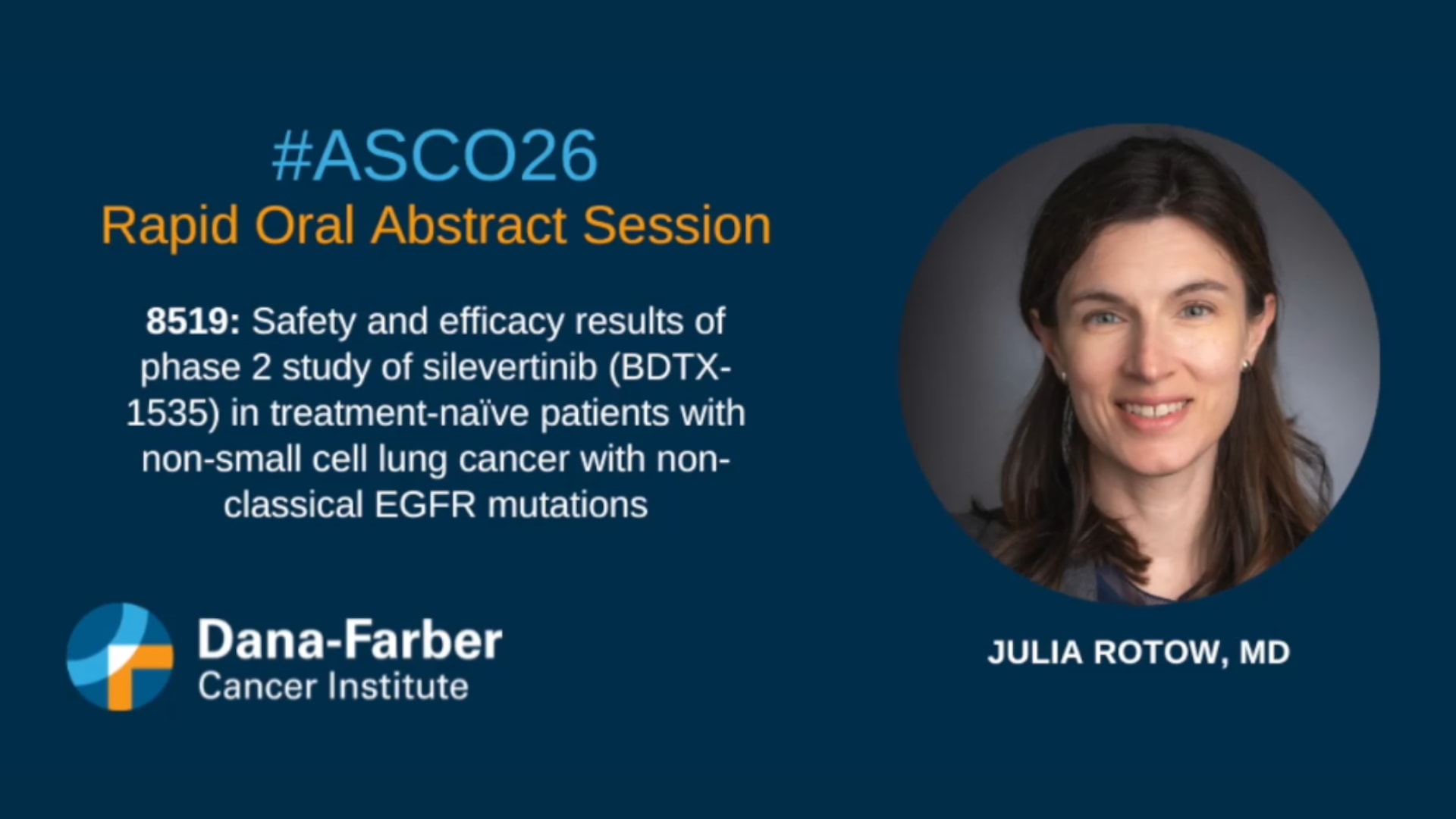
Dana-Farber Cancer Institute's Dr. Julia Rotow reported on a study looking at silevertinib, with data showing it may offer a new first-line option for hard-to-treat EGFR non-small cell lung cancer variants, with encouraging brain activity and manageable side effects.