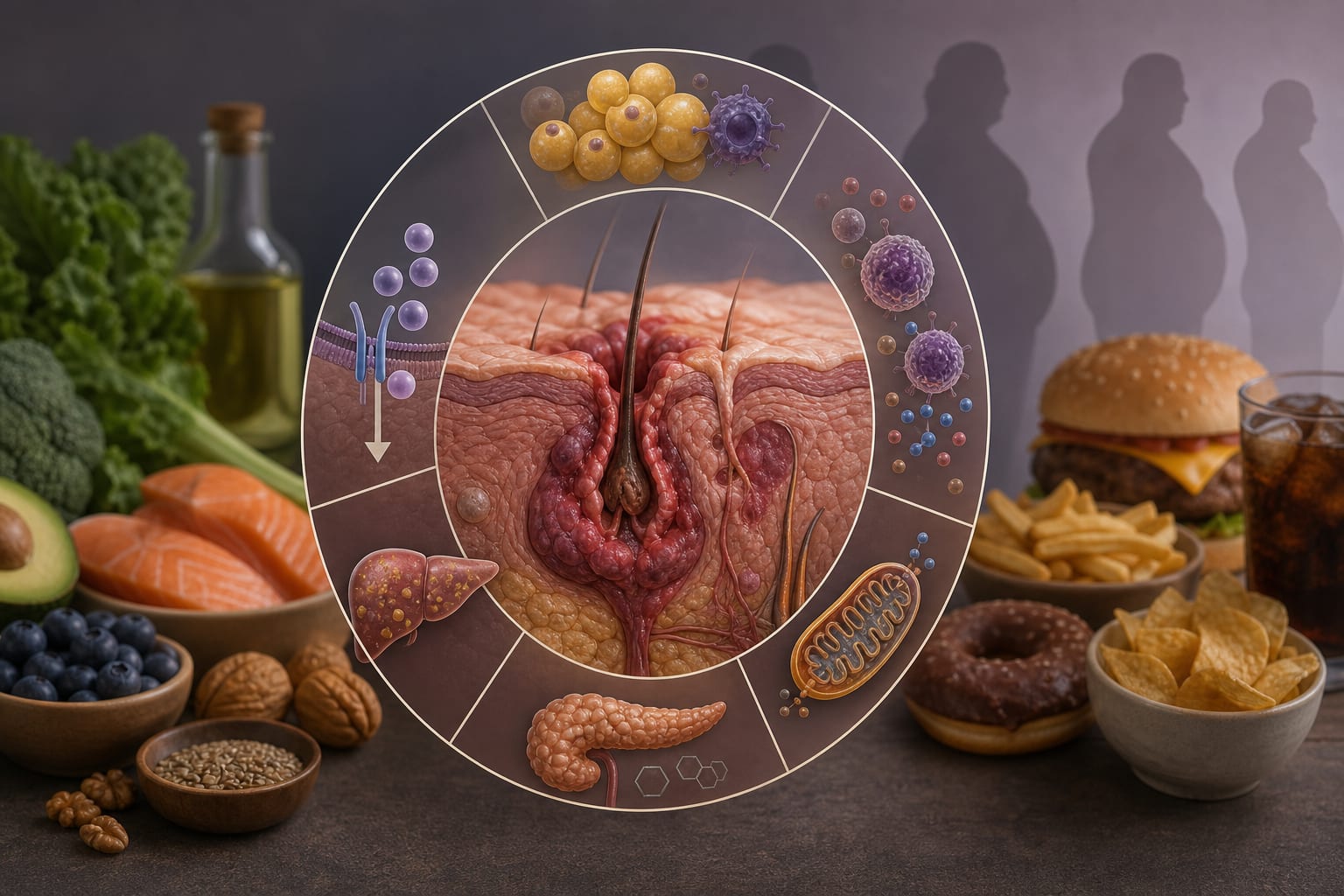
To investigate the role of RasGAP1 in obesity-related traits and its connection to leptin-signaling pathways using Drosophila as a model organism, highlighting its potential implications for understanding obesity mechanisms.
Key Findings:
RasGAP1 knockdown led to obesity-like behaviors, including reduced locomotion and increased feeding interactions.
Elevated lipid storage and circulating sugars were observed alongside reduced expression of the leptin analog upd1.
Protein-interactome mapping indicated RasGAP1's role in linking Ras signaling with cytokine pathways relevant to feeding control.
In humans, RASA2/3, KRAS, and LEP were associated with fat mass, BMI, and lipid dysregulation.
Interpretation:
RasGAP1/RASA2/3 may act as a conserved neuro-metabolic regulator, influencing neural and metabolic control systems towards obesity-linked phenotypes, suggesting potential therapeutic targets.
Limitations:
Findings are based on Drosophila models, which may not fully replicate human metabolic processes due to differences in physiology and genetic regulation.
Further studies are needed to clarify the mechanisms linking RasGAP1 to obesity-related traits, particularly in human contexts.
Conclusion:
The study highlights RasGAP1 as a potential target for understanding obesity mechanisms and suggests a conserved role in metabolic regulation across species.