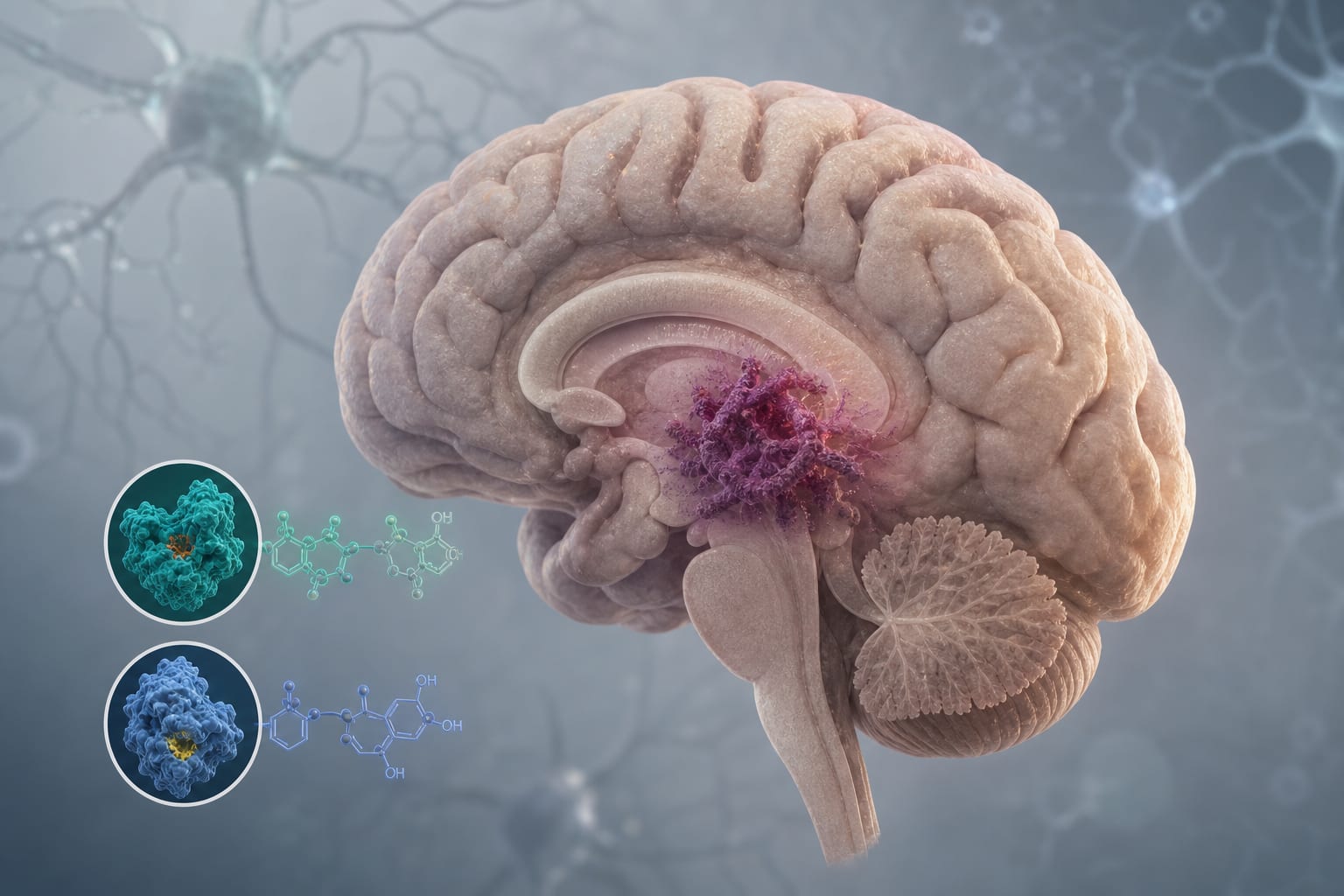
To explore the role of serotonergic dysfunction in impulse control disorders (ICDs) in Parkinson's disease, specifically challenging the traditional dopamine-centric view by highlighting serotonin's involvement in impulsivity.
Increased 5-HT2A receptor availability was found in specific brain regions, suggesting compensatory mechanisms due to serotonergic deficits.
Serotonergic dysfunction correlated with ICD severity and impulsivity subtypes, highlighting distinct neurobiological substrates for action and decision impulsivity.
Interpretation:
The findings suggest that serotonergic dysfunction plays a significant role in the development and severity of ICDs in Parkinson's disease, indicating a need to reconsider the dopamine-centric model and explore serotonin-targeted therapies.
Limitations:
The study does not clarify whether serotonergic dysfunction is an early or late progression in the development of ICDs, which could influence treatment approaches.
Individual variability in genetic predisposition to ICDs was not fully explored, potentially limiting the generalizability of the findings.
Conclusion:
Targeting serotonergic pathways may offer new therapeutic strategies for managing ICDs in Parkinson's disease, warranting further research into serotonin-based interventions and their clinical applications.
Aviva Abosch, M.D., Ph.D., a neurosurgeon at Baptist Health Miami Neuroscience Institute, part of Baptist Health Brain and Spine Care, was installed as the Esernia Endowed Chair in Surgical Treatment of Adult Epilepsy and Movement Disorders.