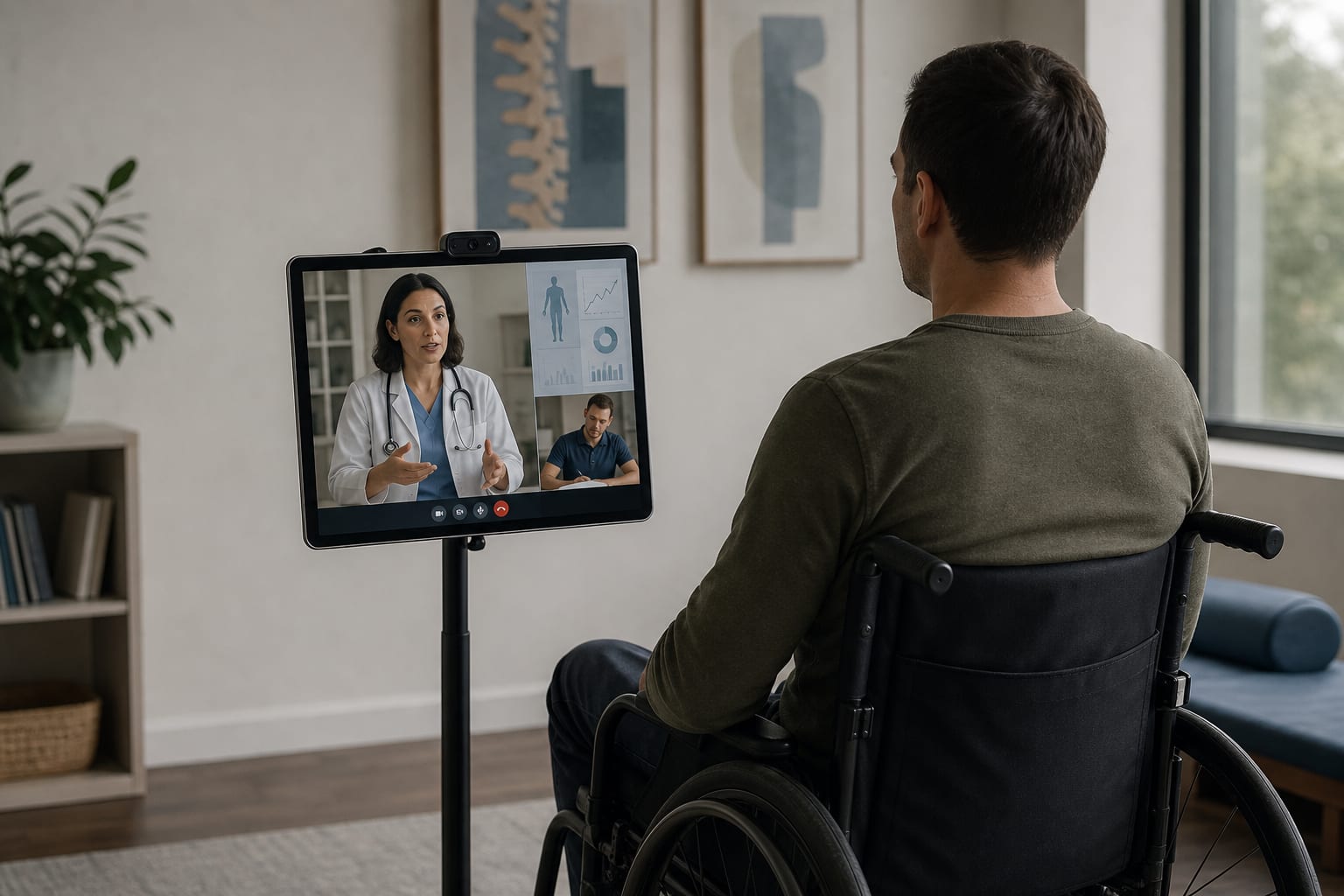
Multidimensional Effects of Telemedicine on Patients With Spinal Cord Injury: Systematic Review and Meta-Analysis of Randomized Controlled Trials - Summary - MDSpire
Advertisement
Multidimensional Effects of Telemedicine on Patients With Spinal Cord Injury: Systematic Review and Meta-Analysis of Randomized Controlled Trials
To systematically review and meta-analyze the effects of telemedicine interventions on psychological health, health-related quality of life, sleep-related functioning, functional independence and rehabilitation outcomes, and pain intensity in patients with spinal cord injury (SCI), highlighting the significance of these findings in the context of existing literature.
Key Findings:
Telemedicine may improve self-management, psychological well-being, complication prevention, pain control, and functional recovery in SCI patients.
Previous meta-analyses indicated significant benefits of telemedicine on pressure injuries and quality of life, but findings were limited by study heterogeneity and potential biases.
Only RCTs with extractable outcome data for at least one prespecified domain were included in the meta-analysis.
Interpretation:
Telemedicine interventions show promise in enhancing various health outcomes for patients with SCI, but the variability in study designs and outcomes complicates the establishment of robust conclusions, emphasizing the need for careful consideration in clinical practice.
Limitations:
Heterogeneity in study objectives, intervention modalities, and outcome measures.
Limited number of RCTs available for pooling in previous analyses.
Potential bias due to data from multiple time points being counted as independent entries, which may affect the overall findings.
Conclusion:
The study aims to provide robust evidence for clinical decision-making regarding tele-rehabilitation strategies for SCI patients, highlighting the need for further research to optimize these interventions and suggesting specific areas for future investigation.
In a target-trial emulation of more than 600,000 veterans, GLP-1 RA initiators saw fewer new substance use disorders—and patients with existing SUDs had fewer overdoses, hospitalizations, and deaths.