Interleukin-15 correlates with cytotoxic immune networks in cervical tuberculous lymphadenitis - Summary - MDSpire

Interleukin-15 correlates with cytotoxic immune networks in cervical tuberculous lymphadenitis

  • By

  • Soumaya Bchiri

  • Khadija Bahrini

  • Rosane M. B. Teles

  • Ameni Ben Alaya

  • Houssem Eddine Kamel

  • Julie West

  • Kimia Rategh

  • Asma Bouzekri

  • Eya Bousalem

  • Rim Ouni

  • Meriem Fassatoui

  • Helmi Mardassi

  • Neira Dekhil

  • Issam Ben Belghith

  • Rym Lahiani

  • Emna Romdhane

  • Meriem Ben-Ali

  • Soumaya Rammeh

  • Asma Ferjani

  • Mamia Ben-Saleh

  • Mohamed-Ridha Barbouche

  • Robert L. Modlin

  • Chaouki Benabdessalem

  • June 3, 2026

  • 0 min

Share

Objective:

To define the cytokine networks coordinating cytotoxic lymphocyte responses in cervical tuberculous lymphadenitis (CTL) and their significance in disease management.

Key Findings:
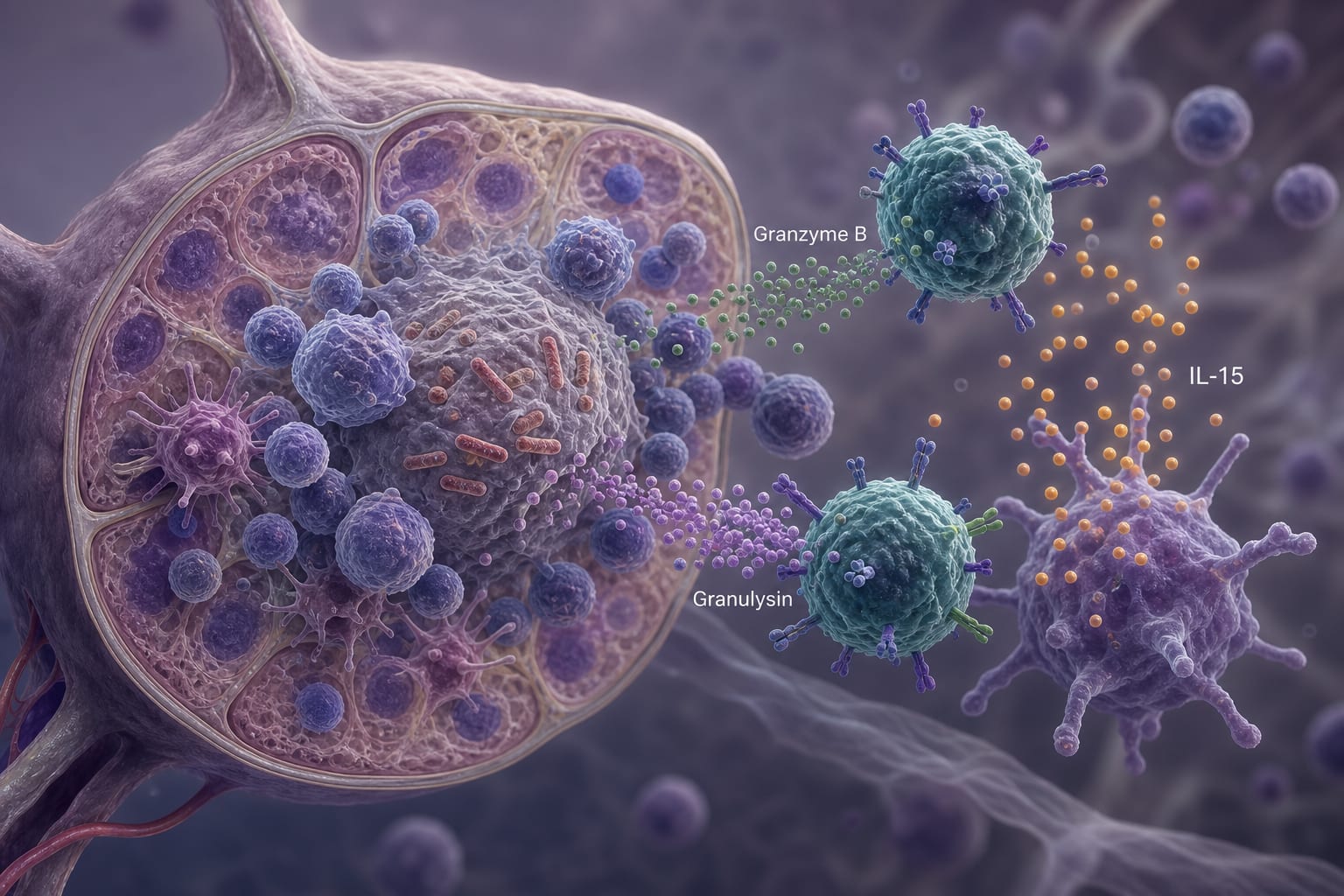
  • CTL exhibited a structured cytotoxic immune program enriched for granulysin, granzyme B, perforin, IFN-γ, and CCL5 (p-values: <0.0001).
  • IL-15 was identified as a highly connected hub within the cytotoxic module in CTL.
  • IL-15 transcripts were significantly elevated in both blood and lymph node compartments (p = 0.0003; p = 0.0007, respectively).
  • Circulating IL-15 concentrations were higher in CTL compared to CNTL (p < 0.0001) and correlated with bacillary burden.
  • IL-15 and IL-15Rα were expressed in CD68+ macrophages within granulomatous regions.
Interpretation:

IL-15 may play a central role in organizing cytotoxic immune pathways in CTL, with its linked immune signatures providing insights into CTL immunopathogenesis and potential therapeutic targets.

Limitations:
  • The study is limited to a specific population and may not be generalizable; potential biases in patient selection should be considered.
  • Further research is needed to fully understand the role of IL-15 in CTL and to validate these findings in larger cohorts.
Conclusion:

IL-15 is a potential central organizer of cytotoxic immune pathways in CTL, highlighting its importance in understanding CTL immunopathogenesis and the need for further research.

Original Source(s)

Related Content