Treatment outcomes of gestational choriocarcinoma before and after EMA/CO introduction in Mongolia: a 15-year retrospective cohort study - Summary - MDSpire
Advertisement
Treatment outcomes of gestational choriocarcinoma before and after EMA/CO introduction in Mongolia: a 15-year retrospective cohort study
To evaluate the clinical characteristics, metastatic patterns, and treatment outcomes of gestational choriocarcinoma in Mongolia, focusing on the impact of EMA/CO chemotherapy.
Approach:
Study Design: Retrospective cohort study including 66 patients diagnosed with gestational choriocarcinoma from 2011 to 2025, stratified by FIGO stage and metastatic status.
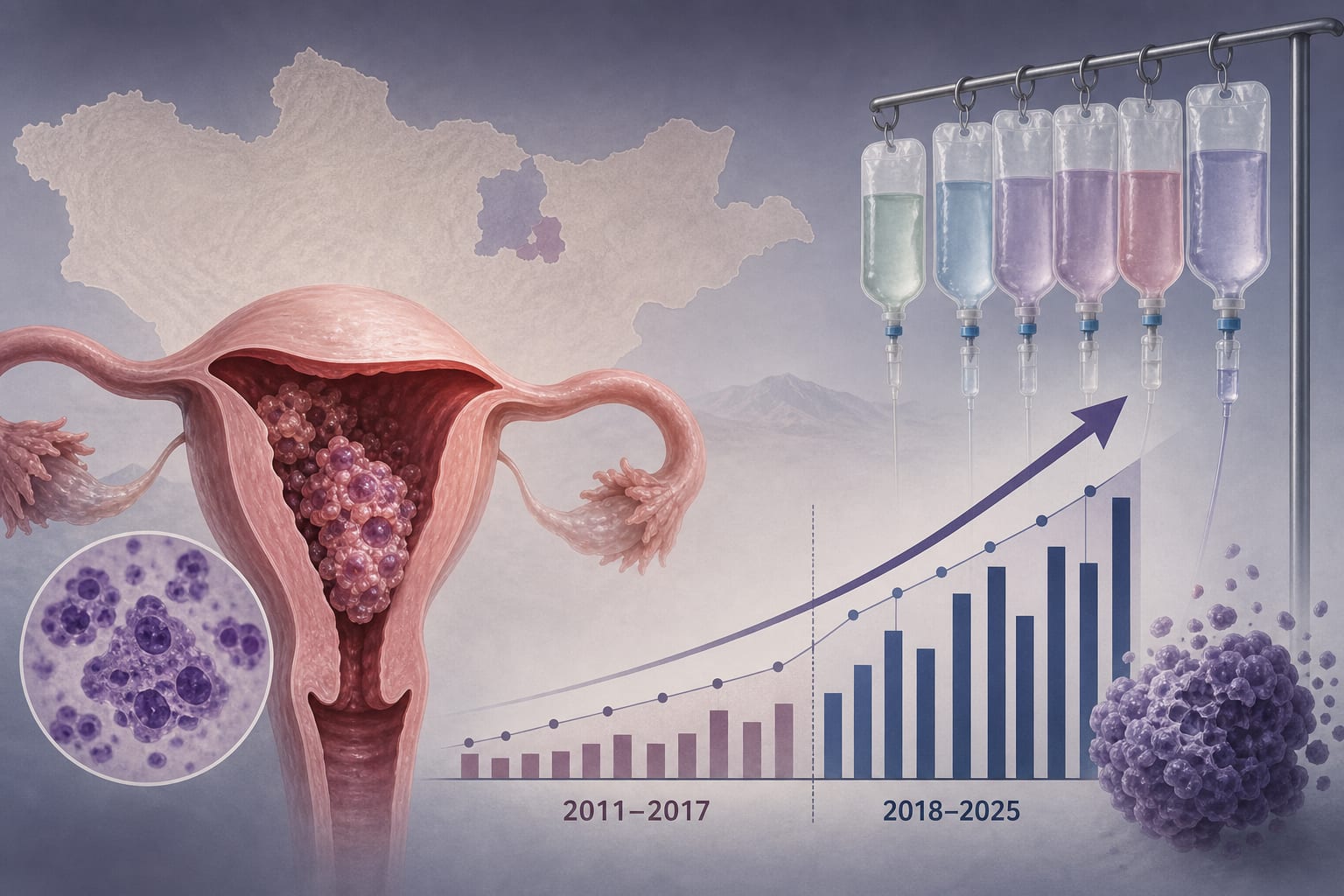
Data Analysis: Clinical features, antecedent pregnancy, and treatment outcomes were analyzed with comparisons between pre-implementation (2011–2017) and post-implementation (2018–2025) cohorts.
Key Findings:
Of the 66 patients, 45.5% (n = 30) had non-metastatic disease (FIGO stage I–II), while 54.5% (n = 36) presented with metastatic disease (FIGO stage III–IV).
Vaginal bleeding was the most common presenting symptom (84.8%).
Following implementation of the EMA/CO chemotherapy regimen in 2018, complete remission rates increased from 69.7% (23/33) to 97.0% (32/33) (p = 0.006).
Disease-related mortality decreased from 30.3% (10/33) to 3.0% (1/33) (p = 0.006).
Chemoresistance and relapse rates decreased, though not statistically significant.
Interpretation:
Patients treated after 2018 demonstrated higher complete remission rates and lower observed mortality compared with those treated before 2018. However, these findings should be interpreted cautiously due to the retrospective design and baseline differences.
Limitations:
Retrospective design limits causal inference.
Absence of adjusted outcome analysis.
Baseline differences between treatment-era cohorts may affect results.
Conclusion:
Early diagnosis, routine serum β-hCG surveillance, timely referral, and standardized management are essential for optimizing outcomes in gestational choriocarcinoma.