Integrative single-cell and bulk transcriptomic analyses identify DRAM1 as a candidate gene from fibroblast-associated transcriptional programs in colorectal cancer - Summary - MDSpire
Advertisement
Integrative single-cell and bulk transcriptomic analyses identify DRAM1 as a candidate gene from fibroblast-associated transcriptional programs in colorectal cancer
To characterize fibroblast-associated transcriptional programs in colorectal cancer (CRC) and identify candidate genes with potential biological relevance, which may inform therapeutic strategies.
Approach:
Key Findings:
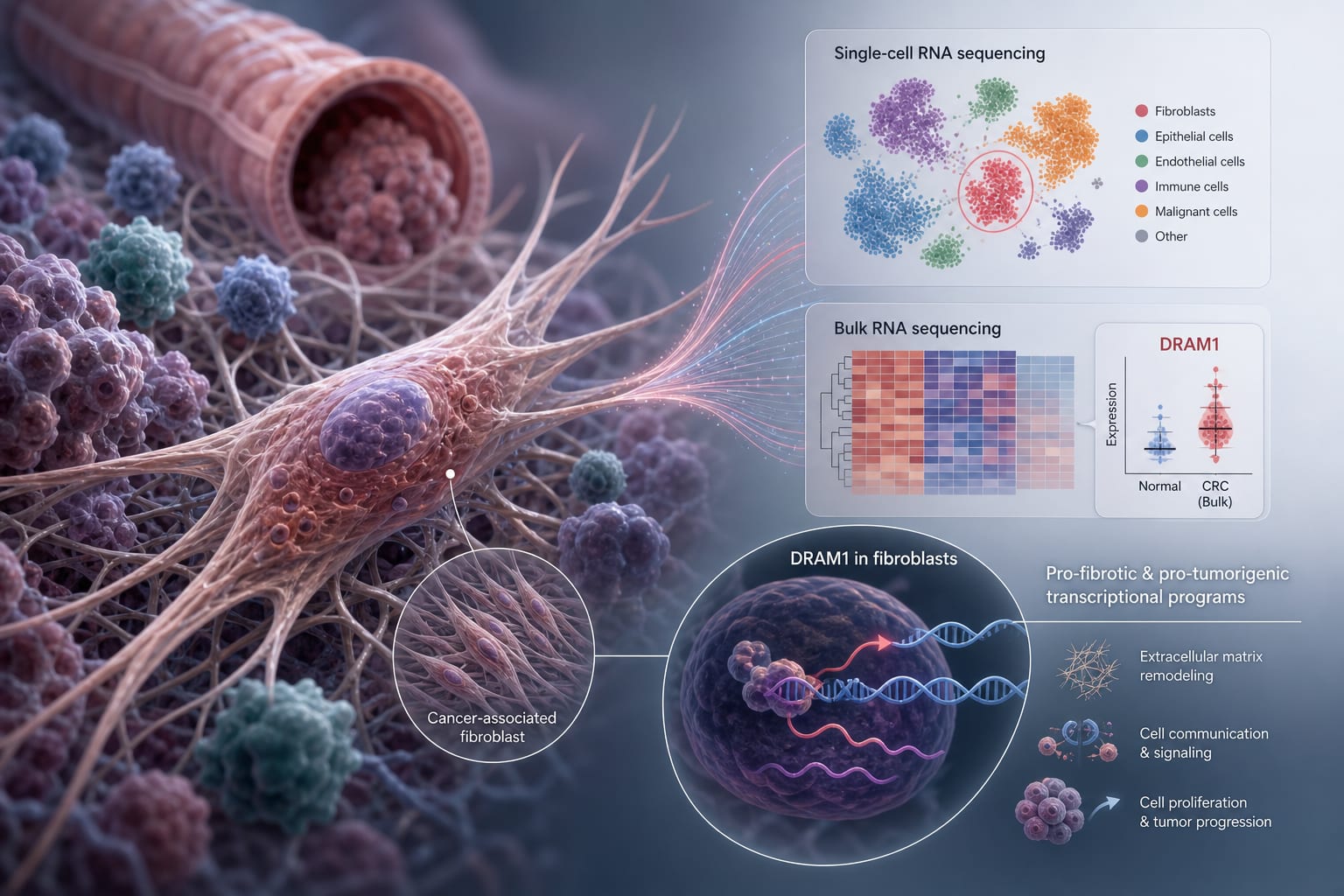
Identified 17 cell clusters corresponding to 10 major cell lineages in CRC and adjacent normal tissues, highlighting cellular diversity.
Detected extensive signaling interactions among stromal, epithelial, endothelial, and immune cell populations, emphasizing the complexity of the tumor microenvironment.
Extracted 123 candidate genes from 31 fibroblast-associated modules identified by hdWGCNA, providing a foundation for further research.
DRAM1 was selected for validation and showed elevated expression in CRC tissues and cell lines, indicating its potential significance.
Loss-of-function assays indicated that silencing DRAM1 enhanced CRC cell proliferation, migration, invasion, and xenograft growth, suggesting its role in tumor suppression.
Interpretation:
Increased DRAM1 expression may reflect a compensatory stress-response program, indicating its potential role in tumor biology beyond a purely oncogenic function.
Limitations:
The direct role of DRAM1 in fibroblast-mediated stromal-immune regulation requires further investigation to fully understand its implications in CRC.
Conclusion:
This study identifies DRAM1 as a candidate gene linked to fibroblast-related transcriptional networks in CRC, suggesting a tumor-restraining role in epithelial tumor cell models, which may have therapeutic implications.