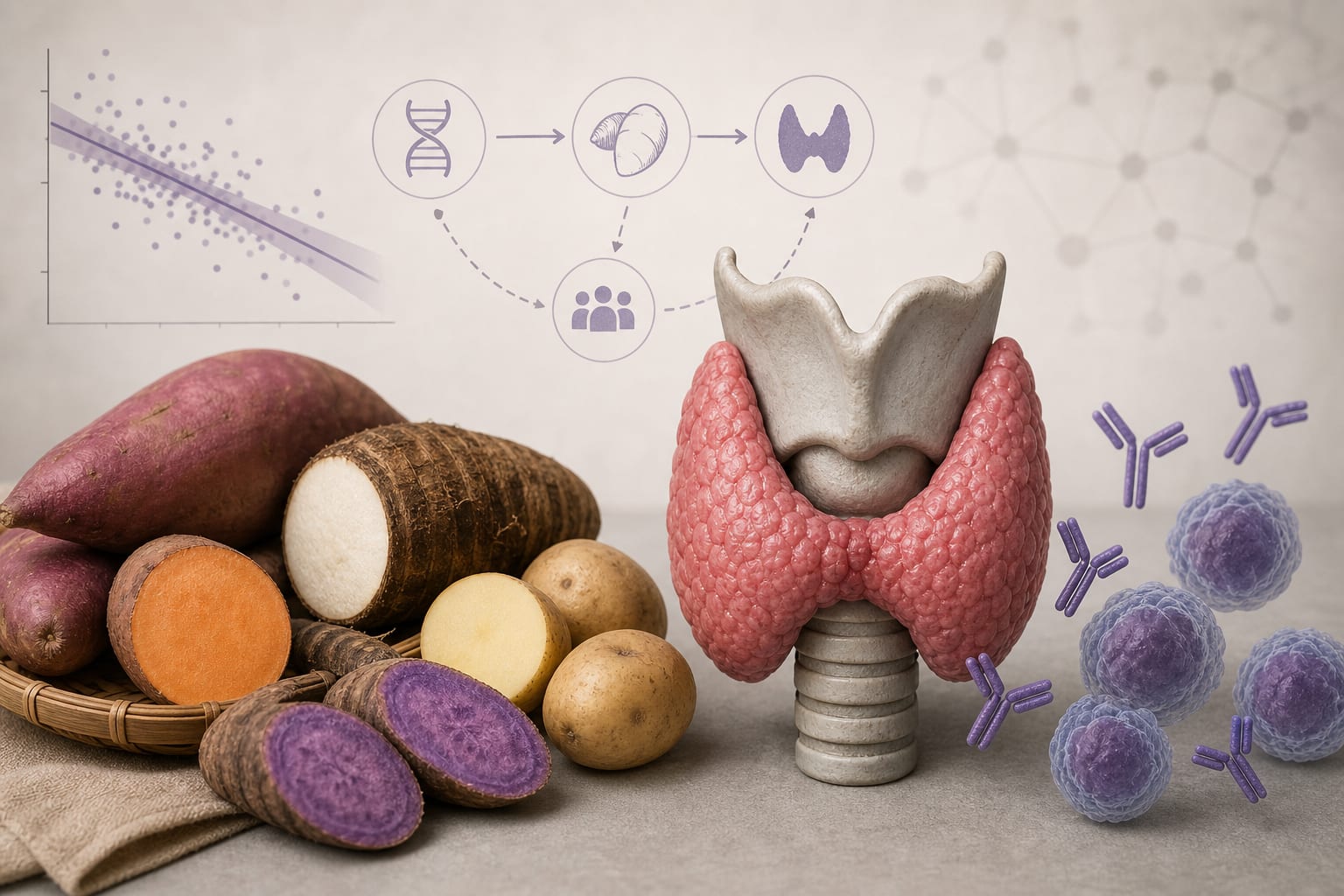
To identify dietary and metabolic factors associated with Hashimoto’s thyroiditis (HT) risk and evaluate whether tuber-associated metabolites causally influence HT susceptibility.
Approach:
Study Design: Cross-sectional analysis of 7,878 community-dwelling adults (≥40 years) from the REACTION cohort in Dalian, China.
Data Collection: Screened 49 variables including dietary intake, lifestyle behaviors, anthropometrics, and metabolic parameters using logistic regression.
Mendelian Randomization: Analyzed eight tuber-associated metabolites as instrumental variable exposures against a published HT genome-wide association study.
Key Findings:
HT prevalence was 29.3% (2,305/7,878).
Female sex (OR 1.97, 95% CI 1.68 to 2.33), elevated total cholesterol (OR 1.13, 95% CI 1.02 to 1.26), and lower fasting glucose (OR 0.95, 95% CI 0.91 to 1.00) were independent metabolic predictors of HT.
Adequate tuber intake (50–100 g/day) was protective against HT (OR 0.75, 95% CI 0.64 to 0.88).
Excessive tuber intake (>100 g/day) was associated with increased HT risk (OR 1.50, 95% CI not provided).
Genetically predicted folic acid supplementation increased HT risk across all MR methods (IVW: β = 0.105, SE = 0.001; P < 0.001).
Interpretation:
Adequate tuber intake is associated with a lower likelihood of HT, while high-dose folic acid supplementation is linked to increased risk.
Limitations:
Observational nature of the study may introduce confounding.
Cross-sectional design limits causal inference.
Conclusion:
Moderate tuber consumption may be associated with lower HT risk, while high-dose folic acid supplementation is linked to increased risk.
Armed with ever-more practical and powerful sampling devices, omics workflows, and wearable tech, could elite athletes pioneer a more precise approach to sport – and health?