Construction and validation of a risk prediction model for early ventilator-induced diaphragm dysfunction in mechanically ventilated patients - Summary - MDSpire
Advertisement
Construction and validation of a risk prediction model for early ventilator-induced diaphragm dysfunction in mechanically ventilated patients
To explore the risk factors of early ventilator-induced diaphragm dysfunction (VIDD) in mechanically ventilated patients and construct a temporally validated risk prediction model using clinical baseline indicators.
Approach:
Study Design: A prospective study conducted at Shenzhen Nanshan People’s Hospital involving 470 mechanically ventilated patients admitted to the ICU from May 2024 to May 2025.
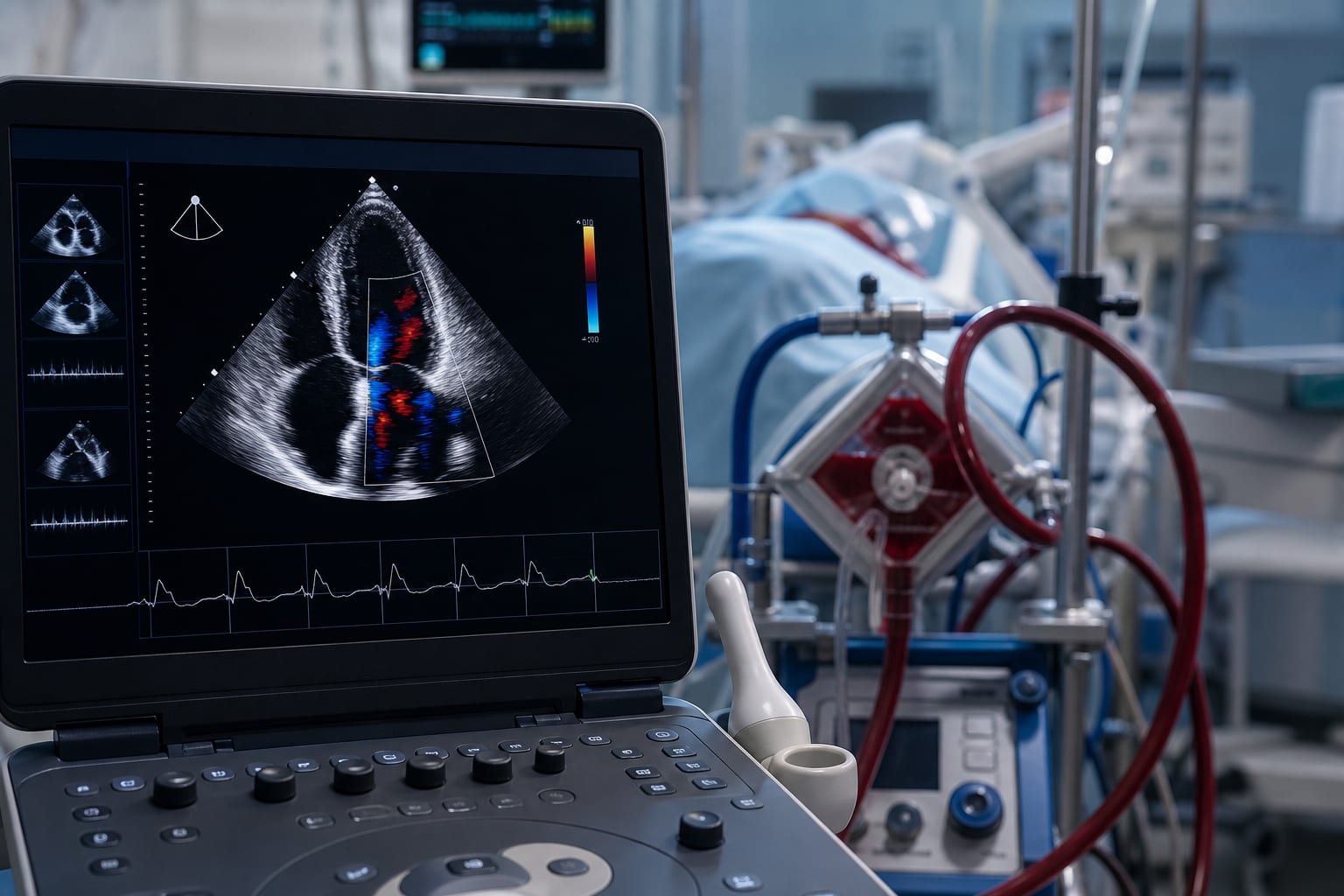
Diagnosis Criteria: VIDD was diagnosed using diaphragm ultrasound indicators: TFdi < 20%, DE < 1 cm, and Tdi < 0.2 cm, which served as outcome diagnostic criteria.
Key Findings:
The incidence of VIDD was 48.78% among the modeling group.
Independent risk factors for VIDD included complicated sepsis, controlled mechanical ventilation mode, RASS score ≤ −4, APACHE II score >20, and complicated intra-abdominal hypertension (IAP ≥ 16 mmHg).
The nomogram model showed an AUC of 0.820 in the modeling group and 0.816 in the validation group, indicating excellent discriminative ability.
Interpretation:
The nomogram model constructed based on five risk factors exhibited favorable efficacy for predicting early VIDD, suggesting it can be a useful tool for early identification of high-risk patients.
Limitations:
The study was conducted in a single center, which may limit the generalizability of the findings.
Conclusion:
The model can be applied as a quantitative tool for the early identification of high-risk patients.