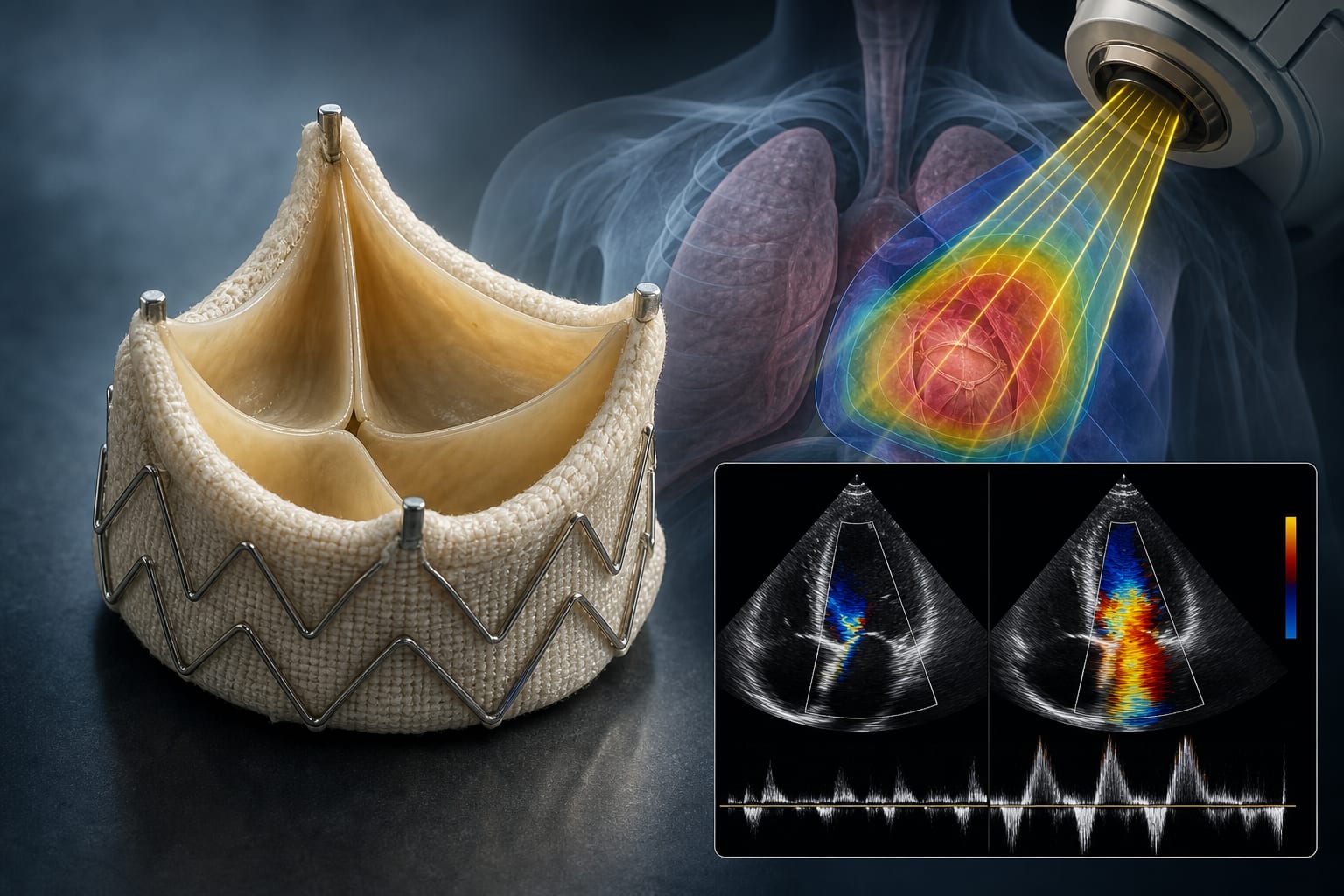
To assess changes in transvalvular gradients following radiation therapy (RT) in patients with previously implanted bioprosthetic valves.
Approach:
Key Findings:
Transvalvular gradients remained stable in control patients but increased significantly over time in the RT group (Friedman's test P < 0.0001).
Total RT dose and mean heart RT dose significantly predicted increases in transvalvular gradients within 12 months (R² = 0.41, P = 0.001) and between 12 and 24 months (R² = 0.62, P < 0.0001).
Shorter time between valve implantation and RT predicted greater gradient increases.
No patients required re-intervention during the follow-up period.
Interpretation:
Chest RT is associated with early, dose-dependent elevations in transvalvular gradients among patients with bioprosthetic valves.
Limitations:
Small sample size of 23 patients.
Retrospective design may introduce selection bias.
Conclusion:
The findings highlight the need for further research to understand the durability of irradiated bioprosthetic valves.