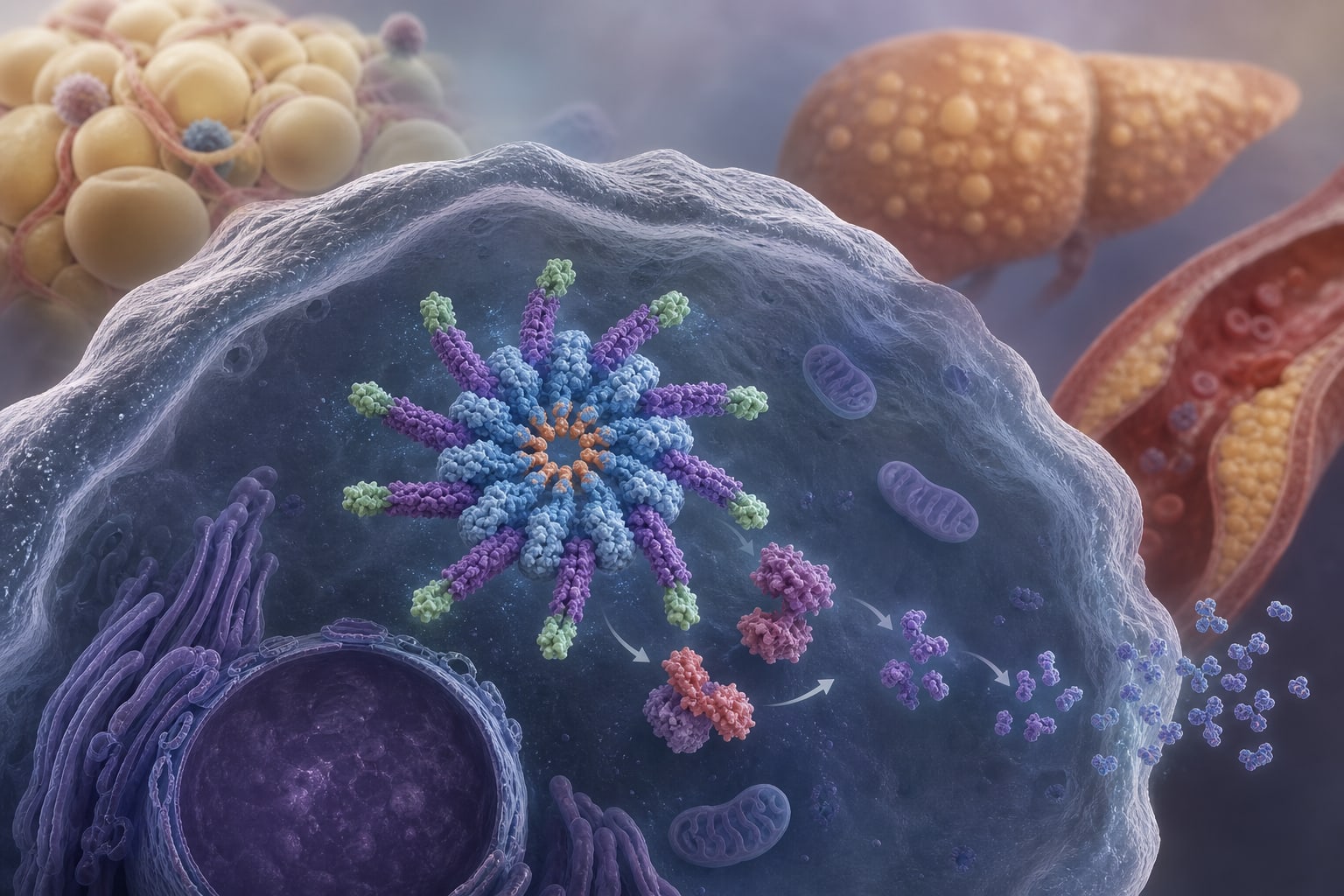
Relationship of erithrocyte membrane polyunsaturated fatty acid composition with biochemical hypogonadism in aging male: evidence from a cross-sectional analysis - Summary - MDSpire
Advertisement
Relationship of erithrocyte membrane polyunsaturated fatty acid composition with biochemical hypogonadism in aging male: evidence from a cross-sectional analysis
To evaluate the relationship between polyunsaturated fatty acids (PUFAs), lipid metabolism enzyme activity, and biochemical hypogonadism in older men, specifically focusing on testosterone levels and associated metabolic factors.
Key Findings:
24.3% of men met the criteria for biochemical hypogonadism (total testosterone ≤ 300 ng/dL).
Arachidonic acid levels were significantly lower in hypogonadal men (p < 0.001), while palmitoleic (p = 0.003) and linoleic acids (p < 0.001) were higher.
Waist circumference and triglyceride levels were independently associated with hypogonadism, while arachidonic acid was inversely associated (p = 0.026).
Interpretation:
Biochemical hypogonadism in older men is associated with specific fatty acid profiles, particularly lower levels of arachidonic acid, which may influence testosterone synthesis through mechanisms related to membrane fluidity and enzyme activity.
Limitations:
The study is cross-sectional, limiting causal inferences about the relationship between fatty acids and hypogonadism.
The underlying biological mechanisms remain incompletely understood, necessitating further research.
Conclusion:
The findings suggest that erythrocyte membrane fatty acid composition, particularly arachidonic acid, may play a role in the metabolic factors associated with biochemical hypogonadism in older men.