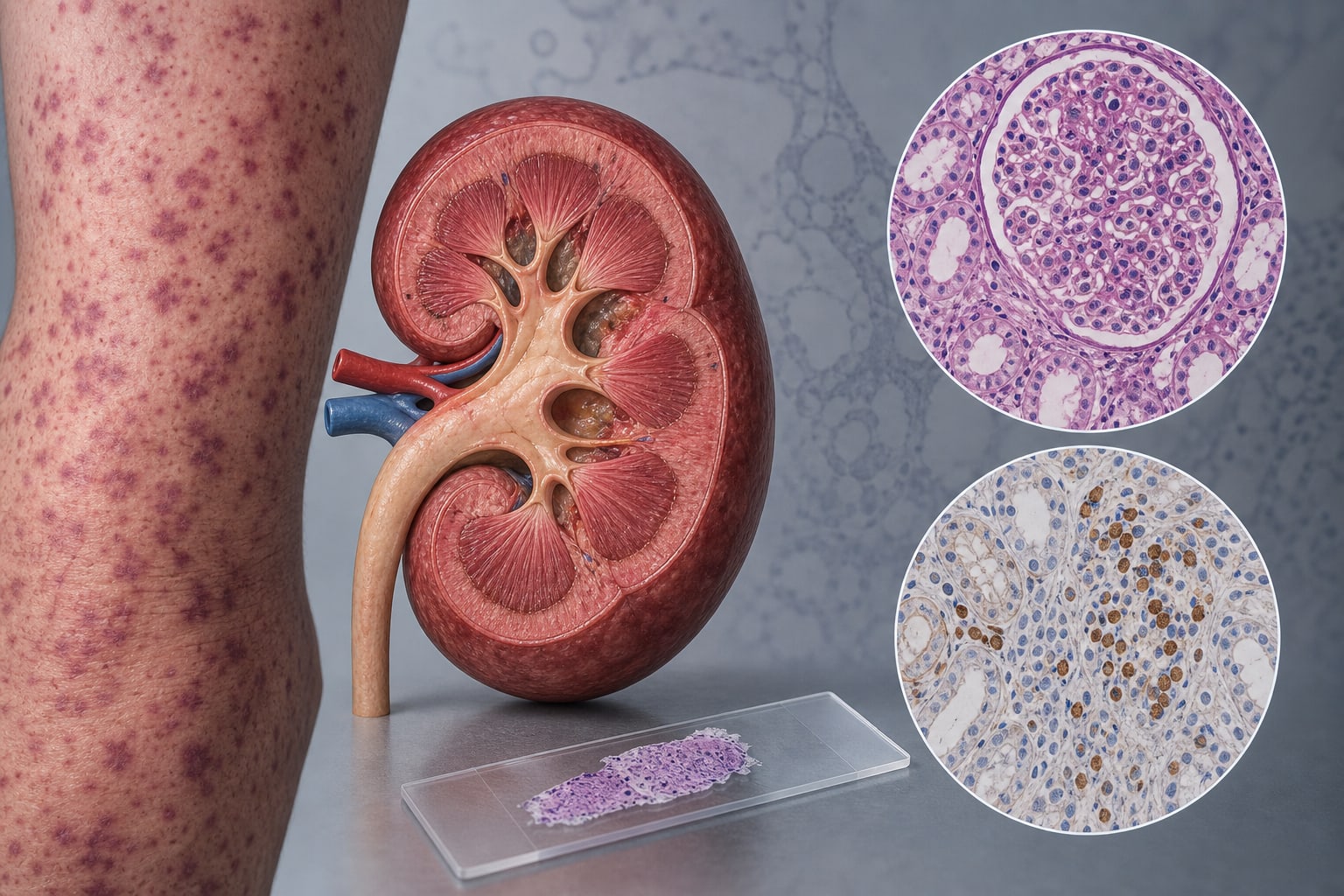
To explore the role of cell-free DNA (cfDNA) in systemic lupus erythematosus (SLE), focusing on its molecular characteristics as biomarkers and its contribution to disease mechanisms.
Approach:
Key Findings:
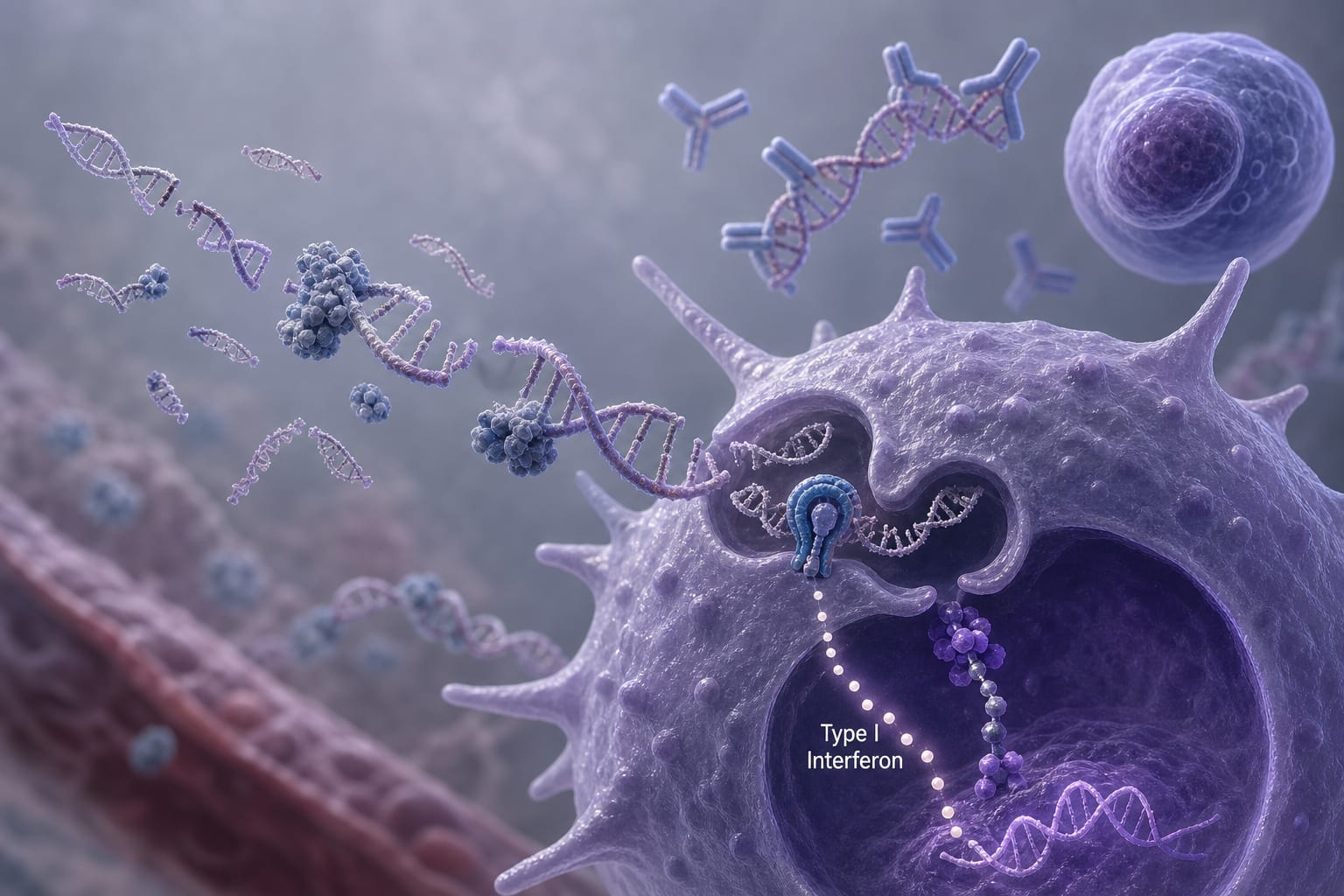
cfDNA is released during cell death and can promote immune activation in SLE.
Molecular characteristics of cfDNA, such as fragment length, end motifs, jaggedness, and epigenetic modifications, serve as biomarkers of disease activity.
Deficiencies in DNASE1L3 alter cfDNA fragmentation and enhance type I interferon signaling, driving B-cell differentiation and anti-dsDNA antibody production.
Autoantibodies can neutralize DNASE1L3, impeding DNA clearance and exacerbating inflammation.
Interpretation:
cfDNA plays a dual role as both a disease mediator and a diagnostic tool in SLE.
Limitations:
The study emphasizes the need for large-scale validation and standardization of cfDNA biomarkers for clinical application.
Conclusion:
The findings support the ongoing development of therapies targeting type I interferon and plasmacytoid dendritic cells.