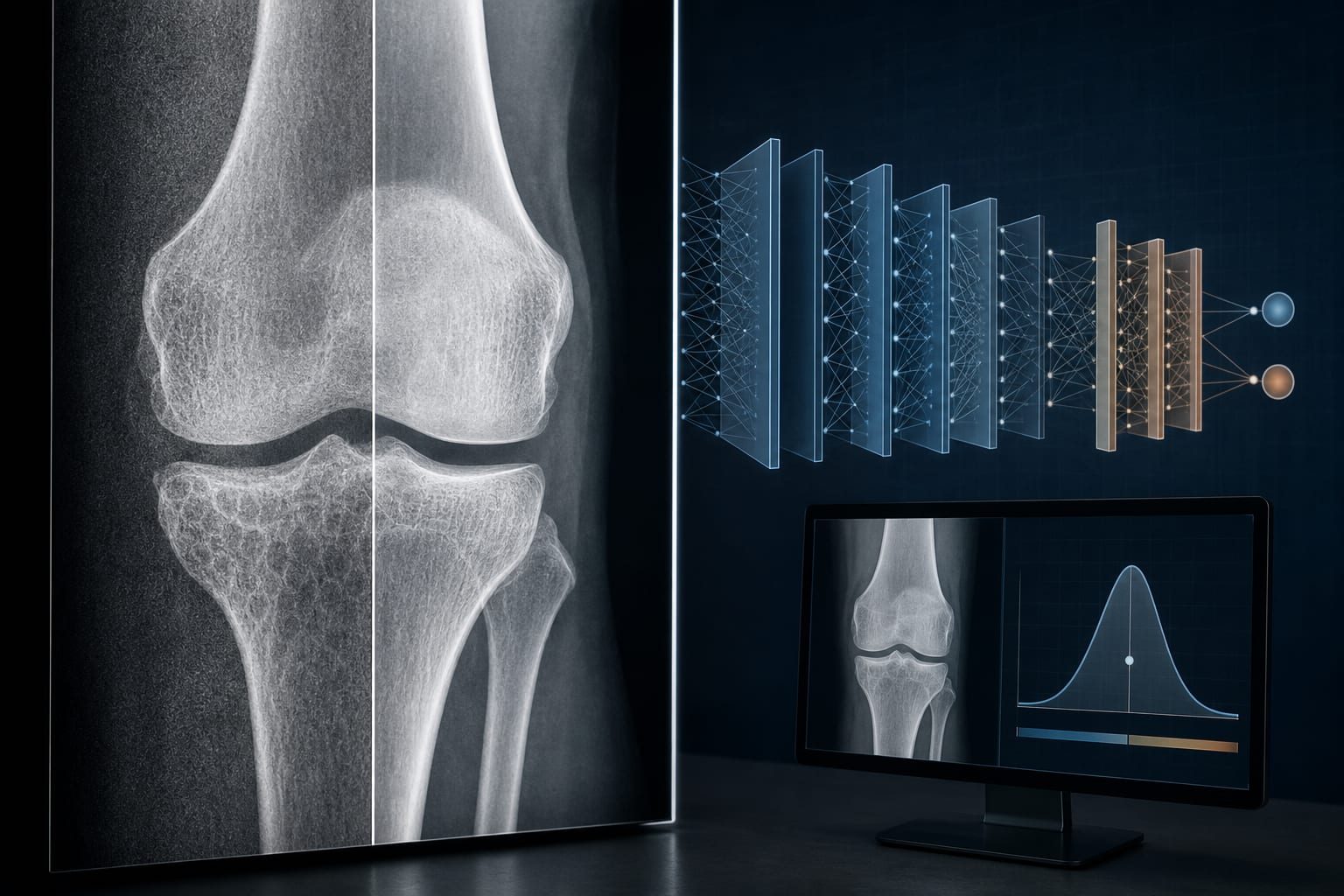
To identify the best machine learning algorithm to predict the incidence of fragility fractures in osteoporosis patients and determine the important features contributing to this prediction, as well as how these features interact with each other.
Approach:
Key Findings:
LightGBM achieved the highest training-set ROC-AUC (0.903) and independent test-set ROC-AUC (0.840).
Age, Hepatitis C virus IgG antibody, and serum sodium were identified as the top factors contributing to increased fracture risk.
Interpretation:
Limitations:
The study is retrospective and relies on data from a single hospital.
No active participant recruitment was conducted.
Conclusion:
The predictive model developed can aid in identifying patients at risk for osteoporotic fragility fractures, potentially leading to targeted interventions.