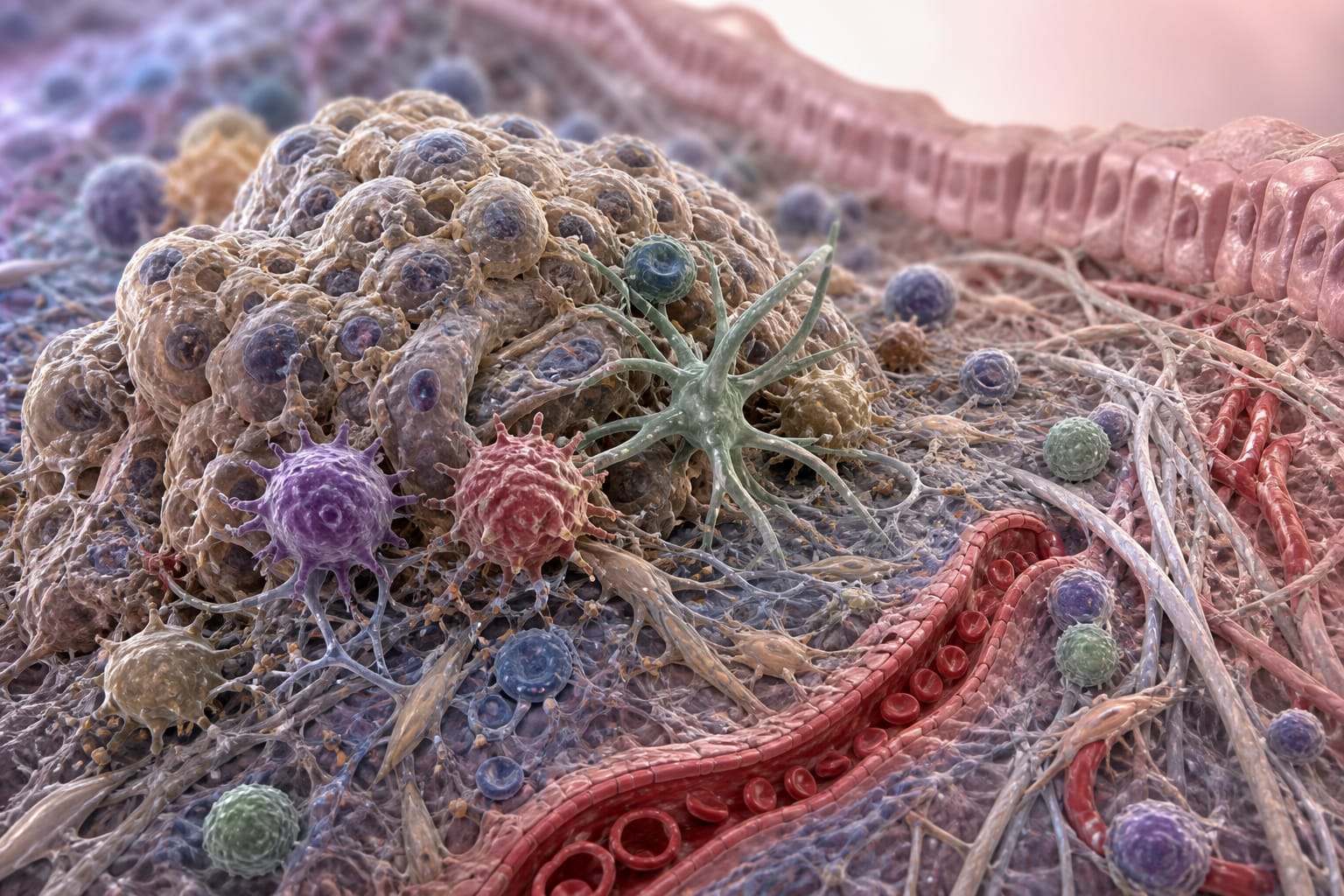
To address personalized gastrointestinal cancer therapy within the context of the tumor microenvironment.
Approach:
Research Topic Overview: The editorial discusses a collection of nine articles that examine gastric, colorectal, rectal, and esophageal cancers, highlighting the role of the tumor microenvironment and systemic host status in individualized cancer care.
Key Findings:
A preoperative nomogram developed by Bai et al. predicts postoperative complications in gastric cancer patients.
Chen et al. found that the postoperative C-reactive protein-to-albumin ratio (CAR) is a practical biomarker for early risk stratification.
Wang et al. demonstrated that the pan-immune-inflammation value (PIV) is an independent prognostic factor for gastric cancer.
The C-reactive protein-albumin-lymphocyte (CALLY) index showed superior prognostic performance in colorectal cancer compared to conventional markers.
Wang et al. established a pathological subtyping strategy for esophageal squamous cell carcinoma to improve prognostic accuracy.
Liu et al. identified recurrence patterns in rectal cancer that correlate with survival outcomes.
Limitations:
The studies primarily rely on retrospective cohort designs, which may limit the generalizability of the findings.
Variability in tumor microenvironment characteristics across different cancer types may complicate the application of findings.
Conclusion:
The editorial emphasizes the importance of tailored treatment approaches that consider the tumor microenvironment and systemic factors in gastrointestinal cancer management.