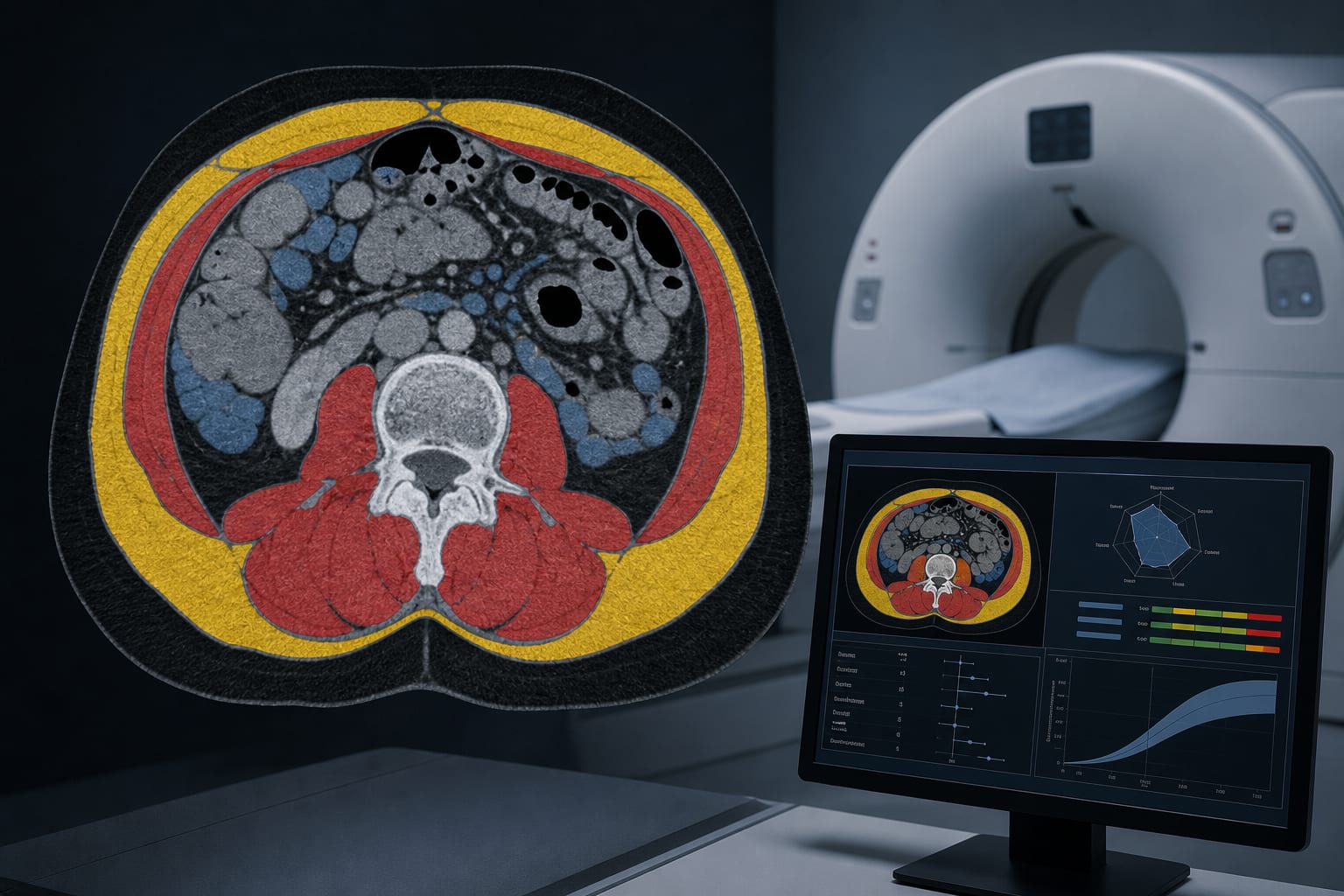
To develop and validate a multidimensional predictive model for postoperative complications in small bowel obstruction (SBO) patients by integrating body composition, systemic inflammation, nutrition, and intraoperative factors.
Key Findings:
Low skeletal muscle density (SMD) was identified as a significant predictor of postoperative sepsis, ICU admission, and complications.
Other predictors included prolonged time from symptom onset to surgery, longer operative duration, lower serum albumin levels, elevated D-dimer, greater resected bowel length, and prolonged prothrombin time.
The predictive models demonstrated strong discriminative ability with AUC values ranging from 0.78 to 0.84 in training sets and 0.72 to 0.80 in validation sets.
Interpretation:
The developed nomogram accurately predicts major postoperative adverse events in SBO patients, facilitating early risk stratification.
Limitations:
The study is limited to a single-center cohort, which may affect the generalizability of the findings.
Retrospective design may introduce biases in data collection and analysis.
Conclusion:
A novel multidimensional nomogram was created to predict postoperative risks in SBO patients, enhancing early monitoring and resource allocation.