Nonlinear Association of Serum Sodium with Urine Output in Postoperative Pediatric Cardiac Patients Receiving Furosemide: A Retrospective Study - Summary - MDSpire
Conexiant’s news site is now MDSpire News. Learn more
Advertisement
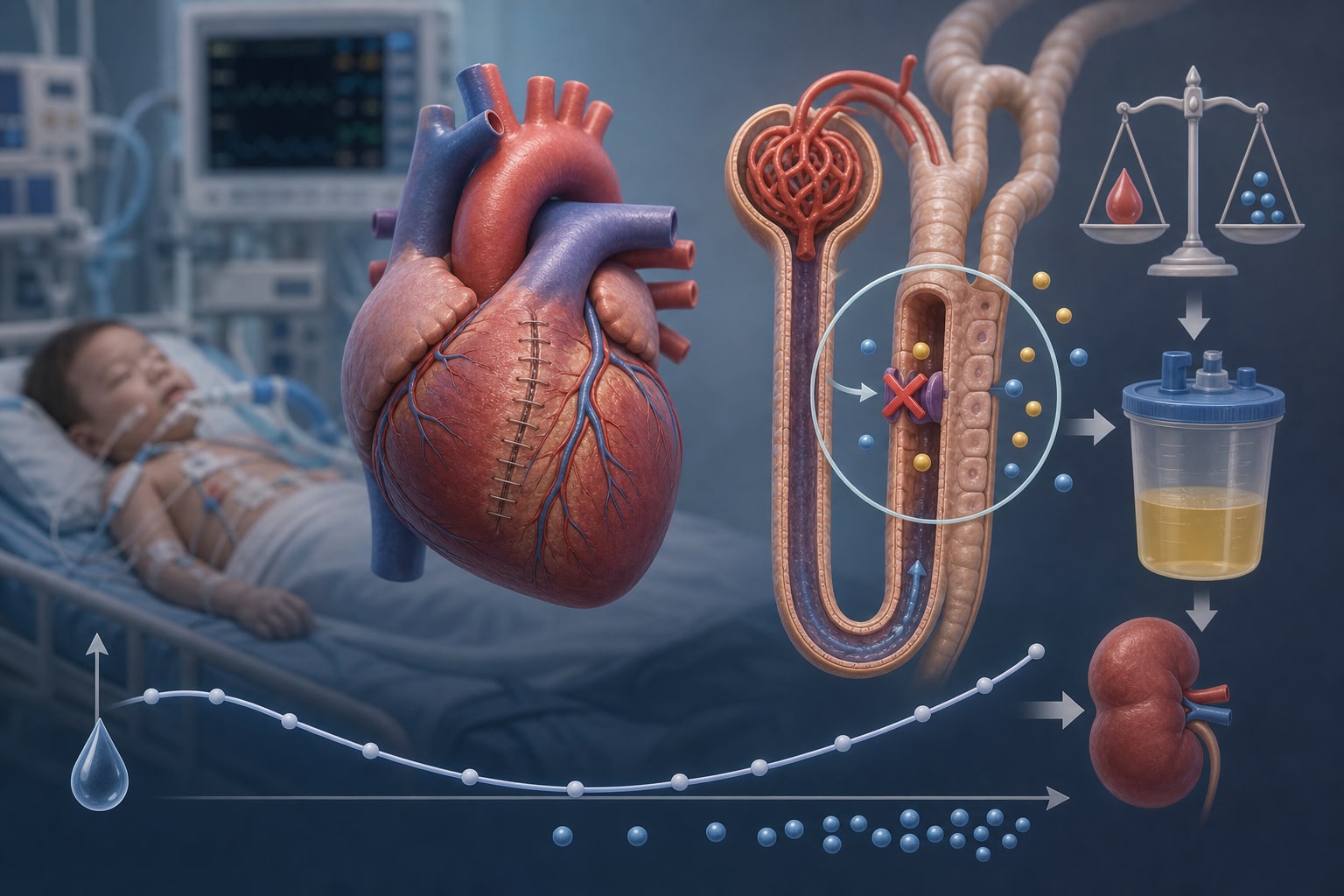
Exploring the Nonlinear Relationship Between Serum Sodium Levels and Urine Output in Pediatric Cardiac Patients Post-Surgery Treated with Furosemide: A Retrospective Analysis
To characterize the association between serum sodium levels and urine output in postoperative pediatric cardiac surgery patients receiving intravenous furosemide.
Approach:
Study Design: Retrospective observational cohort study of pediatric patients admitted postoperatively to the pediatric cardiac intensive care unit at Sheba Medical Center.
Participants: 264 patients aged 0–18 years who underwent cardiac surgery and received intravenous furosemide during the early postoperative period.
Data Collection: Data extracted from electronic medical records, including urine output, serum sodium levels, furosemide dosage, and vasoactive-inotropic scores.
Statistical Analysis: Flexible statistical modeling to capture potential nonlinearity, with adjustments for vasoactive-inotropic support and furosemide administration mode.
Key Findings:
Serum sodium levels primarily reflect water balance and hemodynamic recovery rather than directly influencing urine output.
Hyponatremia is associated with low urine output due to non-osmotic ADH release.
Furosemide responsiveness can predict the risk of AKI and longer hospital stays in children after cardiac surgery.
Interpretation:
The role of serum sodium levels in guiding diuretic therapy and predicting diuretic response in pediatric cardiac patients is not clearly defined.
Limitations:
Retrospective design may introduce bias.
Findings may not be generalizable to all pediatric cardiac patients due to the specific study population.
Conclusion:
The authors concluded that the relationship between serum sodium and urine output in postoperative pediatric cardiac patients receiving furosemide is nonlinear. Serum sodium should be interpreted in the context of fluid balance and hemodynamic status, rather than used alone to guide diuretic therapy or predict urine output.