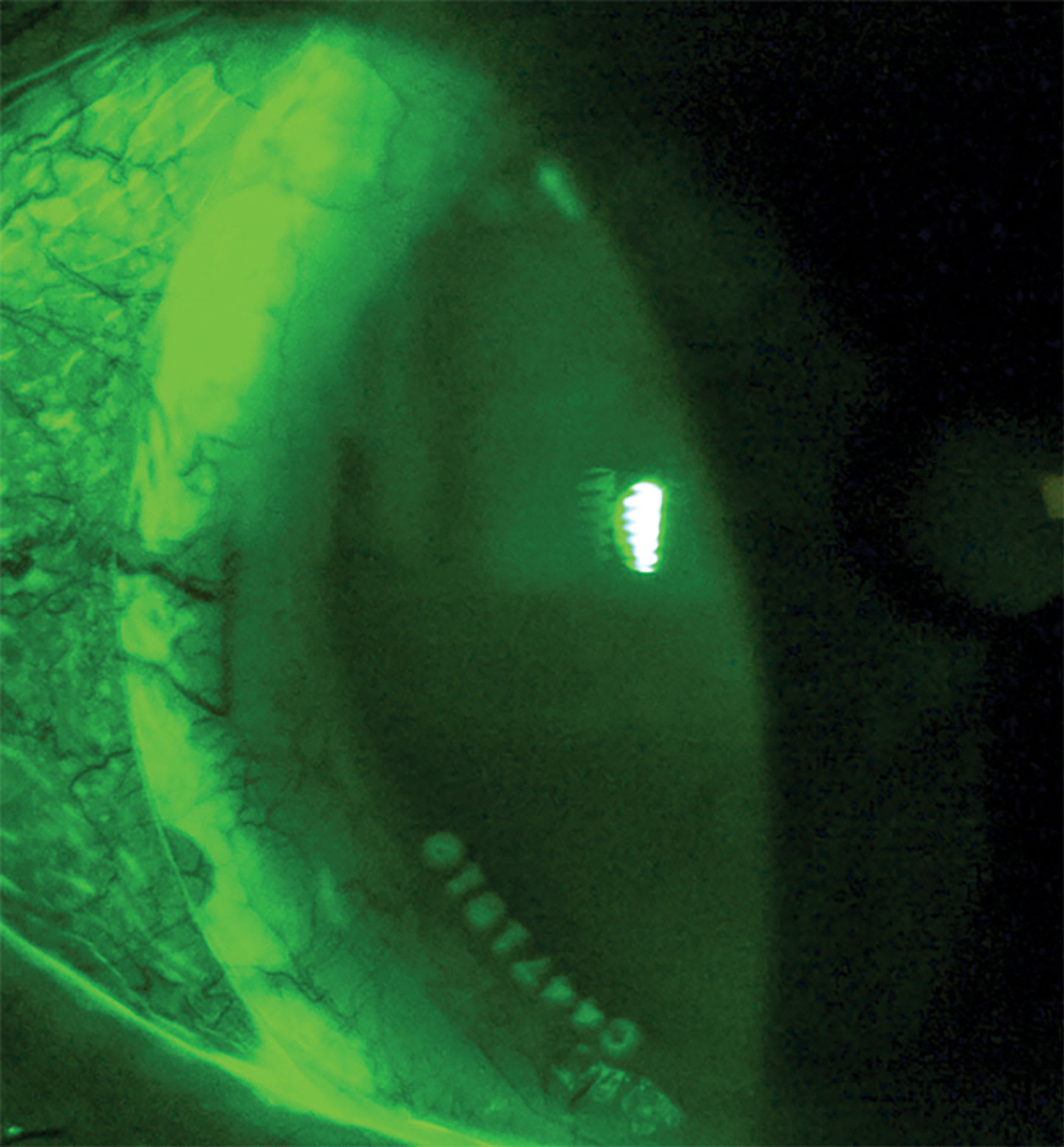
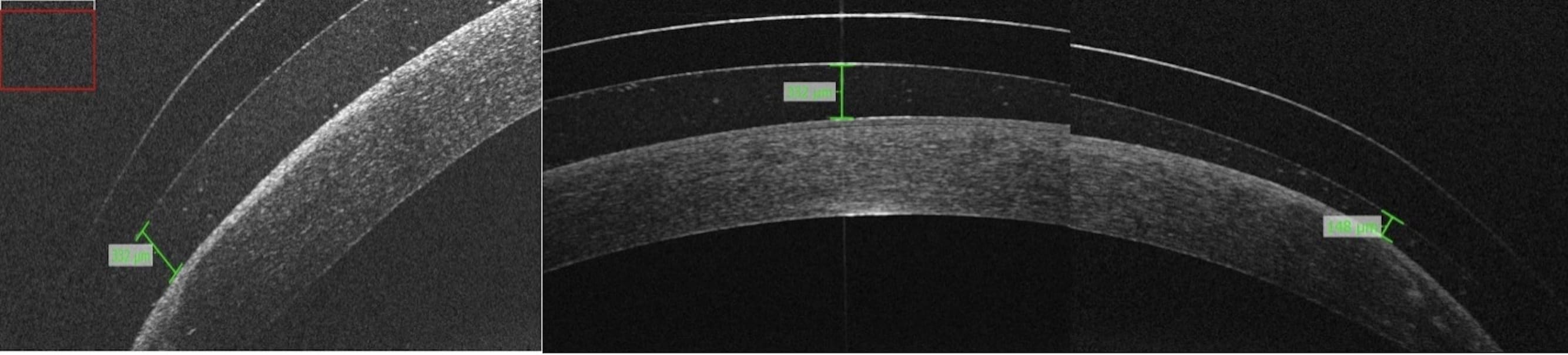
To address persistent scleral lens intolerance in a patient with post-LASIK ectasia and explore the impact of lens material on comfort and tolerance.
Approach:
Patient Case Description: A 46-year-old female with corneal ectasia and previous scleral lens failures was assessed for lens fitting and material suitability.
Assessment and Testing: The patient underwent allergy testing for scleral solutions and a slit lamp examination, revealing mild meibomian gland dysfunction and anterior blepharitis.
Lens Refit: The patient was refit with Onefit MED scleral lenses made from Optimum Infinite material, which has a high-Dk value.
Key Findings:
The patient experienced significant improvement in comfort and lens tolerance after switching to a high-Dk material.
Wearing time increased from less than an hour to 8 hours, with visual acuity improving to 20/20 OD and 20/25 OS.
Interpretation:
Material selection in scleral lenses can significantly impact patient comfort and tolerance, particularly in cases of chronic ocular surface inflammation.
Limitations:
The study is based on a single patient case, limiting generalizability.
No long-term follow-up data is provided to assess the durability of the improvement.
Conclusion:
Changing lens material to a hyper-oxygen-permeable option can be an effective strategy for managing scleral lens intolerance.