Estimating the global burden of diarrhea among young children with wasting and stunting and its projection to 2050: evidence from the Global Burden of Disease 2021 study - Summary - MDSpire
Advertisement
Estimating the global burden of diarrhea among young children with wasting and stunting and its projection to 2050: evidence from the Global Burden of Disease 2021 study
To investigate the epidemiological burden, temporal trends, and future trajectories of stunting- and wasting-related diarrhea in children under 5 years globally, providing evidence for targeted diarrhea prevention and control strategies.
Approach:
Data Source: Utilized data from the Global Burden of Disease 2021 study covering 204 countries from 1990 to 2021.
Indicators: Analyzed deaths, years of life lost (YLLs), years lived with disability (YLDs), and disability-adjusted life years (DALYs).
Analytical Methods: Performed stratified analyses by sex, age, region, and Socio-Demographic Index (SDI); calculated estimated annual percentage change (EAPC); conducted decomposition analysis and used ARIMA model for projections.
Key Findings:
All burden indicators of stunting- and wasting-related diarrhea in under-five children declined from 1990 to 2021.
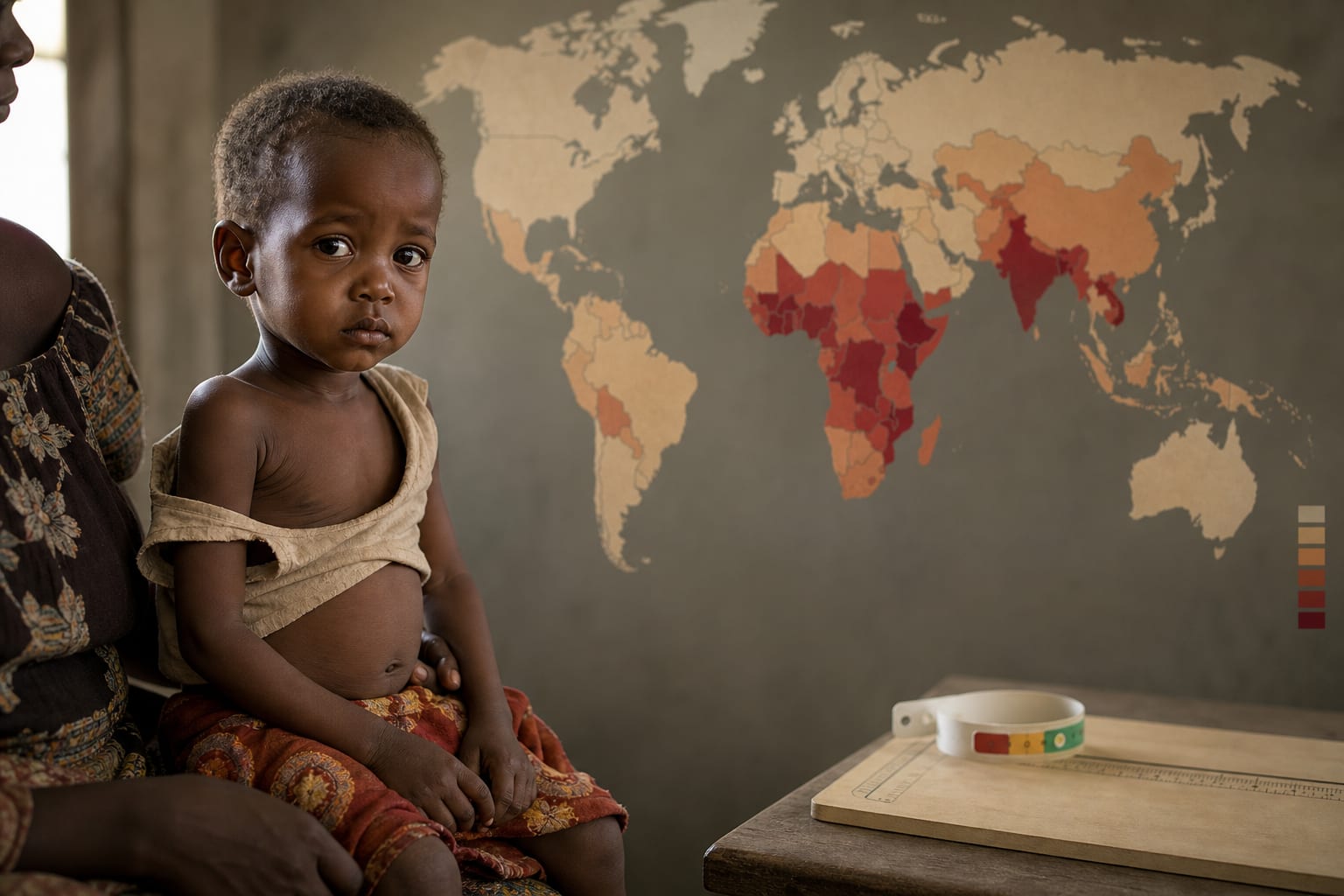
Western Sub-Saharan Africa had the highest burden of diarrhea.
Projections for 2022–2050 indicate sustained reductions in mortality and disability-adjusted life years, particularly among girls.
Wasting-related diarrhea showed a greater and faster burden reduction compared to stunting-related diarrhea, with notable variations in long-term trends.
Interpretation:
The decline in disease burden is associated with improved epidemiological conditions, including better sanitation, access to safe drinking water, child nutrition, and increased rotavirus vaccination coverage.
Limitations:
Raw data quality and regional data imbalance may affect results.
Model estimation bias could influence predictions.
Predictions reflect overall trends and may not capture localized variations.
Conclusion:
Nutritional interventions for wasted children may reduce the burden of acute diarrhea.