Effects of a clinical metagenomics intervention on clinical outcomes, healthcare costs, and health-related quality of life in patients with sepsis or septic shock: results of the randomized-controlled DigiSep trial - Summary - MDSpire

Effects of a clinical metagenomics intervention on clinical outcomes, healthcare costs, and health-related quality of life in patients with sepsis or septic shock: results of the randomized-controlled DigiSep trial

  • By

  • Thorsten Brenner

  • Annabell Skarabis

  • Stefan J. Schaller

  • Thilo von Groote

  • Christian Putensen

  • Ulf Günther

  • Martin Sauer

  • Sebastian O. Decker

  • Fabian Dusse

  • Manfred Weiss

  • Klaudiusz Suchodolski

  • Tim-Philipp Simon

  • Peter Rosenberger

  • Onnen Moerer

  • Matthias Unterberg

  • Jens-Christian Schewe

  • Hendrik Bracht

  • Selina Hutzl

  • Manuel Feißt

  • Ursula Marschall

  • Patrick Brandenburg

  • Philip Stevens

  • Juliana Schmidt

  • Mathias W. Pletz

  • Marc M. Berger

  • June 30, 2026

  • 0 min

Share

Objective:

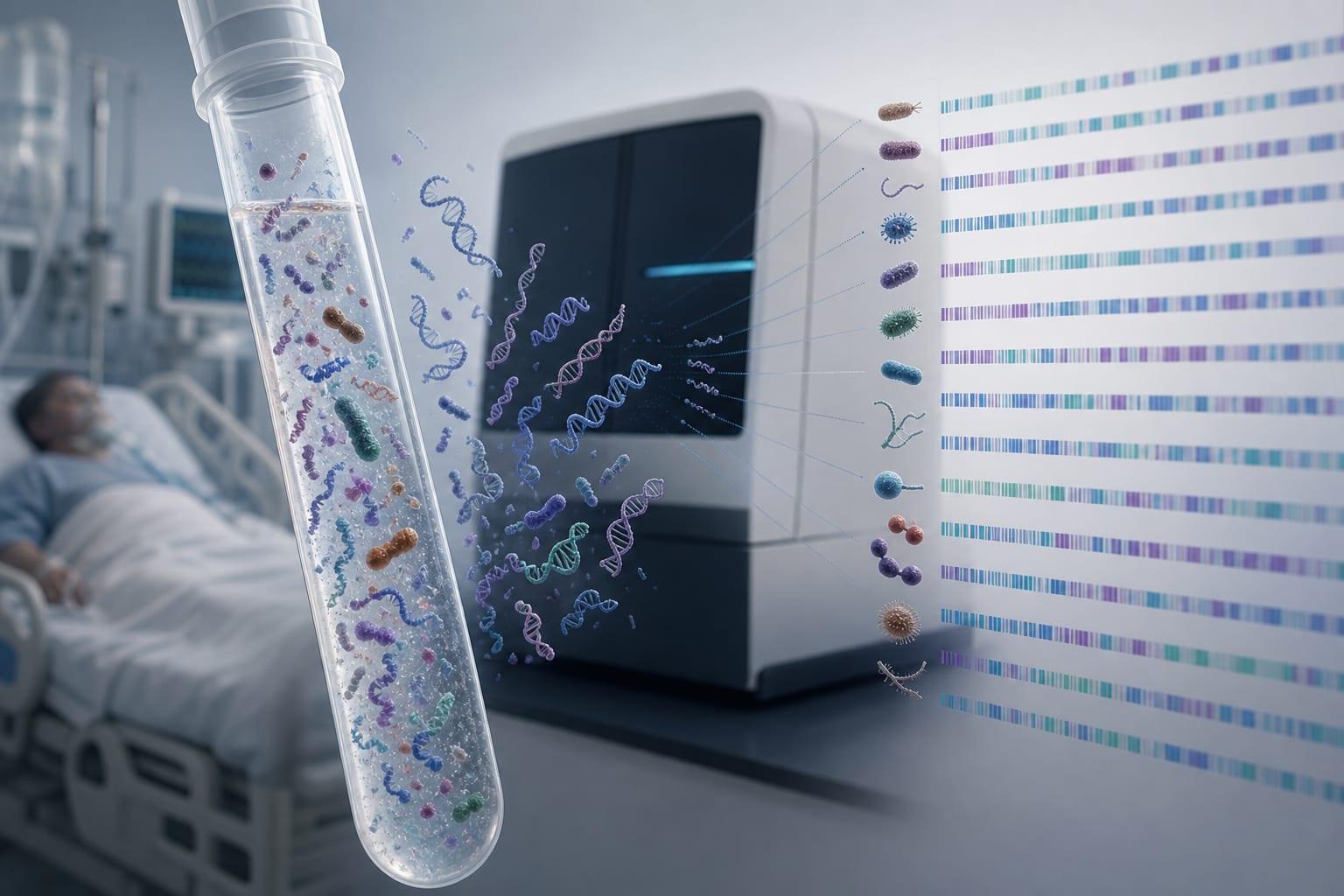
To evaluate the effects of a metagenomics-based approach for pathogen identification in patients with sepsis or septic shock on clinical outcomes, health-related quality of life (HRQoL), and healthcare costs.

Approach:
  • Trial Design: The DigiSep trial was a randomized, controlled, interventional, open-label, multicenter study conducted across 24 hospitals.
  • Patient Inclusion: Adult patients aged ≥ 18 years with sepsis or septic shock diagnosed within < 24 h were included.
  • Intervention: The intervention group received mNGS-based diagnostics in addition to standard-of-care microbiological analyses.
  • Data Collection: Clinical data were collected at multiple time points, and healthcare costs were assessed from claims data.
Key Findings:
  • The primary endpoint, the DOOR/RADAR score, did not improve in the intervention group compared to the control group.
  • Exploratory analyses suggest that mNGS may optimize anti-infective therapy and improve patient-centered outcomes.
  • Further studies are needed to confirm the exploratory findings.
Interpretation:

The study did not demonstrate a significant improvement in the primary clinical outcome with mNGS diagnostics.

Limitations:
  • The primary endpoint did not show improvement, limiting definitive conclusions.
  • The exploratory nature of secondary analyses requires further validation.
Conclusion:

The findings suggest that while mNGS did not improve the primary outcome, further research is needed to explore its potential role in therapy optimization.

Original Source(s)

Related Content