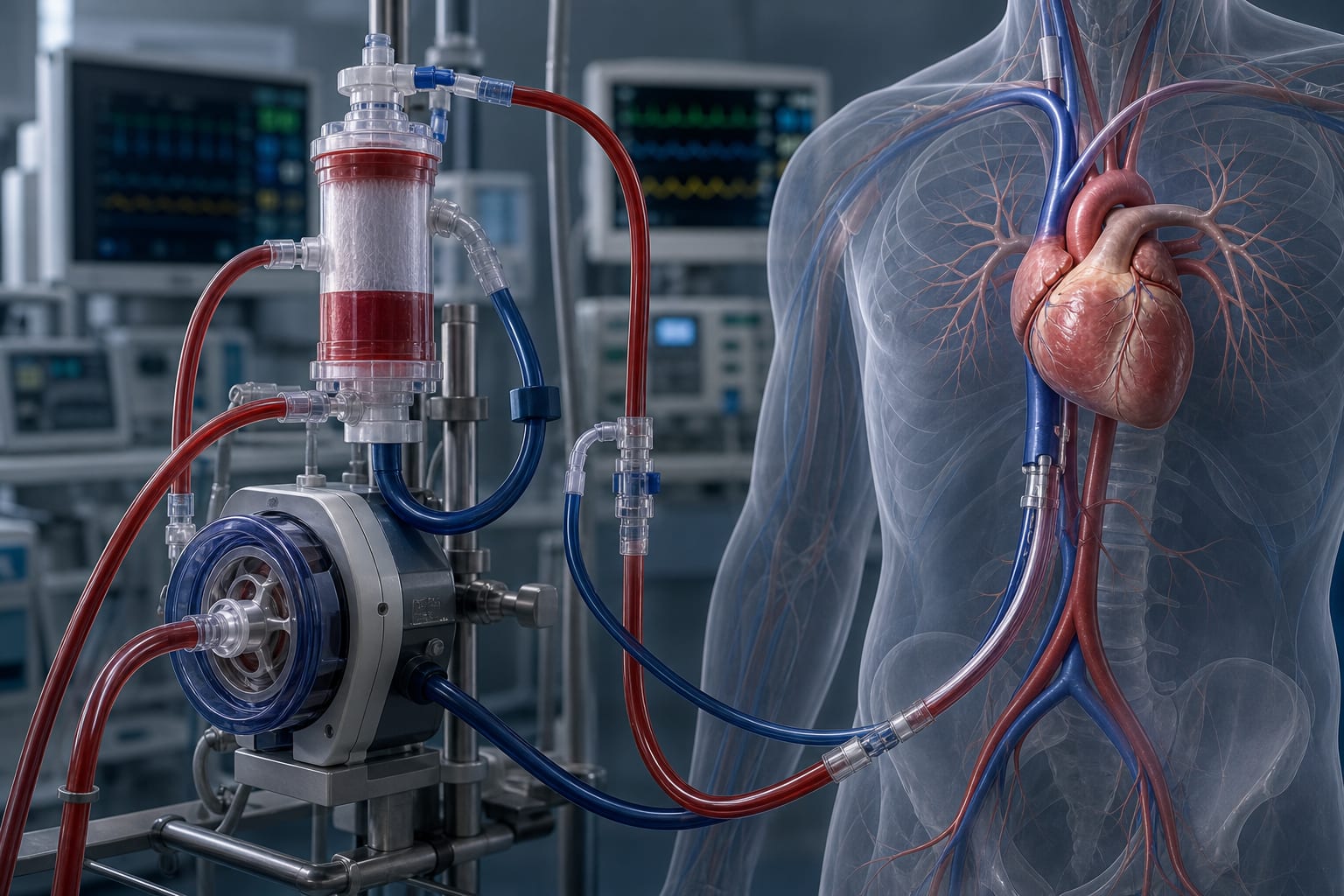
To provide an overview of venoarterial extracorporeal membrane oxygenation (VA ECMO) as a temporary mechanical circulatory support strategy for adult patients with cardiogenic shock.
Approach:
Overview of VA ECMO: VA ECMO is used for patients with cardiogenic shock who do not respond to less invasive treatments. It provides biventricular support by draining blood from the venous system, oxygenating it, and returning it to the arterial system.
Complications and Management: Complications include bleeding, acute kidney injury, stroke, and limb ischemia. Management is complex due to varying underlying causes of cardiogenic shock and patient comorbidities.
Physiological Changes: VA ECMO causes significant physiological changes, including reduced pulmonary blood flow and coagulopathy, which must be managed carefully.
Key Findings:
Mortality during initial hospitalization for cardiogenic shock remains high at approximately 50%.
VA ECMO is resource-intensive and requires expertise from multiple specialties.
There is a lack of robust literature on VA ECMO, with most guidance based on retrospective data and expert opinion.
Interpretation:
VA ECMO is a critical intervention for patients with cardiogenic shock but carries high morbidity and mortality rates.
Limitations:
Limited literature and reliance on retrospective data.
High complexity in patient management and varying outcomes based on underlying causes of cardiogenic shock.
Conclusion:
VA ECMO represents a significant advancement in the management of cardiogenic shock.