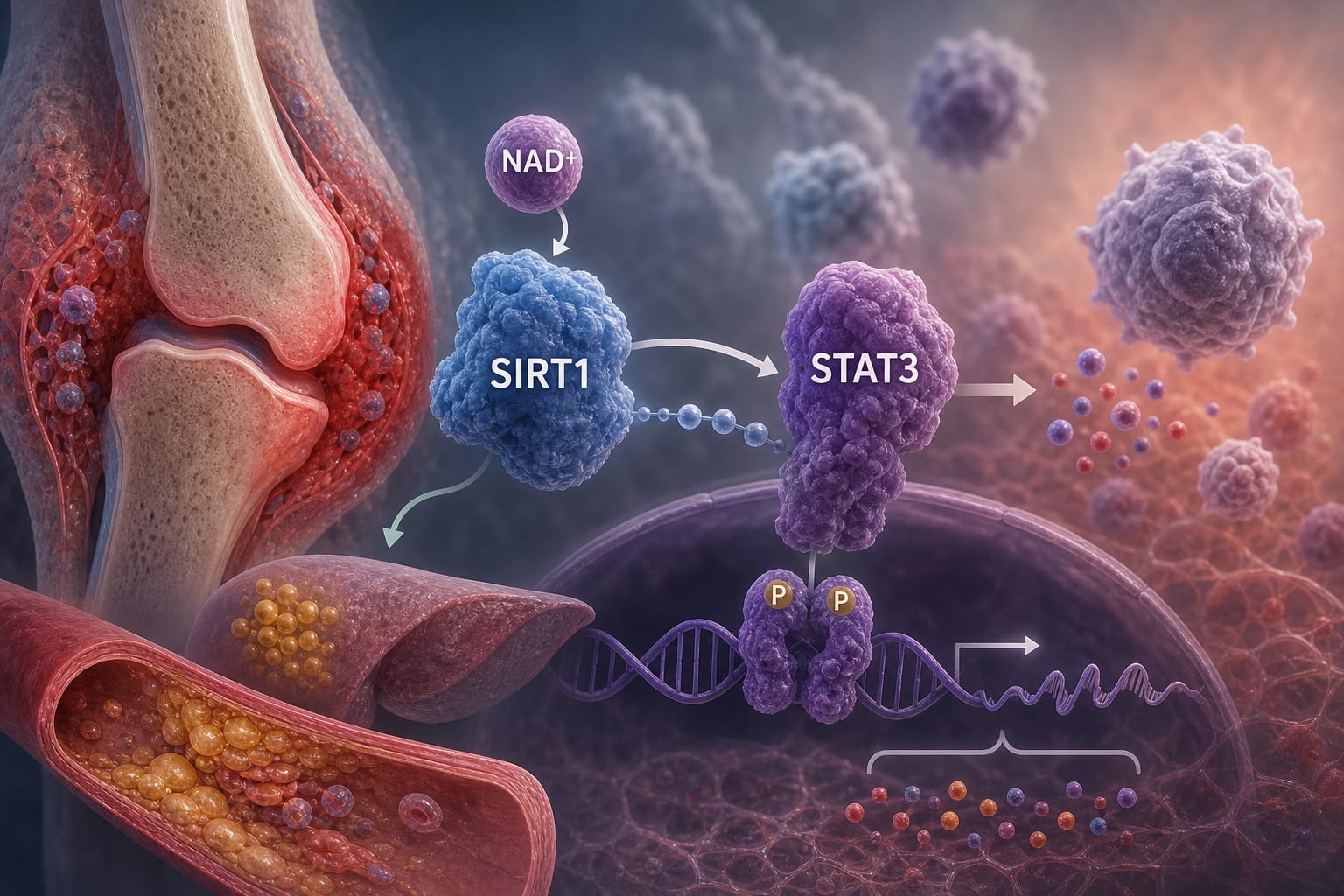
The SIRT1/STAT3 axis as a central regulator of immune, inflammatory, and lipid metabolic dysregulation in rheumatoid arthritis: therapeutic implications - Summary - MDSpire
Advertisement
The SIRT1/STAT3 axis as a central regulator of immune, inflammatory, and lipid metabolic dysregulation in rheumatoid arthritis: therapeutic implications
To propose the SIRT1/STAT3 axis as a central regulator of immune, inflammatory, and lipid metabolic dysregulation in rheumatoid arthritis (RA) and to discuss therapeutic strategies targeting this axis, highlighting its significance in improving patient outcomes.
Key Findings:
RA is characterized by chronic inflammation, joint destruction, and dyslipidemia, contributing to increased cardiovascular disease risk, particularly through altered lipid profiles.
The SIRT1/STAT3 pathway plays a crucial role in linking immune dysregulation and lipid metabolism disorders in RA.
Chronic inflammation and metabolic stress suppress SIRT1 and hyperactivate STAT3, creating a feedback loop that exacerbates RA pathology.
Interpretation:
The SIRT1/STAT3 axis represents a critical intersection of immune and metabolic dysfunction in RA, suggesting that targeting this pathway could significantly improve treatment outcomes for patients.
Limitations:
The review primarily synthesizes existing evidence without presenting new experimental data, and further research, including clinical trials, is needed to validate the proposed therapeutic strategies targeting the SIRT1/STAT3 axis.
Conclusion:
Targeting the SIRT1/STAT3 axis may provide a unified approach to manage both inflammation and metabolic abnormalities in RA, potentially leading to better patient outcomes.