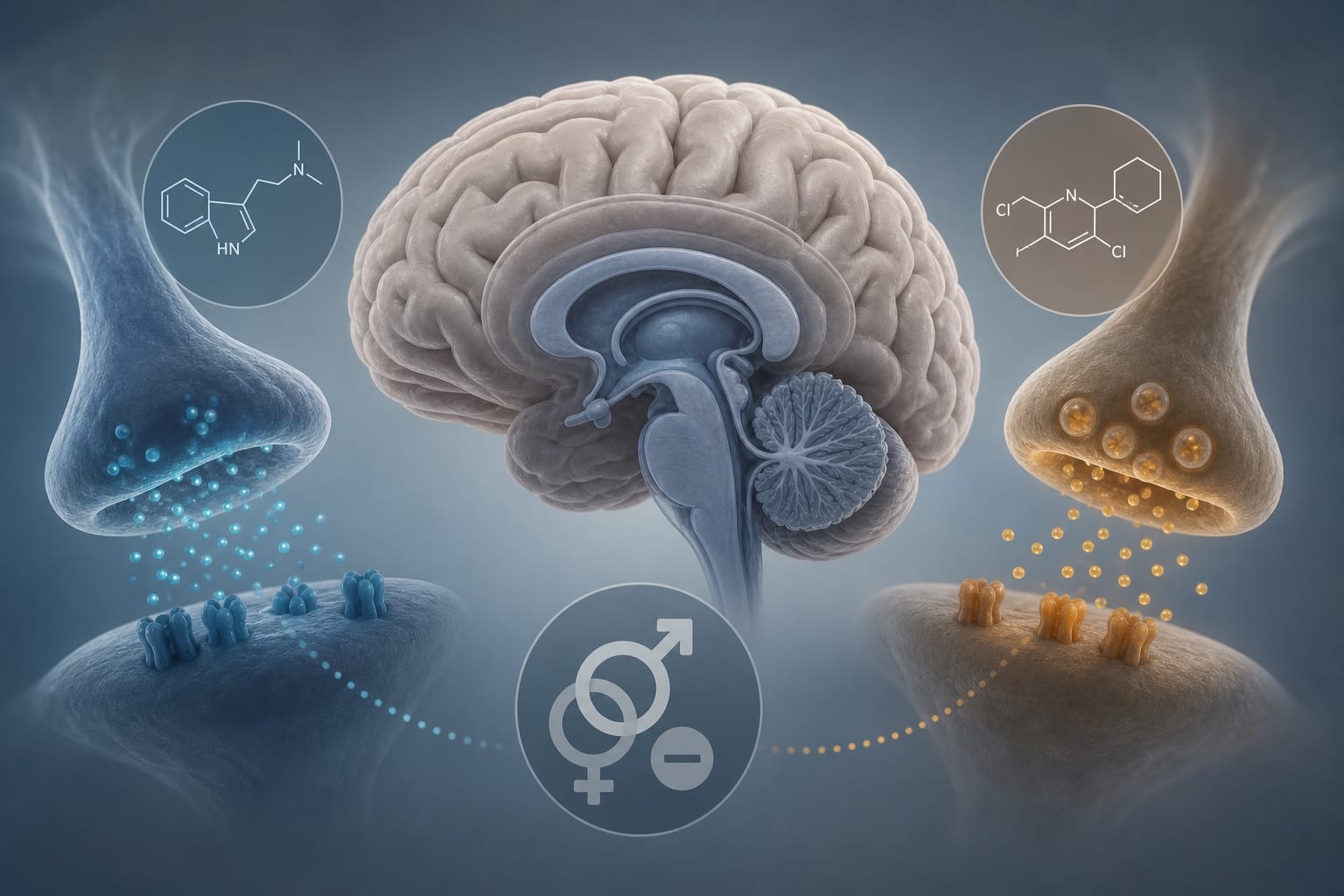
Sexual dysfunction associated with antidepressants and antipsychotics: a structured narrative review of mechanisms, assessment, and personalized management - Summary - MDSpire
Advertisement
Sexual Dysfunction Linked to Antidepressant and Antipsychotic Use: A Comprehensive Review of Mechanisms, Evaluation, and Tailored Treatment Approaches
To provide an integrated overview of sexual dysfunction associated with antidepressants and antipsychotics, focusing on mechanisms, clinical assessment, and management.
Approach:
Review Design: Structured narrative review synthesizing mechanisms, assessment, comparative sexual tolerability, and management strategies.
Literature Search: Search conducted on PubMed/MEDLINE, Scopus, Web of Science, and Google Scholar for relevant literature published up to May 2026.
Key Findings:
Sexual dysfunction is common in patients with depressive and psychotic disorders and may be present before treatment.
Strongly serotonergic antidepressants (e.g., SSRIs) are associated with higher risk of treatment-emergent sexual dysfunction.
Prolactin-elevating antipsychotics generally have a less favorable profile regarding sexual dysfunction.
Direct questioning and validated instruments are necessary for reliable detection of sexual dysfunction.
Interpretation:
Sexual dysfunction should be regarded as a meaningful clinical outcome in psychopharmacology, necessitating systematic assessment in treatment planning.
Limitations:
The review is not a systematic review or meta-analysis and does not claim systematic comprehensiveness.
No formal risk-of-bias assessment or quantitative synthesis was performed.
Conclusion:
Sexual dysfunction is a significant issue in psychotropic treatment, and understanding its mechanisms and management is crucial for patient care.