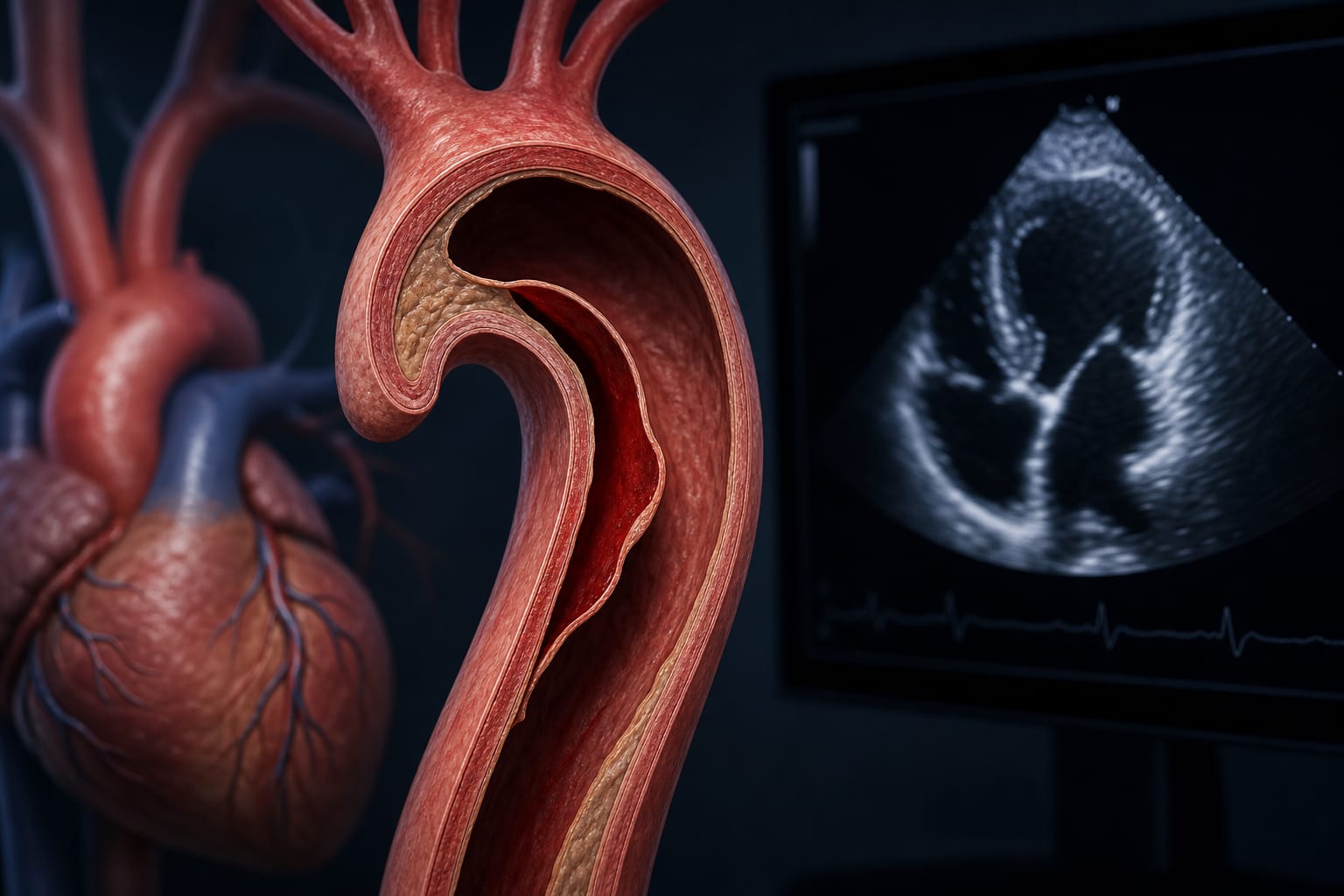
Graham’s death from aortic dissection raises questions about preventing the rare disorder
-
By
-
Elizabeth Cooney
-
July 15, 2026
Objective:
To highlight the seriousness of aortic dissection and the challenges in its diagnosis and reporting.
Approach:
- Expert Opinions: Experts discuss the importance of imaging studies in identifying risks associated with aortic dissection.
- Risk Factors: The article outlines various risk factors for aortic dissection, including family history and genetic syndromes.
- Preventive Strategies: Potential strategies for prevention include improved risk prediction using AI and monitoring through imaging.
Key Findings:
- Aortic dissection is a medical emergency that can develop over years and is often preceded by a dilated aorta.
- Family history is a significant risk factor, with 1 in 5 patients having a first-degree relative with similar conditions.
- Aortic dissection is often underdiagnosed, and many cases may go unreported due to lack of autopsies.
- AI may enhance risk prediction by analyzing imaging data for subtle markers of risk.
Interpretation:
Aortic dissection is often underdiagnosed and can lead to sudden death, highlighting the need for improved risk assessment and monitoring.
Limitations:
- Current clinical practices rely heavily on aortic diameter, which may not accurately predict dissection risk.
- Many cases of aortic dissection may go unreported due to lack of autopsies.
Conclusion:
Improving risk prediction and early identification through genetic testing and advanced imaging is an area of ongoing research.
Sources: