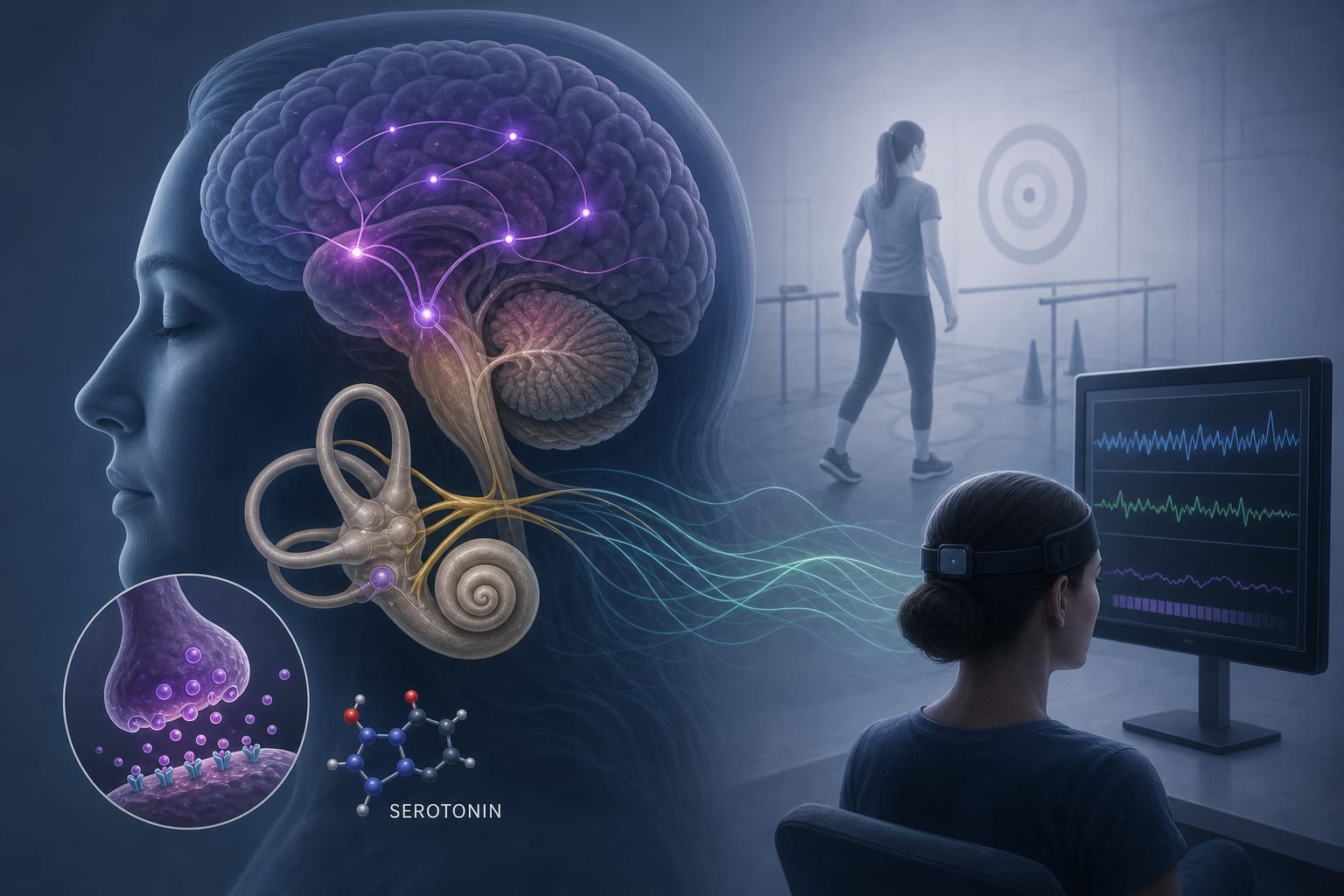
To investigate the efficacy of biofeedback combined with vestibular rehabilitation in patients with vestibular migraine (VM), focusing on clinical outcomes and neurobiochemical markers.
Approach:
Key Findings:
Combined therapy achieved a total effective rate of 94.59%, significantly higher than biofeedback (78.38%), vestibular rehabilitation (75.68%), and routine intervention (67.57%) (p = 0.035).
Group D showed superior improvements in anxiety and depression scores, vertigo disability, and balance function compared to all other groups (all p < 0.001).
Vestibular function parameters improved most substantially with combined therapy.
Serum levels of 5-hydroxytryptamine and γ-aminobutyric acid increased significantly, while calcitonin gene-related peptide and acetylcholine levels decreased in the combined therapy group.
Interpretation:
Combined biofeedback and vestibular rehabilitation therapy provides superior clinical efficacy and favorable neurobiochemical modulation in patients with vestibular migraine.
Limitations:
Study conducted at a single tertiary center, which may limit generalizability.
Short follow-up period of 4 weeks may not capture long-term effects.
Conclusion:
Combined biofeedback and vestibular rehabilitation therapy is a promising non-pharmacological treatment strategy for vestibular migraine.
A VHA study across 11 vendors finds AI-generated primary care notes score lower than clinician-written notes, with the largest deficits in thoroughness, organization, and usefulness