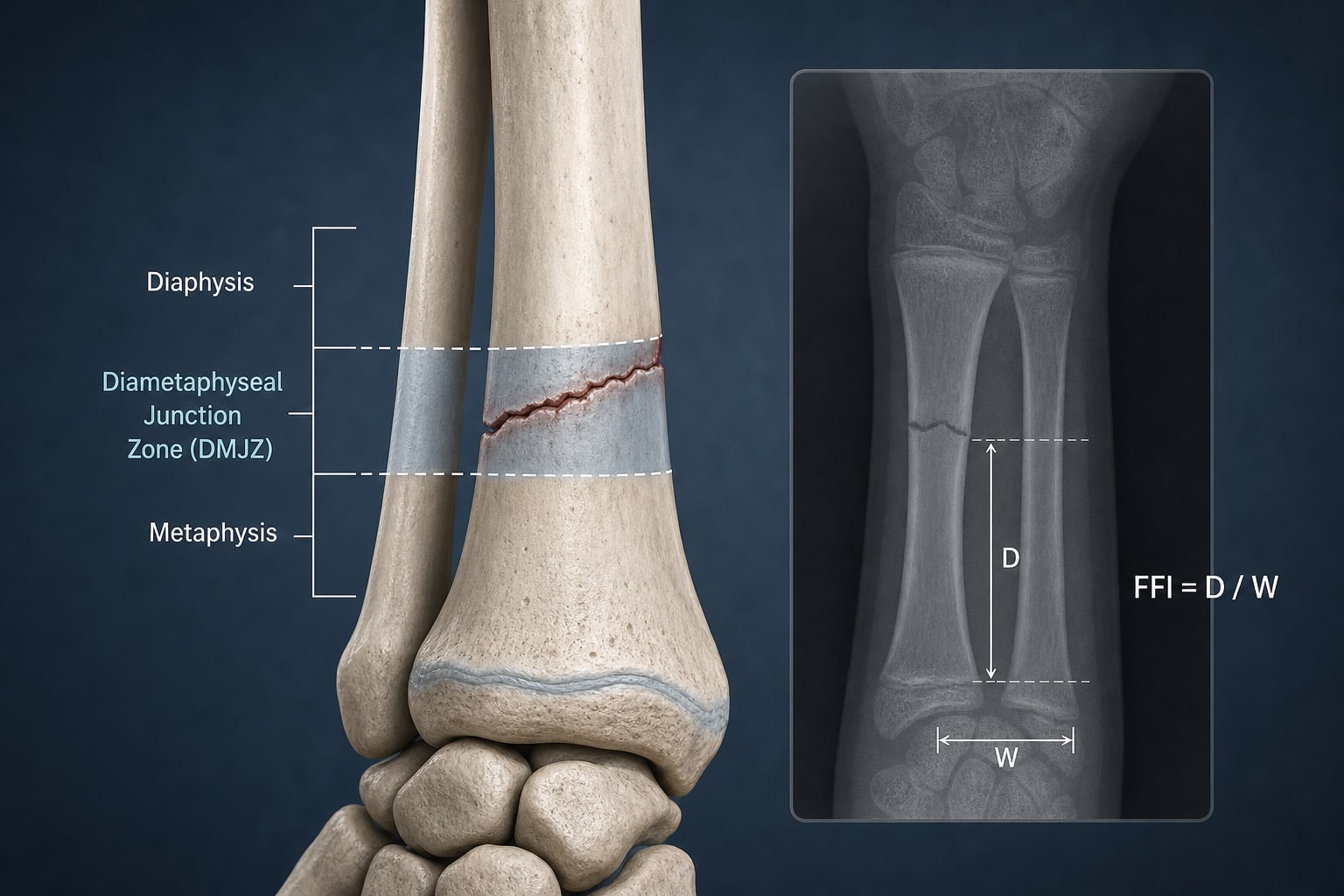
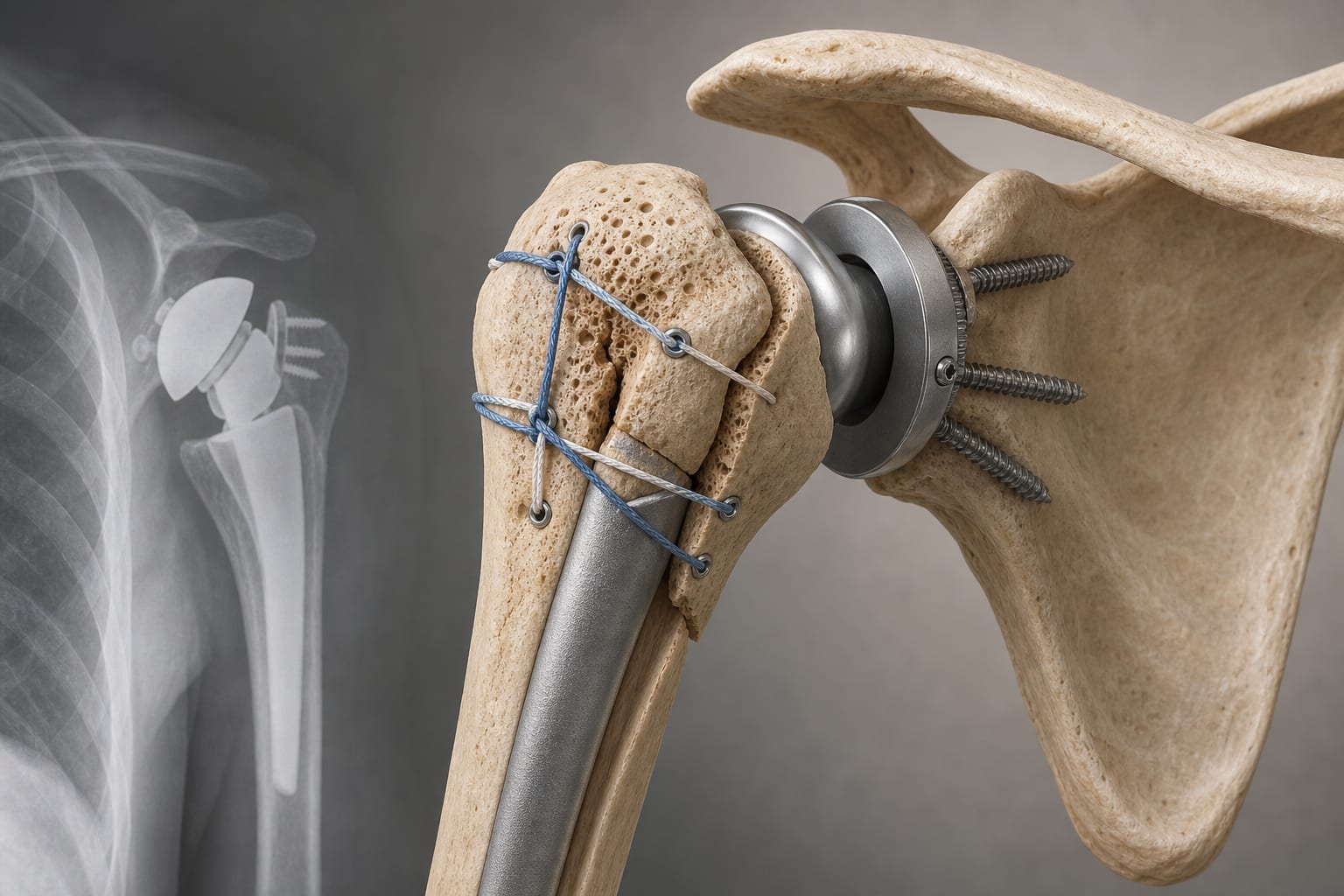
To investigate whether fractures categorized as diaphyseal according to the AO-PCCF but considered to lie within the DMJZ as defined by an FFI between 1 and 2 can be stabilized with conventional ESIN technique and to compare outcomes with TEPIK fixation.
Approach:
Surgical Techniques: Comparison of outcomes between conventional ESIN and TEPIK fixation in treating DMRF+.
Key Findings:
Of 516 DMRF identified, 75 patients met inclusion criteria, with 11 DMRF+ included in the analysis.
ESIN reduced angulation in the lateral radiograph from 37° to 3° (p = 0.0032).
TEPIK reduced angulation in the lateral radiograph from 17° to 1° (p = 0.048).
One patient treated with ESIN developed a pseudarthrosis.
Interpretation:
The study provides insights into the effectiveness of ESIN and TEPIK in treating DMRF+ fractures, highlighting differences in radiographic outcomes.
Limitations:
Small sample size of 11 DMRF+ cases.
Retrospective nature may introduce bias.
Lack of randomization in surgical technique selection.
Conclusion:
The findings suggest that both ESIN and TEPIK can be effective in managing DMRF+, but further studies are needed to validate these results.
These 10 states have paid family or medical leave programs and health, wellness, peer support, or monitoring resources available to physicians or other health professionals.
A 14-year-old soccer player achieved fracture consolidation and clearance for unrestricted sports participation at 8 weeks, although the treatment's contribution remains uncertain.