Polyarteritis nodosa and antiphospholipid syndrome: a systematic review of a rare and challenging overlap between vasculitis and thrombotic vasculopathy - Summary - MDSpire
Advertisement
Polyarteritis nodosa and antiphospholipid syndrome: a systematic review of a rare and challenging overlap between vasculitis and thrombotic vasculopathy
To systematically analyze all reported cases of coexisting Polyarteritis Nodosa (PAN) and Antiphospholipid Syndrome (APS), focusing on clinical presentation, laboratory findings, imaging, histopathology, therapeutic strategies, and outcomes to enhance understanding of their relationship.
Approach:
Search Strategy: A comprehensive literature search was performed in PubMed/MEDLINE, Scopus, and Web of Science, covering studies from inception through March 2023.
Key Findings:
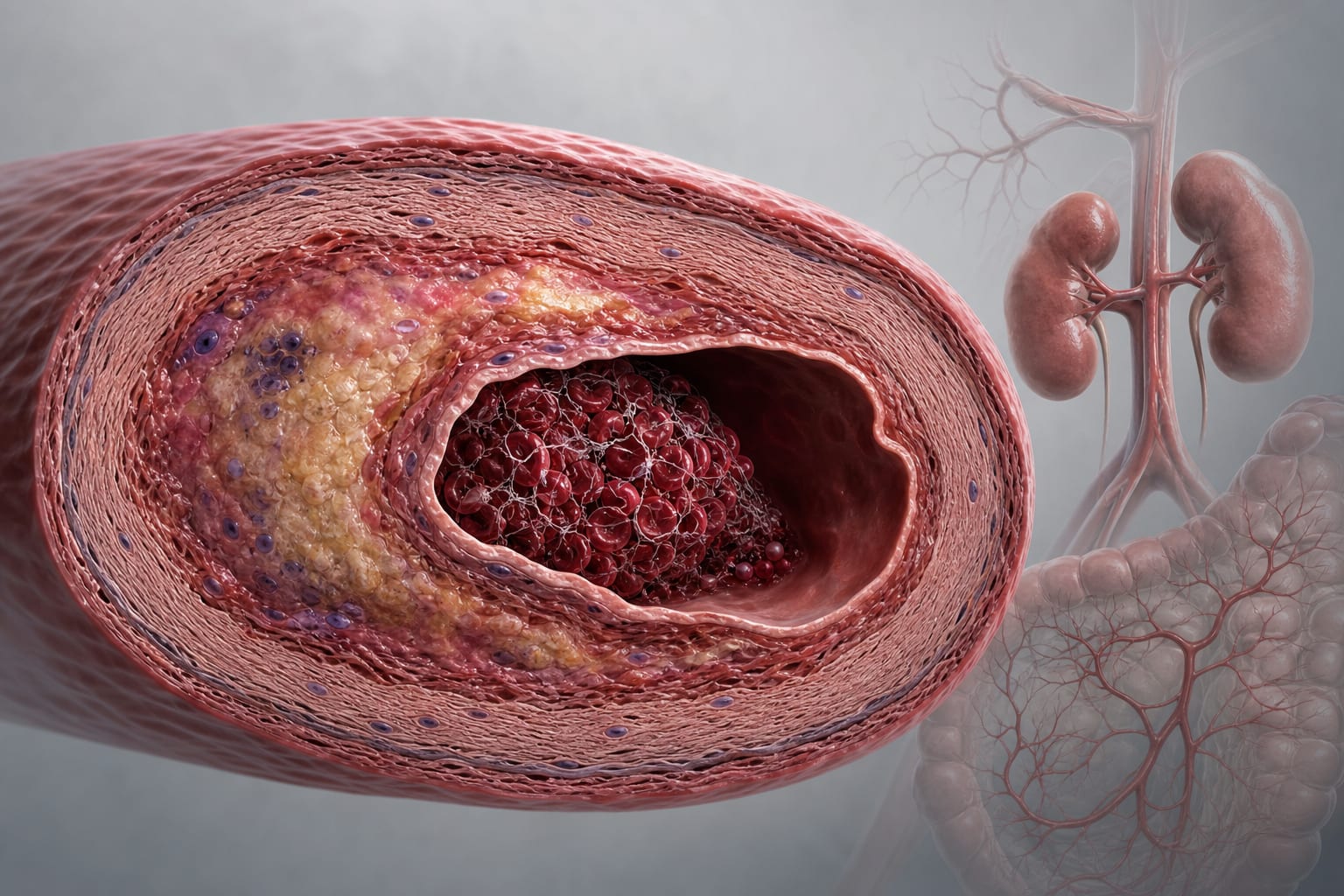
PAN is a necrotizing vasculitis characterized by inflammation and organ ischemia.
APS is an autoimmune thrombotic disorder associated with antiphospholipid antibodies.
The coexistence of PAN and APS complicates diagnosis and management due to overlapping clinical manifestations.
Antiphospholipid antibodies may be present in patients with primary systemic vasculitides, raising questions about their role in vascular injury.
Interpretation:
The relationship between PAN and APS is complex, with significant implications for diagnosis and treatment due to overlapping symptoms and mechanisms.
Limitations:
The literature primarily consists of isolated case reports and small case series, which may limit the generalizability of the findings.
Conclusion:
A systematic synthesis of the available evidence is warranted to better characterize the overlap between PAN and APS.