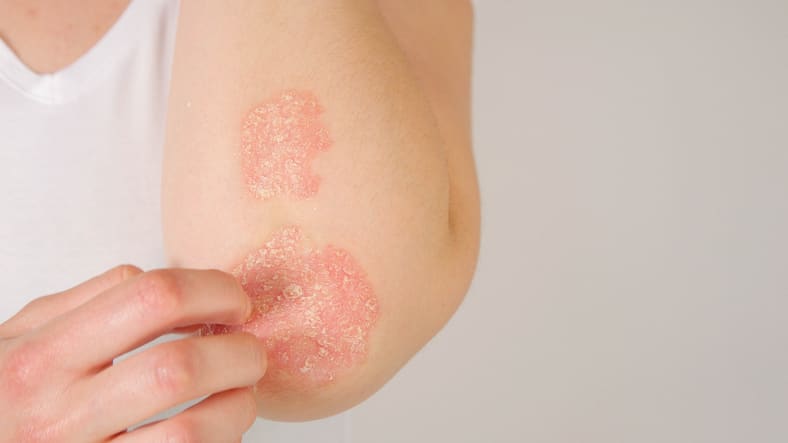
To investigate whether local heat reduces psoriasis-like inflammation and to identify the molecular pathways involved.
Approach:
Experimental models: Researchers tested heat treatment in cultured human keratinocytes and an imiquimod-induced mouse model, alongside analyses of human skin samples and public gene-expression datasets.
Mechanistic tests: They examined CRYAB, NF-κB signaling, and the roles of HSF1, METTL14, m6A RNA modification, and IGF2BP2 using recombinant protein, gene silencing, and overexpression.
Key Findings:
In mice, daily local heat at 41 °C for 20 minutes was associated with lower PASI scores, less epidermal thickening and inflammation, and lower spleen-to-body weight ratios than imiquimod alone.
Heat reduced inflammatory mediators and NF-κB pathway activity in keratinocytes; 41 °C produced the strongest suppression among tested temperatures.
CRYAB expression was lower in psoriatic lesions than in normal skin. Recombinant CRYAB reduced disease measures in mice, while CRYAB silencing diminished heat’s inhibitory effects.
The results support a pathway in which heat activates HSF1 and METTL14, promoting m6A modification of CRYAB messenger RNA; IGF2BP2 also contributed to regulation of CRYAB expression.
METTL14 silencing largely reversed heat-associated improvements in mice. Public datasets showed increased CRYAB expression after several psoriasis treatments.
Interpretation:
The authors concluded that the findings provide a mechanistic basis for the potential use of local hyperthermia as an adjunctive psoriasis treatment.
Limitations:
Functional testing was primarily conducted in cultured keratinocytes and mice with experimentally induced psoriasis-like dermatitis; animal groups were relatively small.
The complete heat-responsive pathway was not directly validated in patients receiving hyperthermia.
The authors noted that additional RNA methylation regulators may contribute to the observed effects.