PRDM1-mediated epigenetic and transcriptional repression mechanisms: a key hub in immune differentiation, tumor progression, and inflammatory responses - Summary - MDSpire
Advertisement
PRDM1-mediated epigenetic and transcriptional repression mechanisms: a key hub in immune differentiation, tumor progression, and inflammatory responses
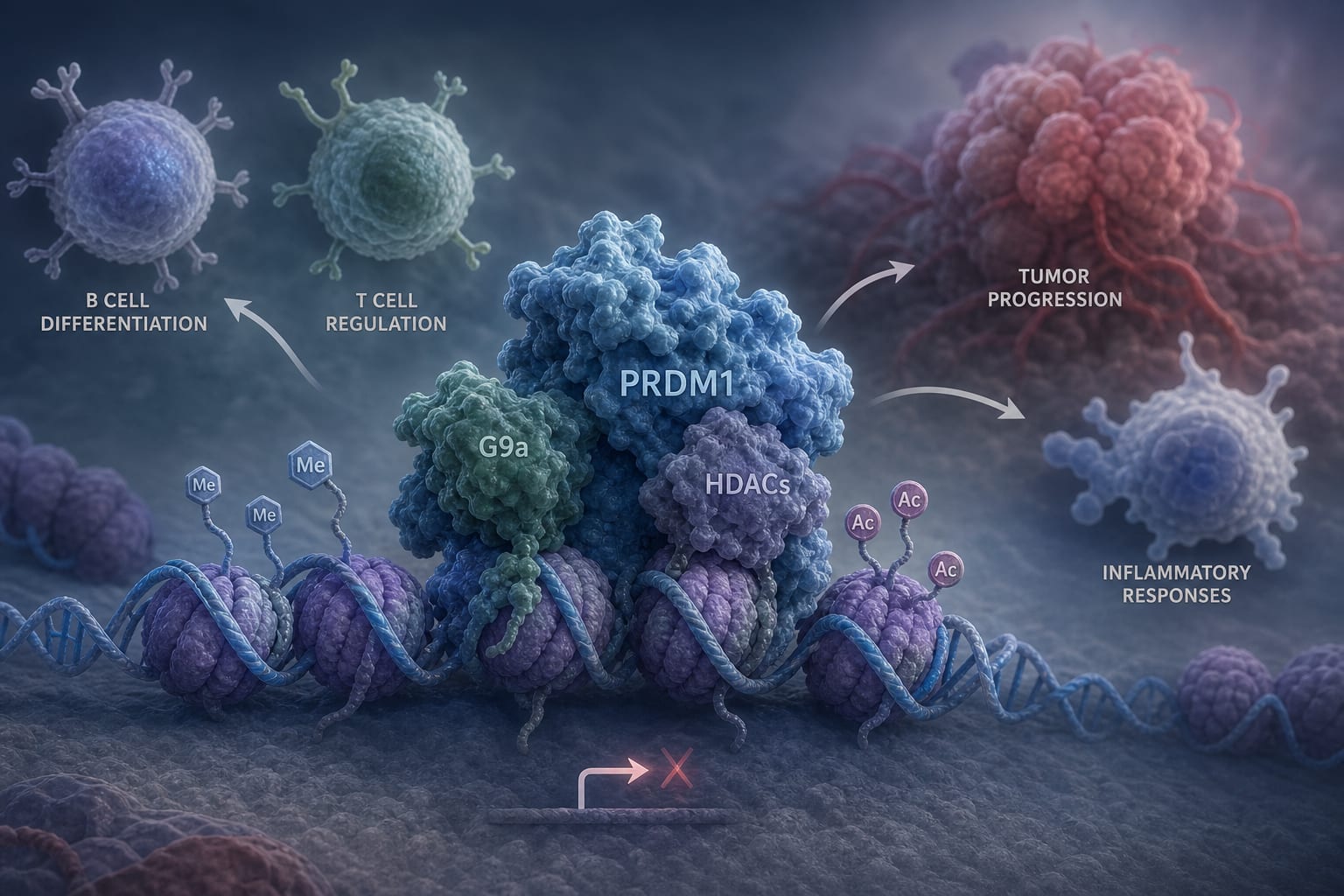
To summarize the structural features of PRDM1 and its regulatory mechanisms in immune regulation, tumor progression, and inflammation-related diseases.
Approach:
Key Findings:
PRDM1 is essential for B cell differentiation and modulates T-cell effector functions.
Dysregulation of PRDM1 is associated with autoimmune diseases such as lupus and rheumatoid arthritis.
Single nucleotide polymorphisms in PRDM1 may serve as biomarkers for disease diagnosis and prognosis.
Interpretation:
PRDM1 functions as a regulatory node in immune and tumor biology, with context-dependent roles in tumor suppression and promotion.
Limitations:
The functional heterogeneity of PRDM1 across different cell types and tissue microenvironments is not fully understood, which may impact its role in disease.
The mechanisms by which PRDM1 mediates epigenetic regulation in cancer remain unresolved.
Conclusion:
This review provides a basis for understanding PRDM1's roles in disease mechanisms.