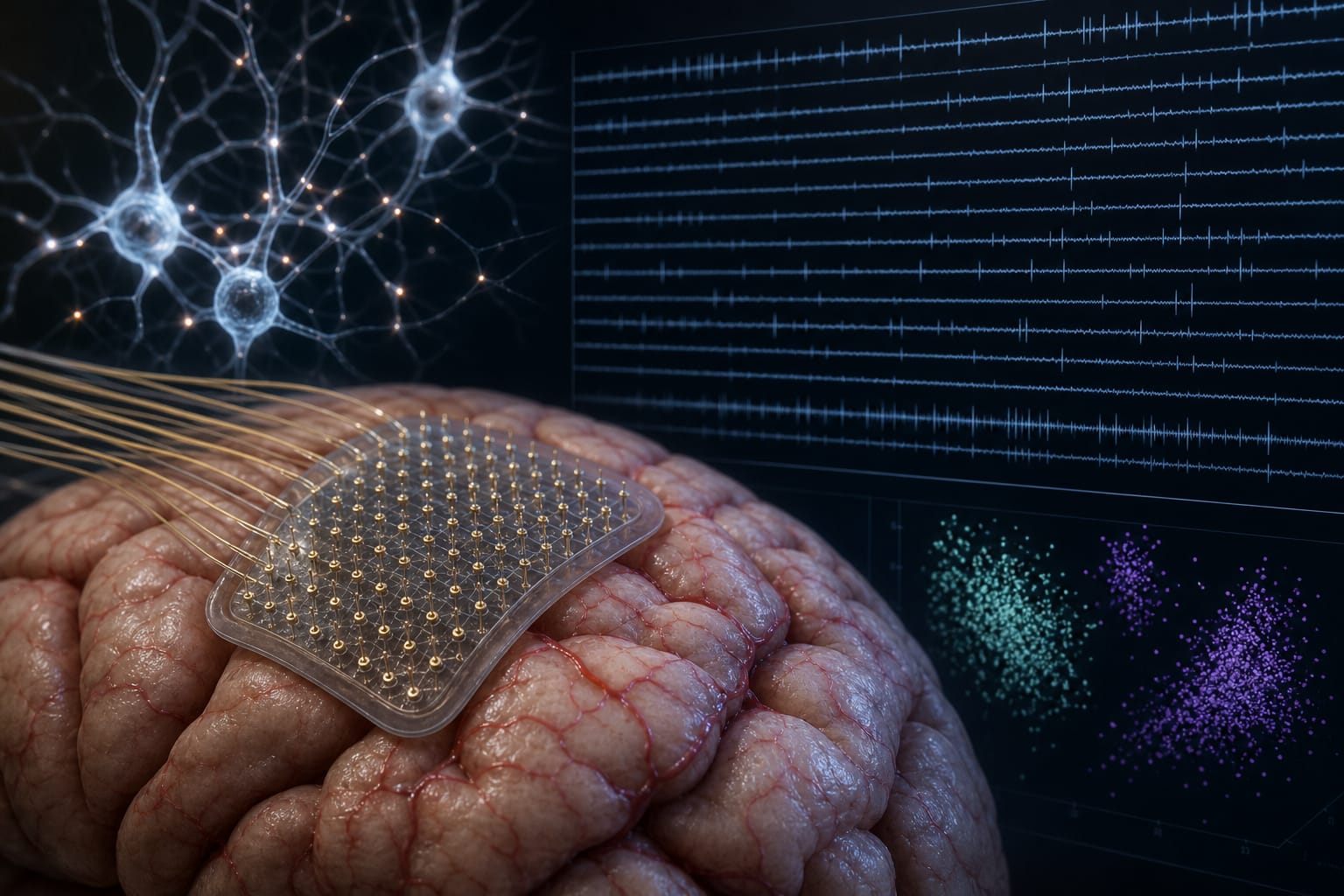
To discuss the potential of laminar fMRI in bridging the gap between nano-scale mechanisms of epilepsy and macro-scale clinical observations, emphasizing its significance in improving treatment outcomes.
Key Findings:
Drug-resistant epilepsy affects 25%-30% of patients, highlighting limitations in current treatments.
Antiseizure medications primarily target nano-scale structures but are assessed at the macro-scale, creating a disconnect in understanding.
Microcircuits, particularly deep cortical layers, play a critical role in seizure generation and propagation.
Laminar fMRI can provide insights into layer-specific mechanisms of seizure activity, potentially revealing new therapeutic targets.
Interpretation:
The findings suggest that laminar fMRI could enhance understanding of epilepsy by linking micro-scale dysfunctions to macro-scale seizure activity, potentially improving treatment strategies through targeted interventions.
Limitations:
The review is based on existing literature and may not include all recent advancements in the field, which could affect the comprehensiveness of the findings.
The effectiveness of laminar fMRI in clinical settings remains to be fully validated, indicating a need for further research.
Conclusion:
Laminar fMRI holds promise for refining surgical targeting in focal epilepsies and elucidating the mechanistic effects of antiseizure medications, potentially leading to improved epilepsy treatments and guiding future research directions.
Novo Nordisk’s Parkinson’s cell therapy finds a new home at Cellular Intelligence, while base editing, prime editing, and large-insertion genome writing push forward