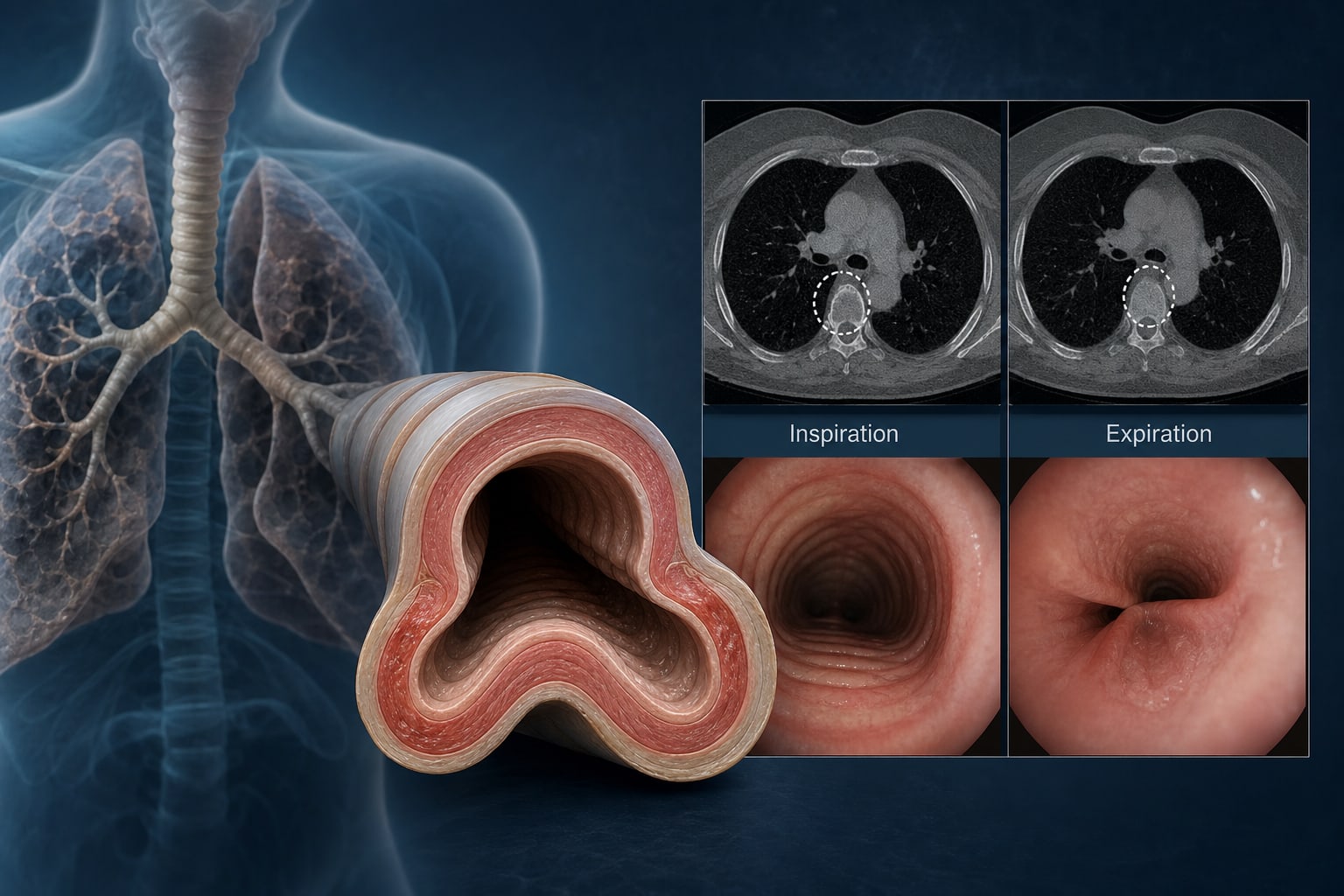
To study excessive dynamic airway collapse (EDAC) and its significance on the clinical course of patients with chronic obstructive pulmonary disease (COPD).
Approach:
Study Design: An observational cross-sectional study involving 75 stable COPD patients diagnosed using GOLD criteria.
Diagnostic Methods: Dynamic bronchoscopy and low-dose dynamic chest CT were used to evaluate airway collapse.
Assessment Tools: Patients were assessed using spirometry, mMRC dyspnea scale, and a simplified Arabic version of the COPD Assessment Test (CAT).
Key Findings:
EDAC is frequently observed in patients with COPD and asthma, contributing to symptoms like dyspnea and wheezing.
Dynamic bronchoscopy is the gold standard for diagnosing EDAC, while low-dose dynamic chest CT is a reliable non-invasive alternative.
Treatment options for EDAC vary based on symptom severity and include conservative, minimally invasive, and surgical techniques.
Interpretation:
Chronic airway inflammation may weaken the tracheobronchial wall, leading to EDAC in COPD patients, which can persist despite optimal medical treatment.
Limitations:
Exclusion of patients with recent COPD exacerbations or other significant comorbidities may limit the generalizability of the findings.
Dynamic CT requires patient cooperation, which may be challenging for elderly or symptomatic patients.
Conclusion:
EDAC may be a significant factor in persistent symptoms among COPD patients, warranting further investigation into its impact on management strategies.