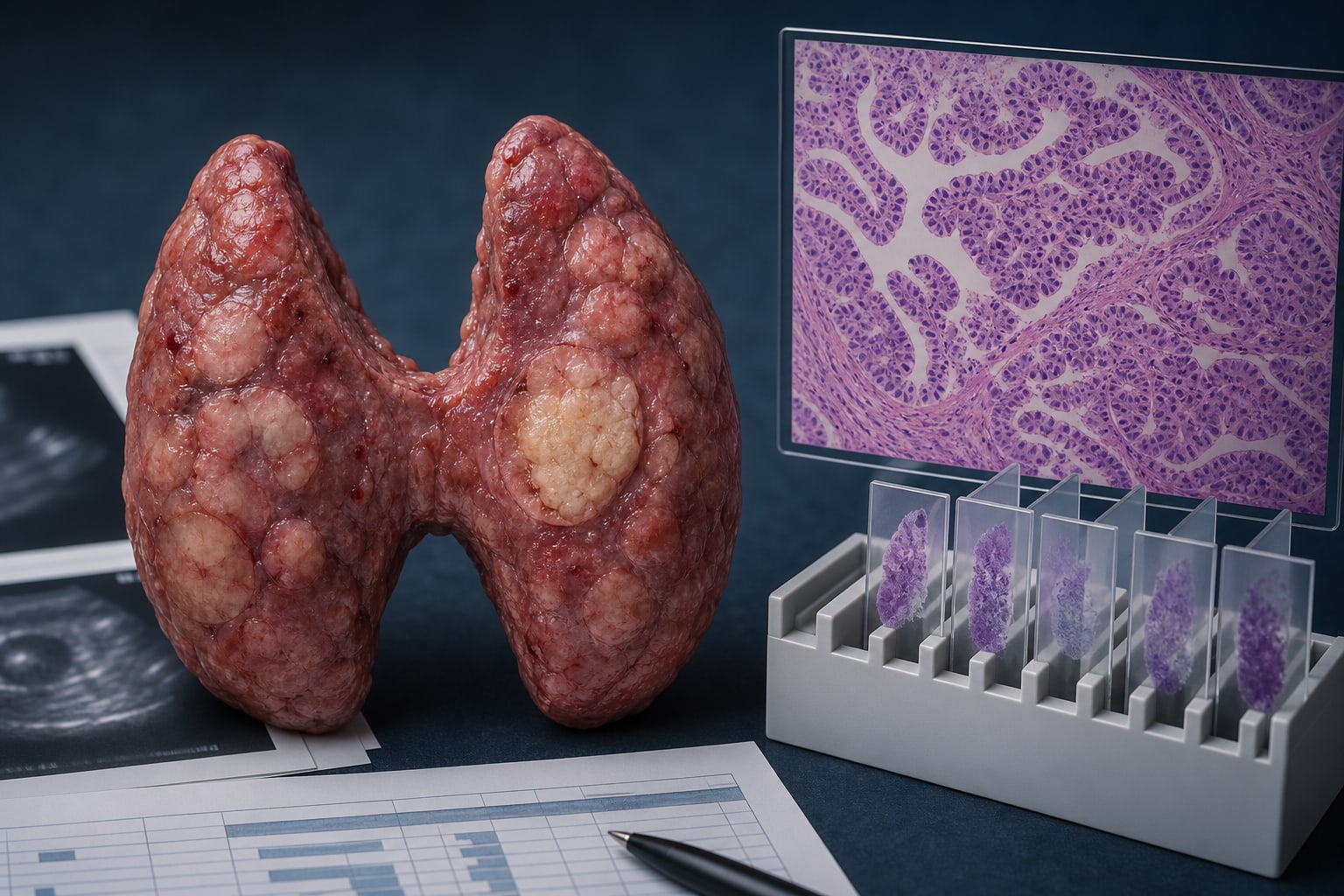
To evaluate the incidence of incidental thyroid carcinoma in patients undergoing surgical treatment for multinodular goiter and analyze associated demographic and clinicopathological characteristics.
Approach:
Study Design: Retrospective study of patients with preoperative diagnosis of multinodular goiter who underwent total or partial thyroidectomy between January 2018 and May 2024.
Data Collection: Clinical, demographic, and pathological data were collected from medical records.
Statistical Analysis: Statistical analyses were performed to explore associations between patient characteristics and the occurrence of incidental thyroid carcinoma.
Key Findings:
Incidental thyroid carcinoma was identified in 32 out of 223 patients, resulting in an overall incidence of 14.4%.
The majority of patients with carcinoma were female (75%), with a female-to-male ratio of 3:1.
Papillary thyroid carcinoma was the most common subtype, accounting for 78.1% of cases.
Patients with carcinoma were significantly younger than those without malignancy (mean age 49.4 vs. 56.2 years; p = 0.008).
Logistic regression indicated that increasing age was associated with a reduced probability of malignancy (OR=0.963; p = 0.009).
Interpretation:
Incidental thyroid carcinoma is a relatively frequent finding in patients undergoing surgery for multinodular goiter, with papillary carcinoma being the predominant subtype.
Limitations:
The study is retrospective and may be subject to selection bias.
The evidence remains insufficient to support modifications to existing screening strategies for thyroid nodules.
Conclusion:
Incidental thyroid carcinoma is common in multinodular goiter surgeries.