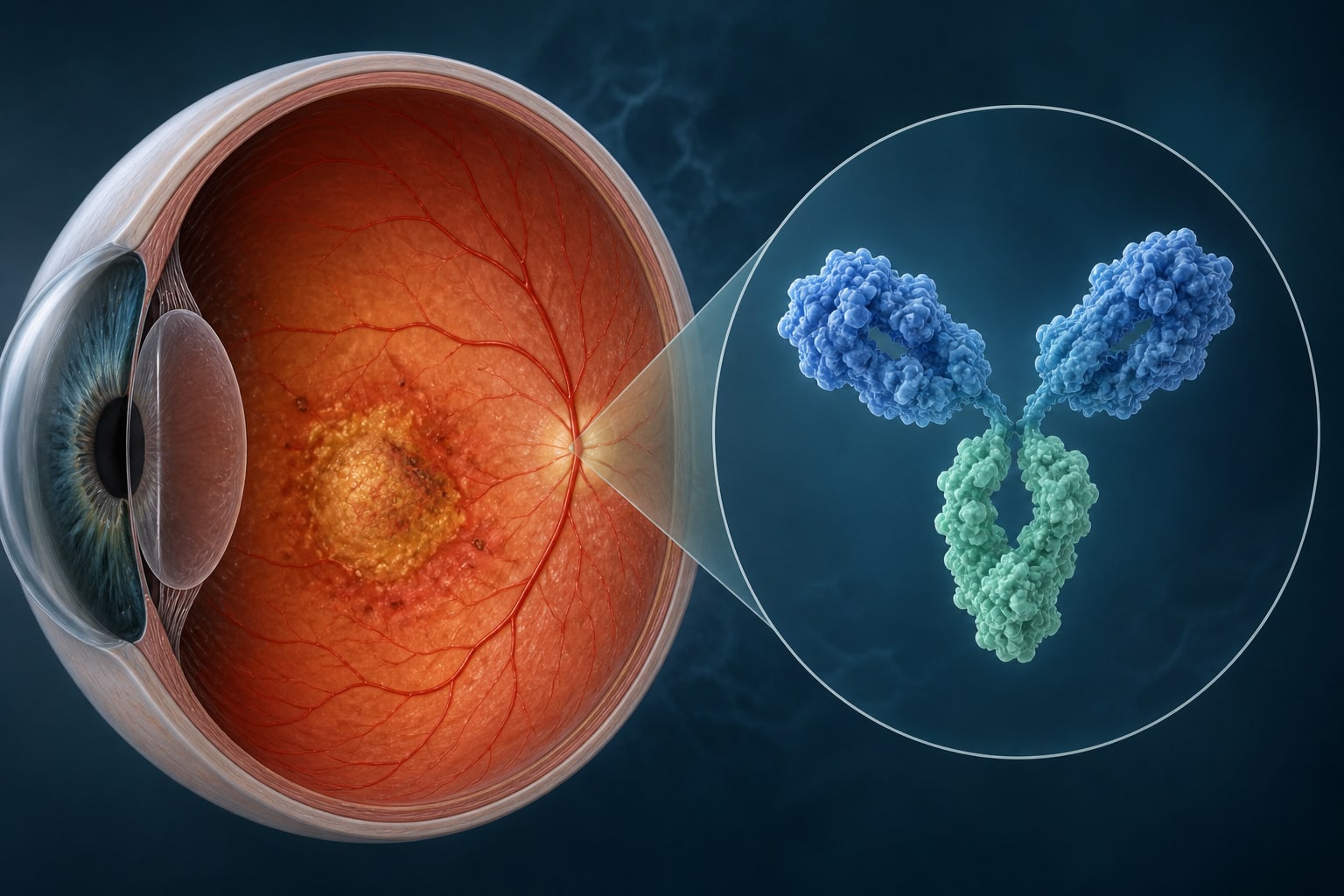
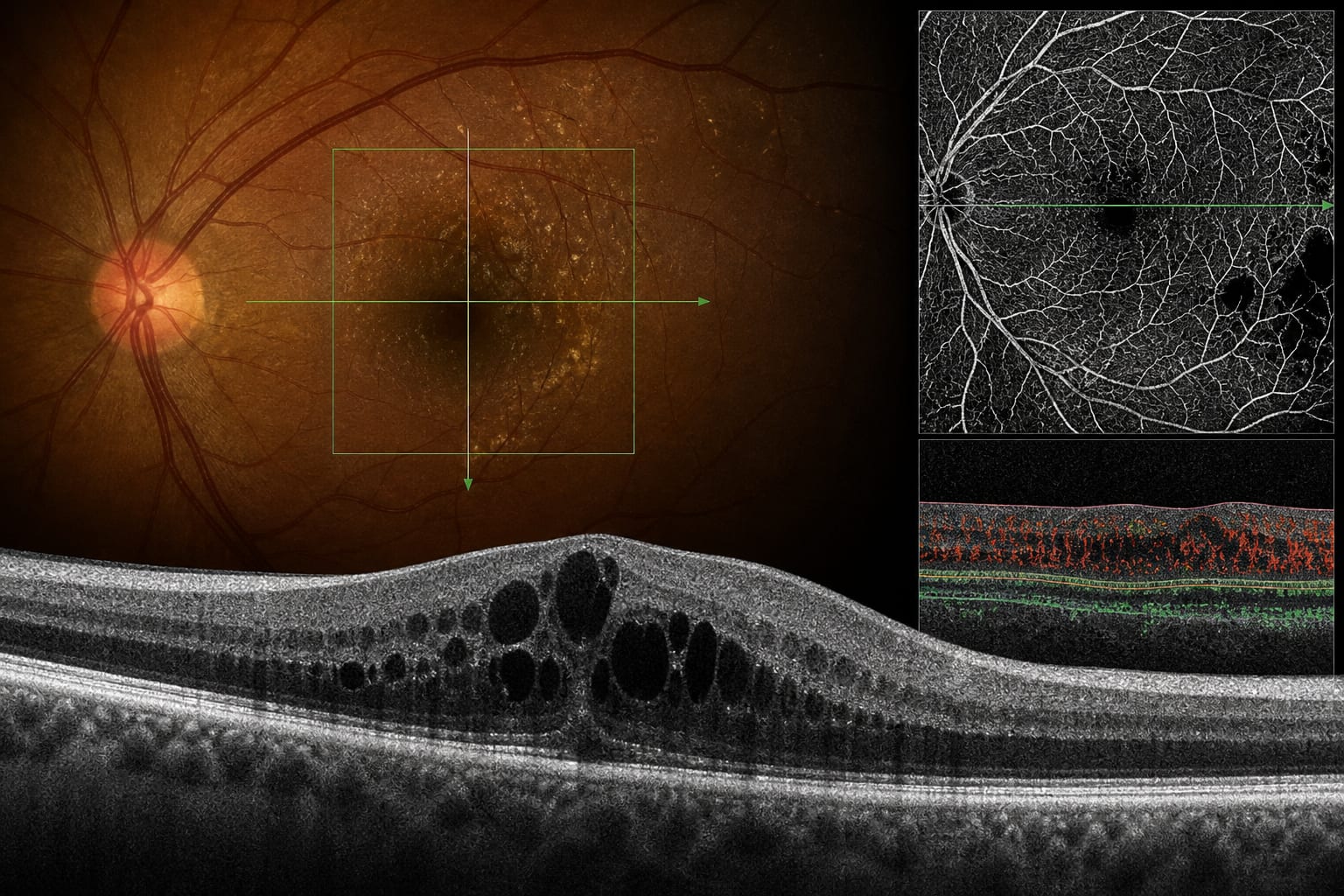
The article examines whether ranibizumab can retain a meaningful role in retinal practice as aflibercept biosimilars become more available, affordable, and supported by real-world evidence.
Approach:
Market trends: It reviews U.S. anti-VEGF injection patterns from 2017 to 2023, including the decline in ranibizumab use that began before biosimilars entered the market.
Policy and evidence: It summarizes NHS England commissioning recommendations and early U.S. real-world findings for aflibercept-ayyh.
Treatment choice: It discusses ranibizumab’s established clinical role and factors relevant to treatment selection, including response, durability, safety, patient preference, and cost.
Key Findings:
Among 571,545 U.S. anti-VEGF injections recorded from 2017 through 2023, aflibercept 2 mg accounted for 53.6% and ranibizumab for 7.83%.
Aflibercept 2-mg use rose from 361.3 to 913.1 injections per 100,000 ophthalmology encounters, while ranibizumab use fell from 92.4 to 64.0.
NHS England identifies aflibercept 2-mg biosimilars as a best-value first-line option, alongside ranibizumab biosimilars, for wet AMD, DMO, and RVO.
Early U.S. real-world reports of aflibercept-ayyh found stable visual acuity after switching in one study and improved visual and anatomical outcomes in short-term APEX findings; neither reported unexpected safety signals.
Interpretation:
The article describes ranibizumab as an effective treatment with an established evidence base, while noting that its use may face increasing pressure as aflibercept biosimilars gain uptake and offer potential economic advantages. It states that longer-term comparative evidence is still needed and that treatment selection involves clinical and economic considerations beyond efficacy alone.
Limitations:
The aflibercept-ayyh real-world findings described are early and include short-term follow-up.
The article states that longer-term comparative evidence is still needed.
Conclusion:
The article argues that when outcomes are comparable, treatment selection extends beyond efficacy alone and may also involve factors such as response, durability, safety, patient preference, and cost.