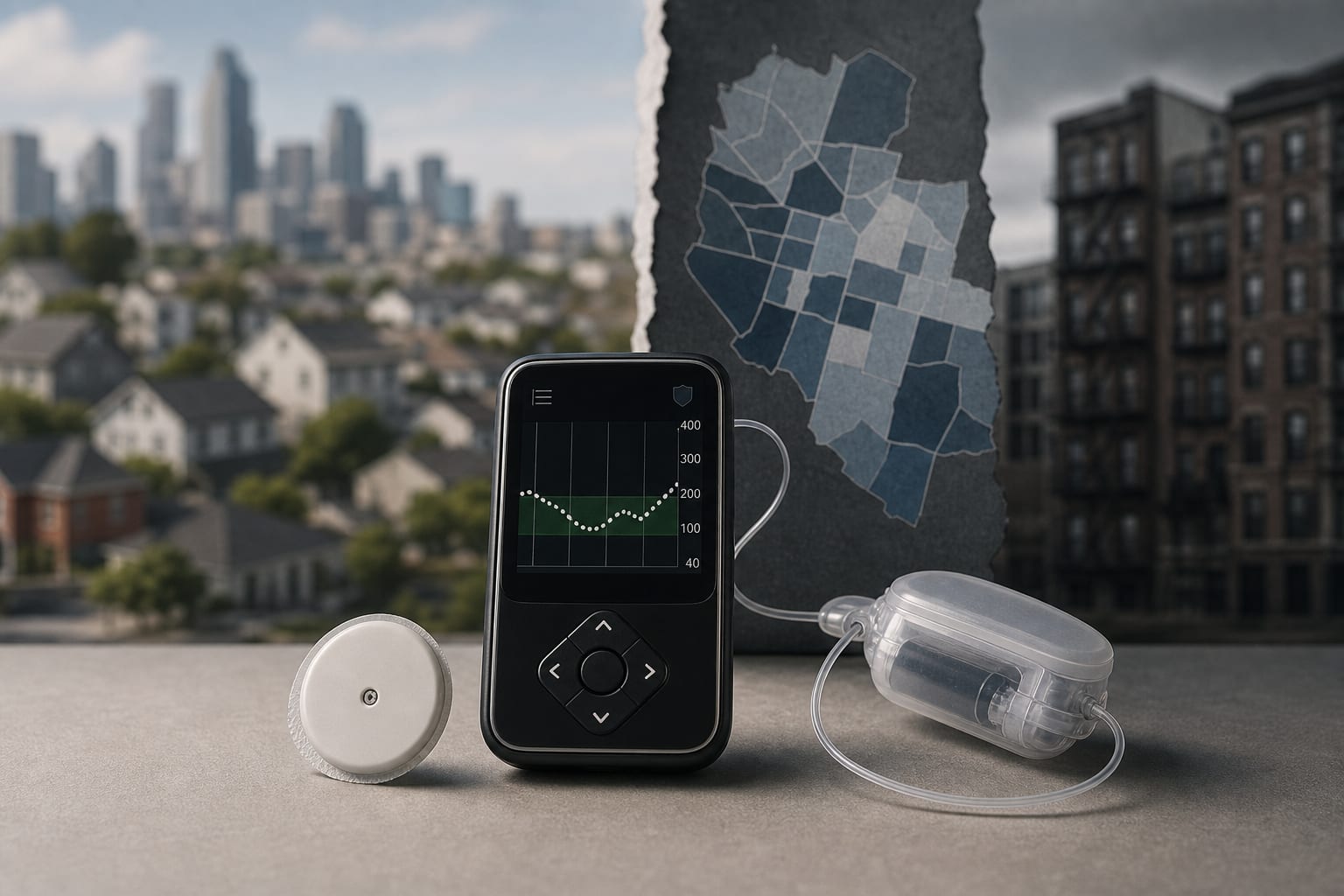
To examine the association between social determinants of health and continuous glucose monitoring (CGM) metrics among individuals using CGM with or without insulin pump technology.
Approach:
Study Population: The study analyzed data from 1743 adults and children using CGM.
Key Findings: The study found that public health insurance was linked to worse glycemic metrics across all age groups, and that Black race and living in disadvantaged neighborhoods were associated with worse metrics in children.
Key Findings:
Access to advanced diabetes technologies alone may not be sufficient to overcome sociodemographic differences in glycemic outcomes.
Disparities in diabetes glycemic control are prevalent among racial and ethnic minority groups and those with social barriers to health.
Interpretation:
Continuous glucose monitoring and insulin pumps require education, support, and access to healthcare providers to effectively improve glycemic control.
Limitations:
The study highlights that diabetes technology does not address underlying social needs such as health literacy and healthcare access.
Conclusion:
The study highlights that diabetes technology does not address underlying social needs such as health literacy and healthcare access.