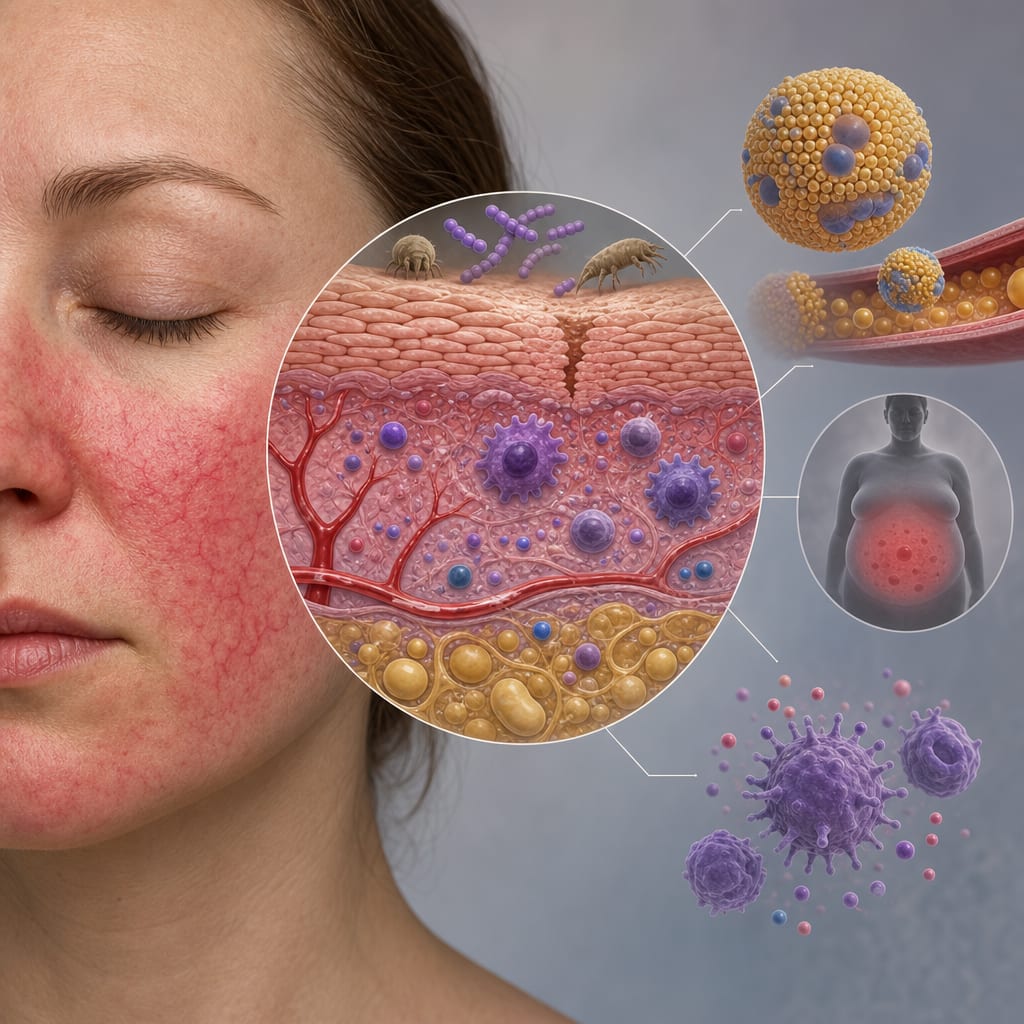
To consolidate current evidence regarding serum lipid profile abnormalities and cutaneous lipid metabolism in patients with rosacea, emphasizing the significance of these factors in developing effective treatment options.
Approach:
Key Findings:
Rosacea is characterized by chronic facial erythema, flushing, and papular lesions, with a prevalence of approximately 5.1%.
Patients with rosacea exhibit significant changes in the composition of facial sebum lipids, particularly an increase in myristic acid and a decrease in long-chain fatty acids.
Dysregulation of lipid metabolism and microbiome imbalance are linked to the pathogenesis of rosacea, contributing to skin barrier dysfunction and impacting patients' quality of life.
Interpretation:
The findings suggest that lipid metabolism disorders may play a critical role in the development and exacerbation of rosacea, indicating potential targets for therapeutic intervention and highlighting the need for further research.
Limitations:
The studies reviewed did not differentiate lipid composition changes between rosacea subtypes.
Further research is needed to establish causal relationships between lipid dysregulation and rosacea pathogenesis, particularly in diverse populations.
Conclusion:
Understanding lipid metabolism and its implications in rosacea may lead to improved treatment strategies, particularly through the use of ceramide-containing moisturizers to restore skin barrier function and address microbiome interactions.
The nurse practitioner profession claims the No. 1 spot across three categories in the U.S. News & World Report 2026 Best Jobs rankings for the third consecutive year.