Type 3 innate lymphoid cells dominate the ILC compartment in endstage lung disease - Summary - MDSpire

Type 3 innate lymphoid cells dominate the ILC compartment in endstage lung disease

  • By

  • Olga Halle

  • Jan-Niklas Falke

  • Claudia Kessemeier

  • Khatuna Lobjanidze

  • Emily Fuchshuber

  • Sean Brüske

  • Svenja Gaedcke

  • Marina Schumacher

  • Londa Dähne

  • Jonas Knaup

  • Maresa Borghorst

  • Sophia Pallenberg

  • Melanie Albrecht

  • Adan Chari Jirmo

  • Jana Bergmann

  • Michelle Paulsen

  • Danny Jonigk

  • Peter Braubach

  • Anna-Maria Dittrich

  • June 10, 2026

  • 0 min

Share

Objective:

To characterize the ILC population in lung and lung-draining lymph nodes from patients with endstage lung diseases and compare it specifically to healthy lung tissue.

Approach:
    Key Findings:
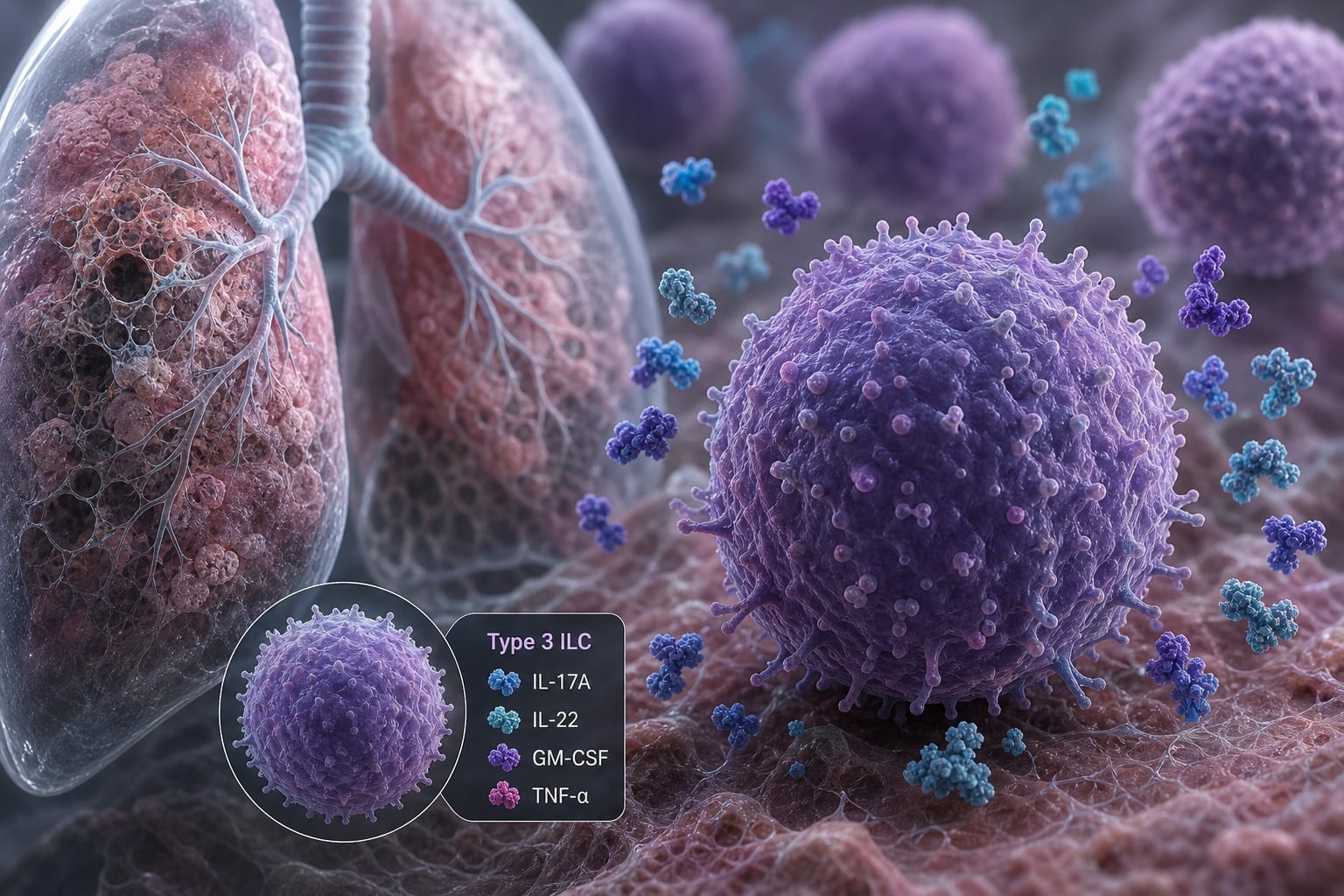
    • Type 3 ILCs dominate the ILC compartment in lungs and LNs from patients with endstage lung diseases, indicating a shift in immune response.
    • Type 1 ILCs are the major ILC population in healthy lung tissue, highlighting the contrast with diseased states.
    • In peripheral blood of clinically stable CF patients, type 2 ILCs are increased compared to healthy controls, suggesting a persistent immune alteration.
    • Differences in PB ILC composition persist for up to 24 months in CF patients receiving CFTR modulator therapy, indicating long-term immunological changes.
    Interpretation:

    The findings indicate that ILCs reflect unique immunological aspects of chronic lung disease, which may not be effectively addressed by current disease-modifying treatments, necessitating further research into targeted therapies.

    Limitations:
    • The study is limited to specific endstage lung diseases and may not be generalizable to other conditions.
    • The analysis is based on a relatively small sample size from specific patient populations, which may introduce biases.
    Conclusion:

    The study highlights the predominance of type 3 ILCs in advanced lung disease and the sustained changes in ILC populations despite treatment, suggesting complex immunological challenges in chronic lung conditions that require innovative therapeutic strategies.

Original Source(s)

Related Content