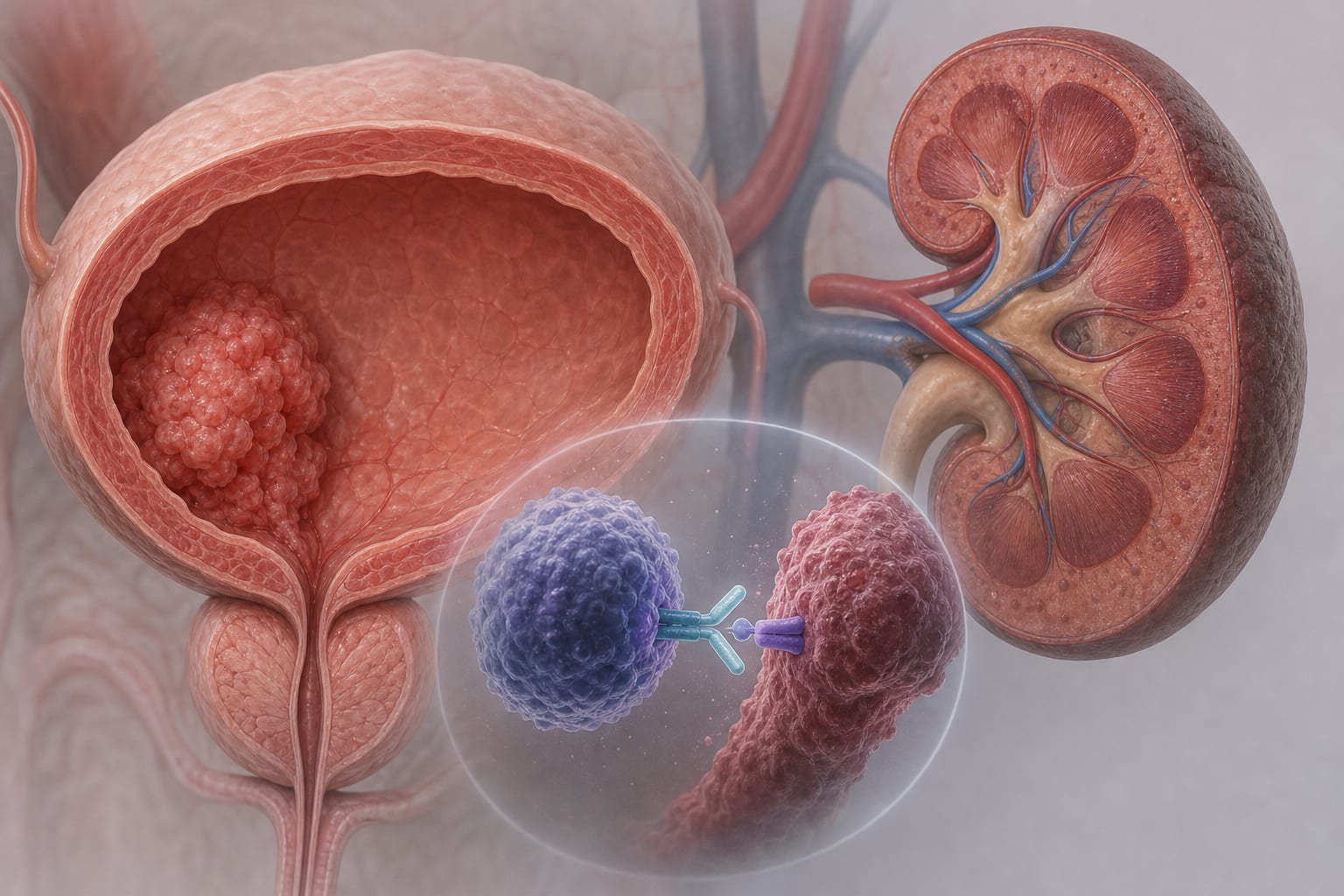
To report a case of a patient with urothelial bladder cancer and chronic kidney disease who experienced immune-related adverse events during nivolumab therapy, highlighting the diagnostic and management challenges.
Approach:
Patient Background: A 72-year-old male with type 2 diabetes mellitus and CKD underwent cystoprostatectomy for locally advanced urothelial carcinoma and received adjuvant nivolumab.
Treatment and Symptoms: After three cycles of nivolumab, the patient developed severe neuromuscular symptoms, leading to hospitalization and treatment with glucocorticosteroids.
Multidisciplinary Management: The patient received coordinated care from oncology, nephrology, endocrinology, neurology, and cardiology teams, addressing complications and managing treatment.
Key Findings:
The patient developed immune-related adverse events that complicated the management of his chronic kidney disease, including severe neuromuscular symptoms.
High-dose intravenous glucocorticosteroids led to clinical improvement, but symptoms recurred during tapering, necessitating careful management.
The case illustrates the diagnostic complexity of distinguishing immune-related adverse events from chronic kidney disease progression.
Interpretation:
Adjuvant nivolumab remains a therapeutic option for cisplatin-ineligible urothelial carcinoma patients with CKD, but requires careful monitoring and management of adverse events.
Limitations:
Limited evidence on the safety of immune checkpoint inhibitors specifically in patients with chronic kidney disease.
Scarcity of literature addressing the challenges of distinguishing immune-related adverse events from chronic kidney disease progression in this patient population.
Conclusion:
This case contributes to the understanding of immune checkpoint inhibitor safety in patients with chronic kidney disease and underscores the importance of multidisciplinary management.