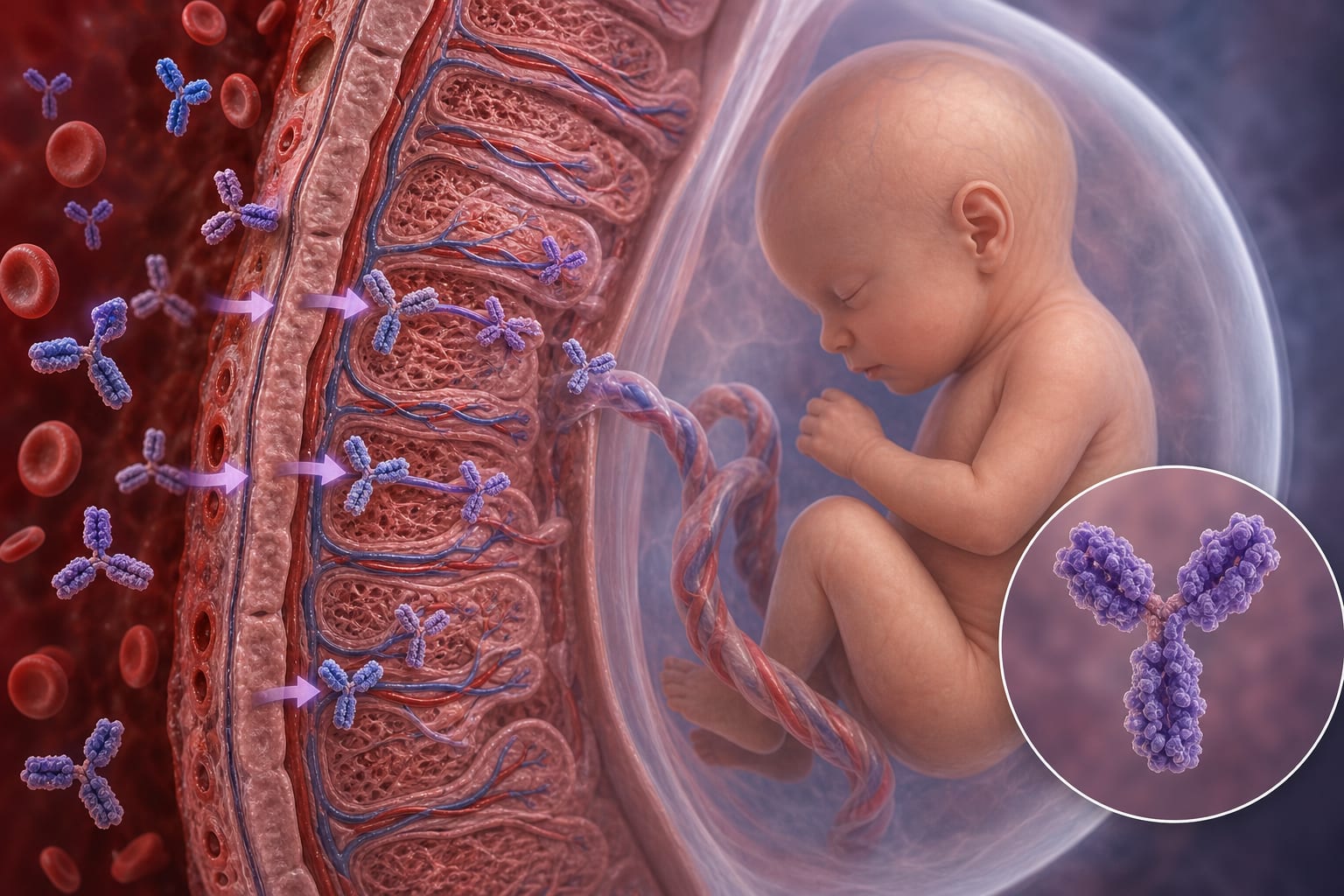
To determine the serological levels of IgG antibodies transmitted to newborns and their role in neutralization of SARS-CoV-2 after maternal vaccination.
Approach:
Study Design: Cohort study of 117 pregnant women assessing IgG antibodies against SARS-CoV-2 in maternal, umbilical cord, and neonatal blood at delivery.
Sample Collection: Venous blood samples collected from mothers and newborns during delivery, processed for serum analysis.
Antibody Testing: ELISA and pseudo virus neutralization assays were used to detect IgG levels and neutralizing capacity.
Key Findings:
95% of mothers had detectable IgG antibodies.
87% of neonates acquired antibodies transplacentally.
Hybrid immunity was present in 65.5% of mothers and was associated with higher anti-RBD IgG levels in newborns.
Neutralizing antibodies correlated positively with IgG titers, with umbilical cord samples showing the highest neutralization capacity.
Interpretation:
Combined natural infection and vaccination in mothers enhance passive immunity in neonates, potentially improving early-life protection against SARS-CoV-2.
Limitations:
Limited information regarding antibody response in pregnant women and their newborns in Mexico may affect the generalizability of the findings.
Study conducted in a specific timeframe may not reflect long-term immunity dynamics.
Conclusion:
Maternal vaccination and hybrid immunity may enhance antibody transfer to newborns.
by J. Gómez-Carballo, R. González-Losa, L. Conde-Ferráez, C. Cen-Baas, N. Kantun-Moreno, H. Puerta-Guardo, J. A. Cruz-Cárdenas, M. E. G. Brunck, Y. Leal-Herrera, G. Valencia-Pacheco, M. García-Knight, G. Ayora-Talavera