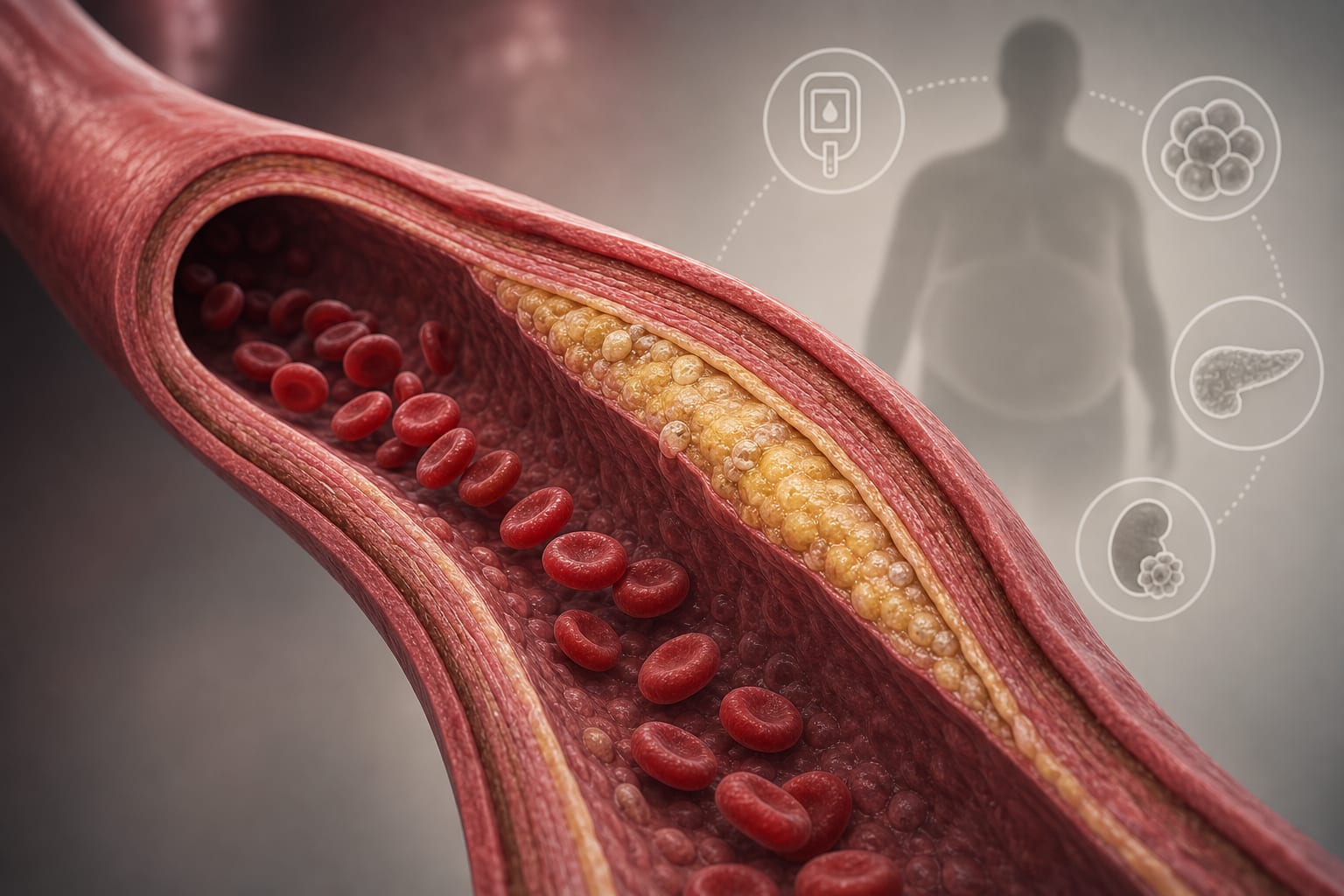
To highlight the significance of maintaining normal blood lipid levels in the context of metabolic and endocrine diseases and to advocate for a shift from rigid threshold-based lipid management to a more nuanced understanding of lipid fluctuations.
Approach:
Introduction: Discusses the global health burden of metabolic and endocrine diseases and the dual role of blood lipids in human physiology.
Early insulin resistance and diabetes risk: Highlights studies showing that the triglyceride-glucose (TyG) index can predict diabetes risk even in individuals with normal lipid levels.
Remnant cholesterol: Explores the role of remnant cholesterol as a predictor of glycemic recovery and its associations with insulin resistance.
Composite lipid indices: Describes the advantages of composite lipid indices over traditional markers in predicting metabolic disturbances.
Trace elements and lipoprotein interactions: Examines how whole-blood copper concentration interacts with apolipoprotein B levels in relation to glycemic control.
Key Findings:
The TyG index is a strong predictor of diabetes risk, even within normal lipid ranges.
Incremental increases in LDL-C within the normal range are associated with higher diabetes risk.
Remnant cholesterol is a potent predictor of glycemic recovery and is linked to insulin resistance.
Composite lipid indices often outperform traditional lipid markers in predicting metabolic disturbances.
Copper levels in relation to glycemic control are modified by apolipoprotein B levels.
Interpretation:
The findings suggest that maintaining normal blood lipid levels is crucial for reducing metabolic risk, and that traditional binary classifications may overlook significant individual risk factors.
Limitations:
The studies referenced may have population-specific limitations and may not be generalizable to all demographics.
The editorial does not provide extensive data on the methodologies of the studies discussed.
Conclusion:
A paradigm shift towards continuous risk assessment of lipid levels is necessary to better understand and manage metabolic health.