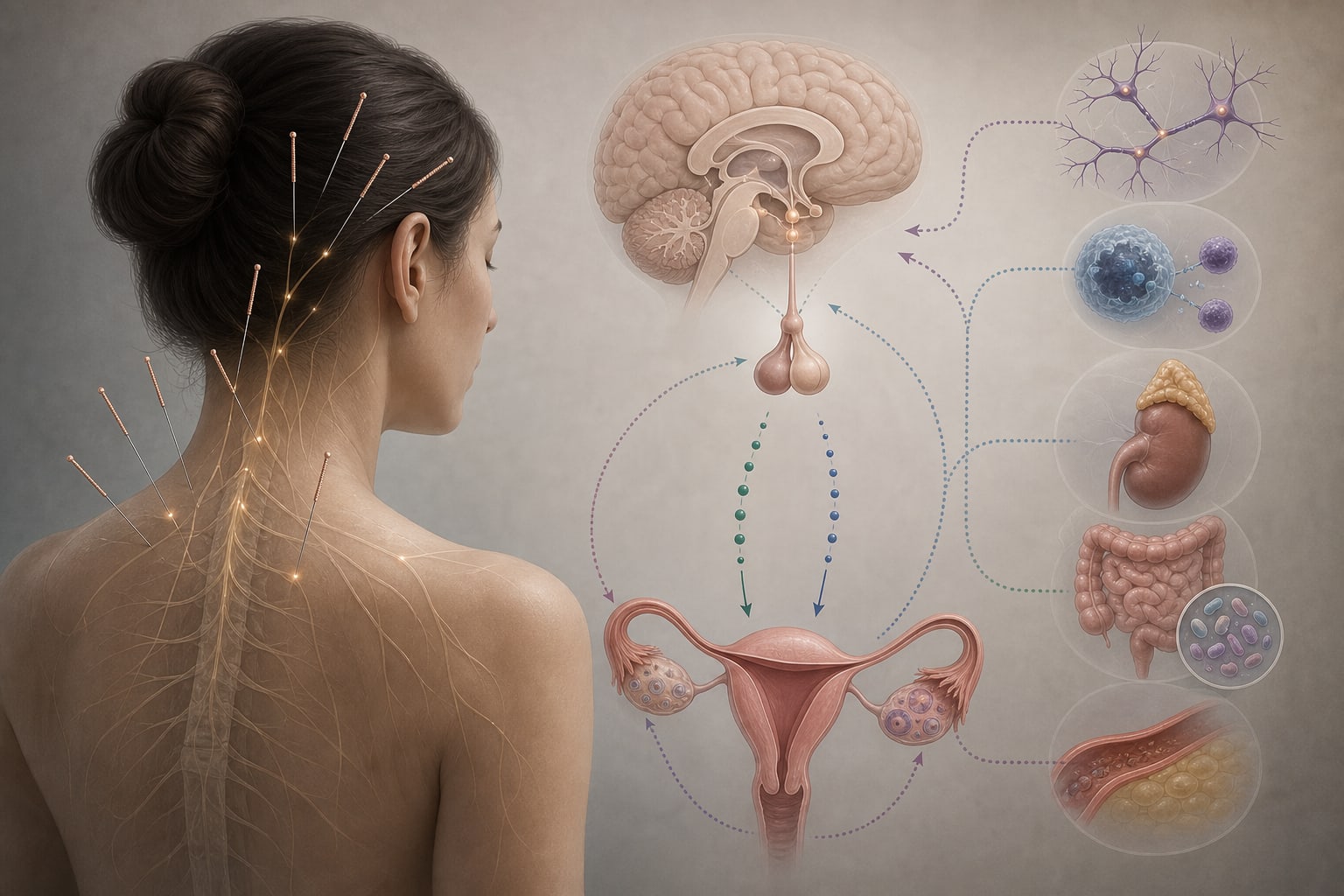
To delineate the systemic neuroendocrine mechanisms and potential clinical roles of acupuncture in premature ovarian insufficiency (POI).
Approach:
Overview of POI: POI is characterized as a systemic neuroendocrine condition affecting multiple body systems, not just the reproductive system.
Acupuncture as Intervention: Acupuncture is proposed as a multi-target intervention that may influence reproductive hormone regulation and broader physiological modulation.
Key Findings:
Acupuncture may influence reproductive hormones such as follicle-stimulating hormone (FSH), luteinizing hormone (LH), and estradiol (E2).
Some studies report associations with changes in ovarian reserve-related indicators and menstrual function.
Acupuncture may also affect stress-related endocrine activity, autonomic function, and emotional symptoms, potentially involving inflammatory and metabolic pathways.
Interpretation:
While acupuncture demonstrates biological plausibility and preliminary therapeutic potential for POI, its clinical efficacy remains inconclusive due to limited evidence.
Limitations:
Current evidence is limited by small sample sizes and short follow-up durations.
Methodological variability exists among studies.
There is insufficient evidence regarding clinically meaningful long-term outcomes.
Conclusion:
Further well-designed, large-scale studies are required to evaluate acupuncture's effectiveness and clarify its mechanisms in POI.
To better service community practitioners, Roswell Park Comprehensive Cancer Center is proud to introduce Gyn-Onc Connect, a dedicated phone number to access Roswell Park’s gynecologic oncology team.
Brief GPT-4o chatbot conversations increased parents' HPV vaccination intentions immediately following exposure, but public health materials showed more durable effects, and no intervention increased self-reported vaccination uptake.