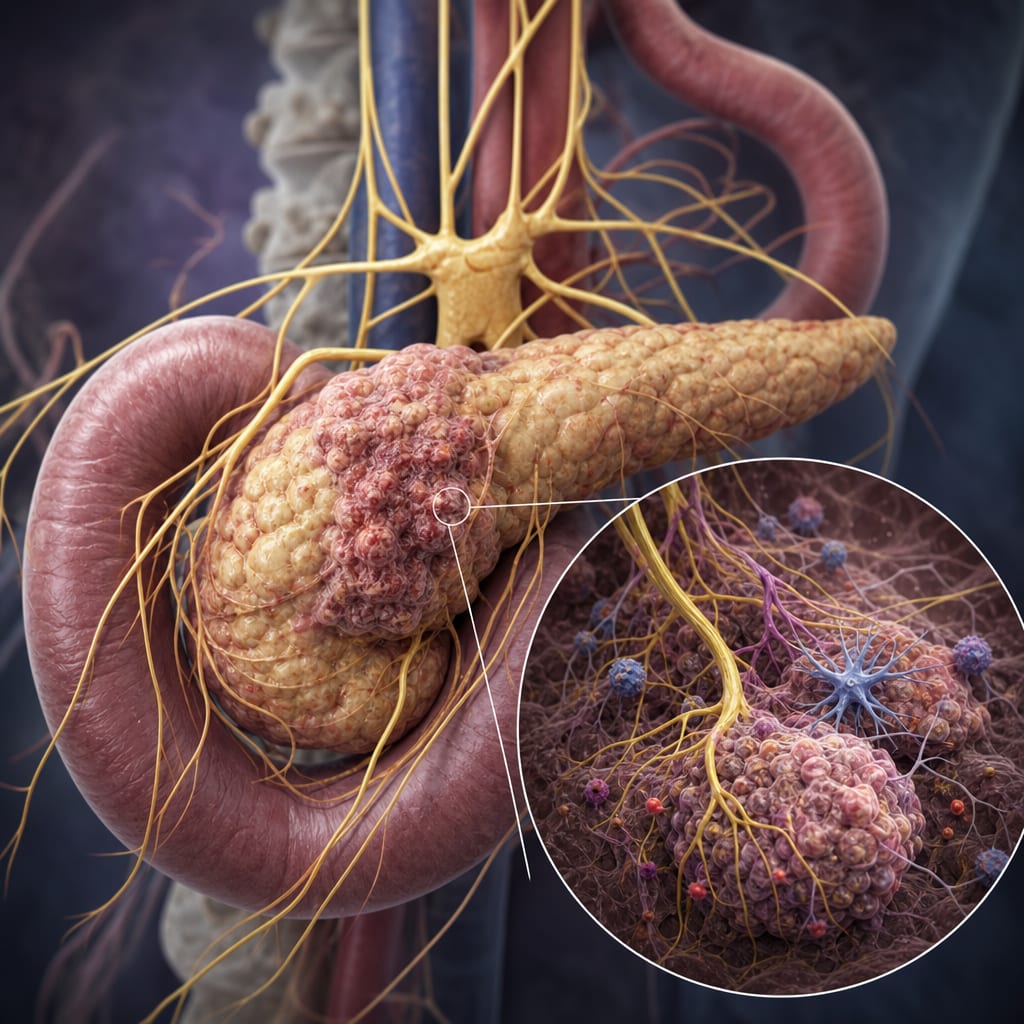
To summarize current knowledge on the pathophysiology, assessment, and treatment of pain in pancreatic ductal adenocarcinoma (PDAC), emphasizing the critical need for effective pain management.
Key Findings:
Over 60% of PDAC patients experience significant pain at diagnosis, which worsens with disease progression, highlighting the urgent need for effective management.
Pain is associated with various negative outcomes, including anorexia, weight loss, and decreased quality of life, underscoring its impact on overall health.
Perineural invasion is a key feature of PDAC linked to pain severity and prognosis, indicating a need for targeted therapies.
Emerging research highlights neuroimmune signaling and tumor-nerve interactions as potential therapeutic targets, suggesting new avenues for treatment.
Interpretation:
Pain in PDAC is complex, involving both nociceptive and neuropathic mechanisms, necessitating comprehensive assessment and tailored management strategies to improve patient quality of life.
Limitations:
Pain management often relies on clinical experience rather than mechanistic understanding, leading to potential gaps in treatment.
Many patients remain undertreated despite available therapies, indicating a need for better implementation of existing pain management strategies.
Conclusion:
Improving pain management in PDAC requires integrating molecular insights with clinical assessment to develop more individualized treatment approaches, ultimately enhancing patient care.
by Mahya Faghih, Marko Damm, Charlotte Gutzler, Michael Hirth, Marie-Theres Kassik, Louise Kuhlmann, Patrick Michl, Søren S. Olesen, Anna E. Phillips, Vikesh K. Singh, Asbjørn M. Drewes