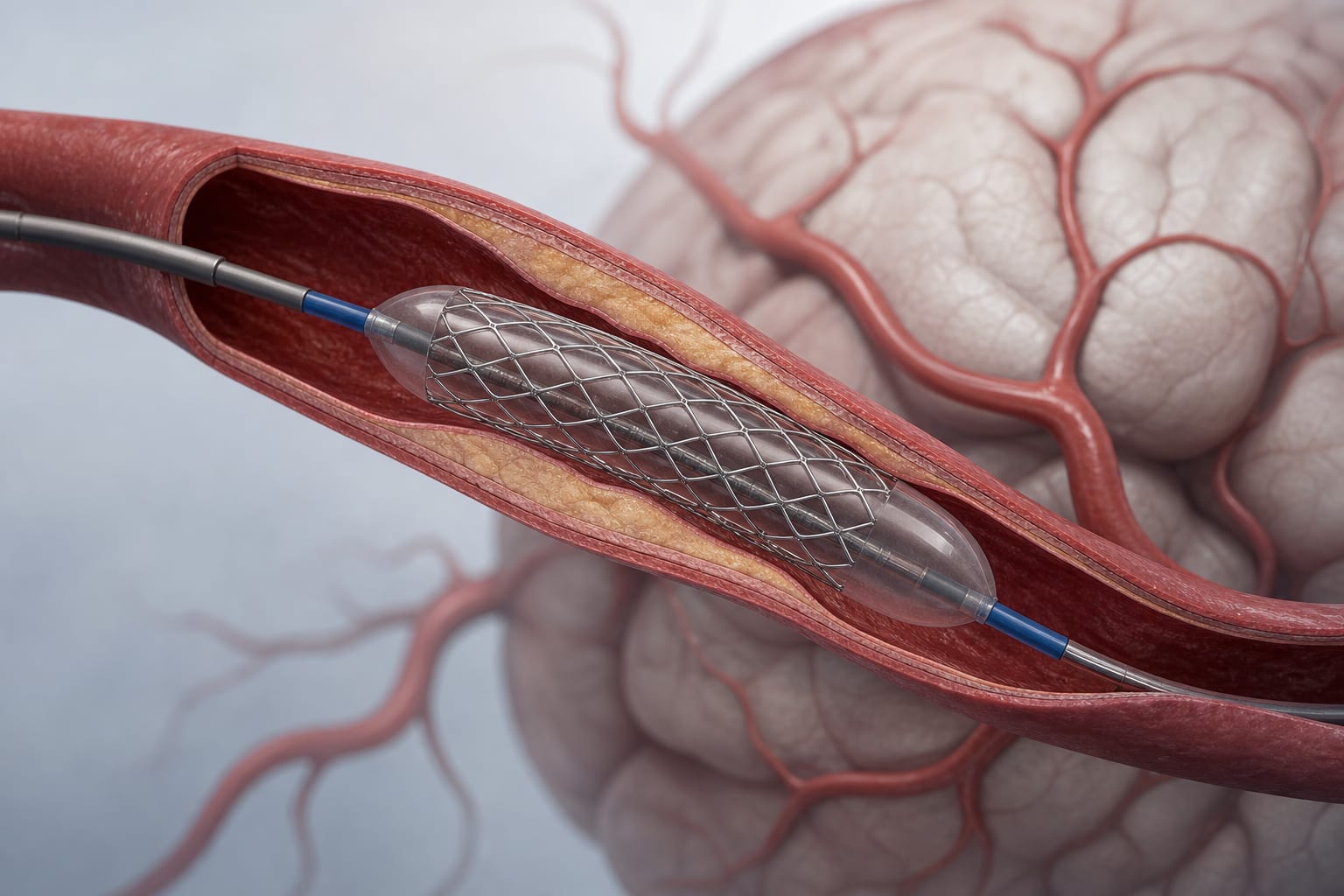
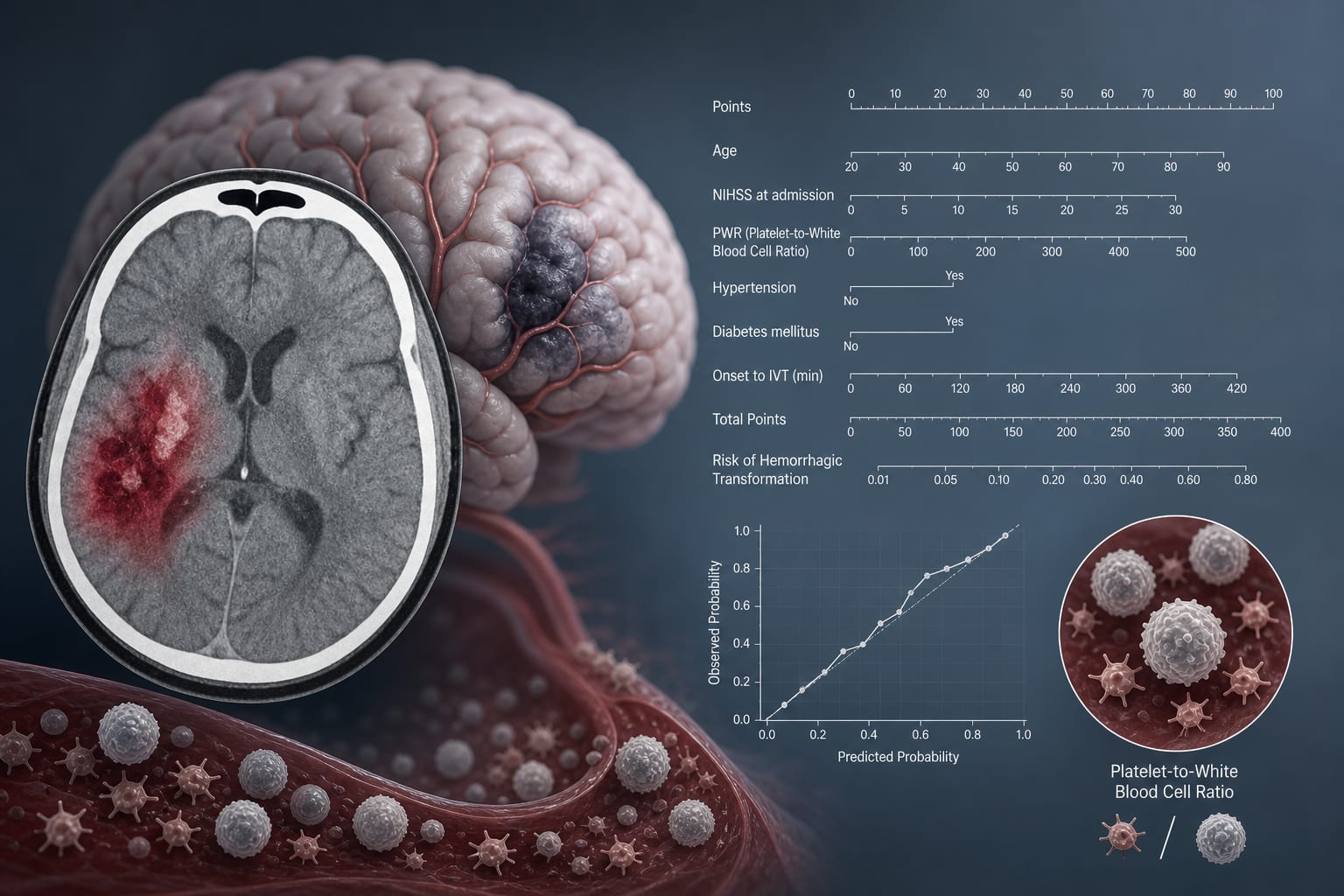
To evaluate the safety and early angiographic outcomes of a standardized, exchange-free, single-pass Gateway balloon-assisted Neuroform Atlas stenting strategy for symptomatic high-grade intracranial atherosclerotic stenosis (sICAS).
Approach:
Key Findings:
Technical success rate was 100%.
No flow-limiting dissections, perforations, distal embolizations, acute in-stent thromboses, symptomatic vasospasms, 30-day strokes, or intracranial hemorrhages occurred.
30-day mortality rate was 1.8% (due to sepsis).
Median stenosis improved from 87% pre-procedure to 21.5% post-procedure and was 30% at 3-month DSA (p<0.001).
ISR >50% at 3 months occurred in 7.1% of patients; cumulative ISR/occlusion during follow-up was 10.5%.
Interpretation:
Exchange-free Gateway–Atlas stenting appears technically feasible and was associated with a low observed 30-day neurological complication rate and meaningful luminal gain in a selected cohort of patients with medically refractory sICAS.
Limitations:
Retrospective study design.
Small sample size.
Exploratory nature of observed restenosis pattern, particularly in basilar artery lesions.
Conclusion:
The observed basilar artery-predominant restenosis pattern is exploratory and hypothesis-generating, suggesting the need for closer posterior circulation surveillance in future prospective studies.