Adolescent locked femoral nail for recurrent femoral fractures in children with osteogenesis Imperfecta: a case report and literature review - Summary - MDSpire
Conexiant’s news site is now MDSpire News. Learn more
Advertisement
Use of Adolescent Locked Femoral Nails for Managing Recurrent Femoral Fractures in Pediatric Osteogenesis Imperfecta: A Case Study and Review of Existing Literature
To evaluate the efficacy of Adolescent Locked Femoral Nails (ALFN) in managing recurrent femoral fractures in a pediatric patient with Osteogenesis Imperfecta (OI).
Approach:
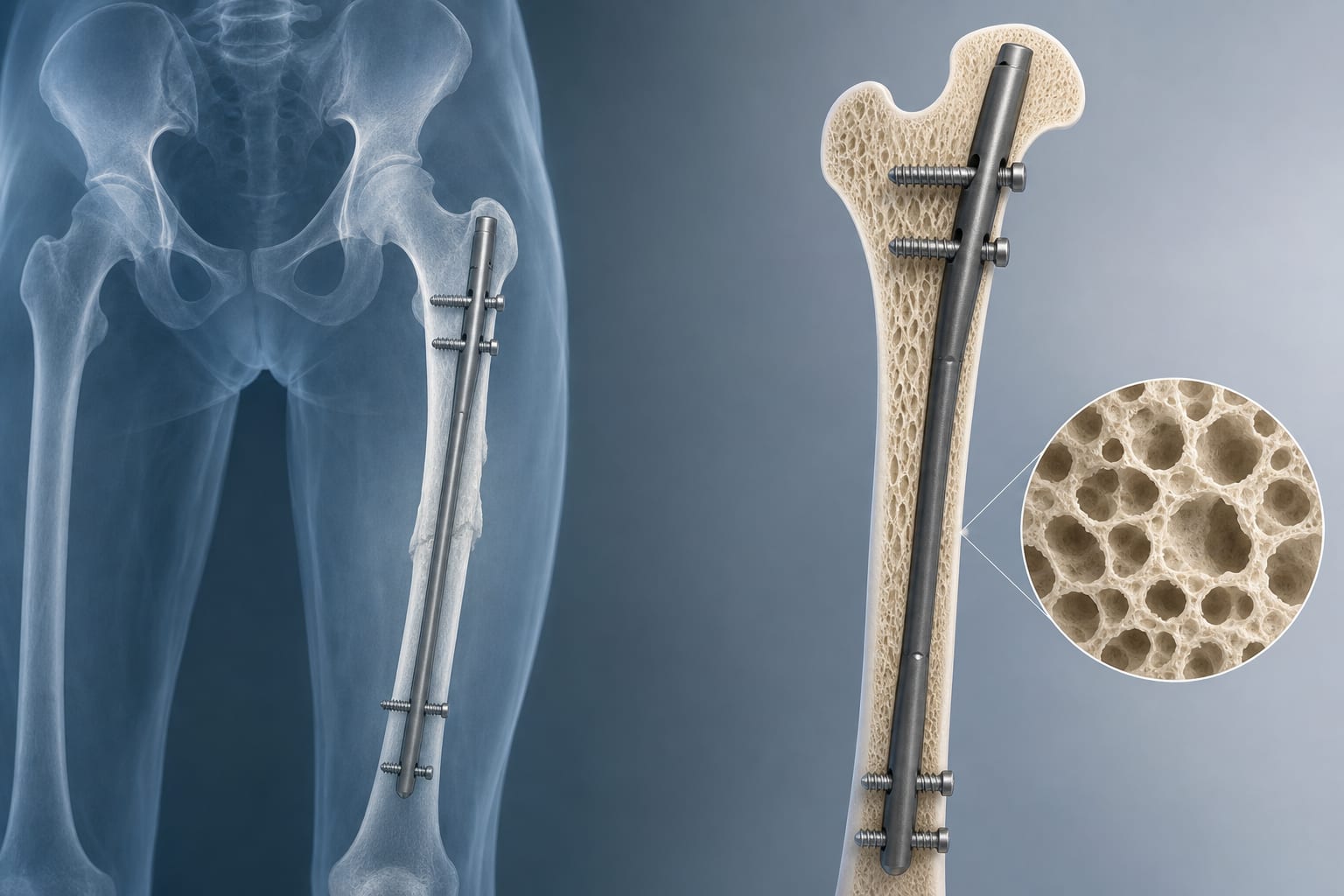
Case Presentation: A 13-year-old male with Sillence type III OI experienced four left femoral fractures over five years, treated initially with plate fixation, leading to refractures. The fourth fracture was treated with ALFN and zoledronic acid, resulting in successful healing.
Key Findings:
ALFN provided stable intramedullary fixation and preserved bone blood supply.
At the 3-year follow-up, the fracture healed uneventfully without refracture; the lower limb alignment was normal, with a 0.5 cm limb-length discrepancy and satisfactory knee function.
ALFN may serve as a valuable option for selected adolescent OI patients with recurrent fractures, wide medullary canals, or failure of previous fixation methods.
Interpretation:
The use of ALFN in this case suggests it may effectively address the challenges of recurrent femoral fractures in adolescents with OI, particularly those with wide medullary canals and previous fixation failures.
Limitations:
The study is based on a single case report, limiting generalizability.
Long-term outcomes and comparative effectiveness with other fixation methods remain to be established.
Conclusion:
ALFN combined with anti-osteoporotic medication may serve as a valuable option for selected adolescent OI patients.