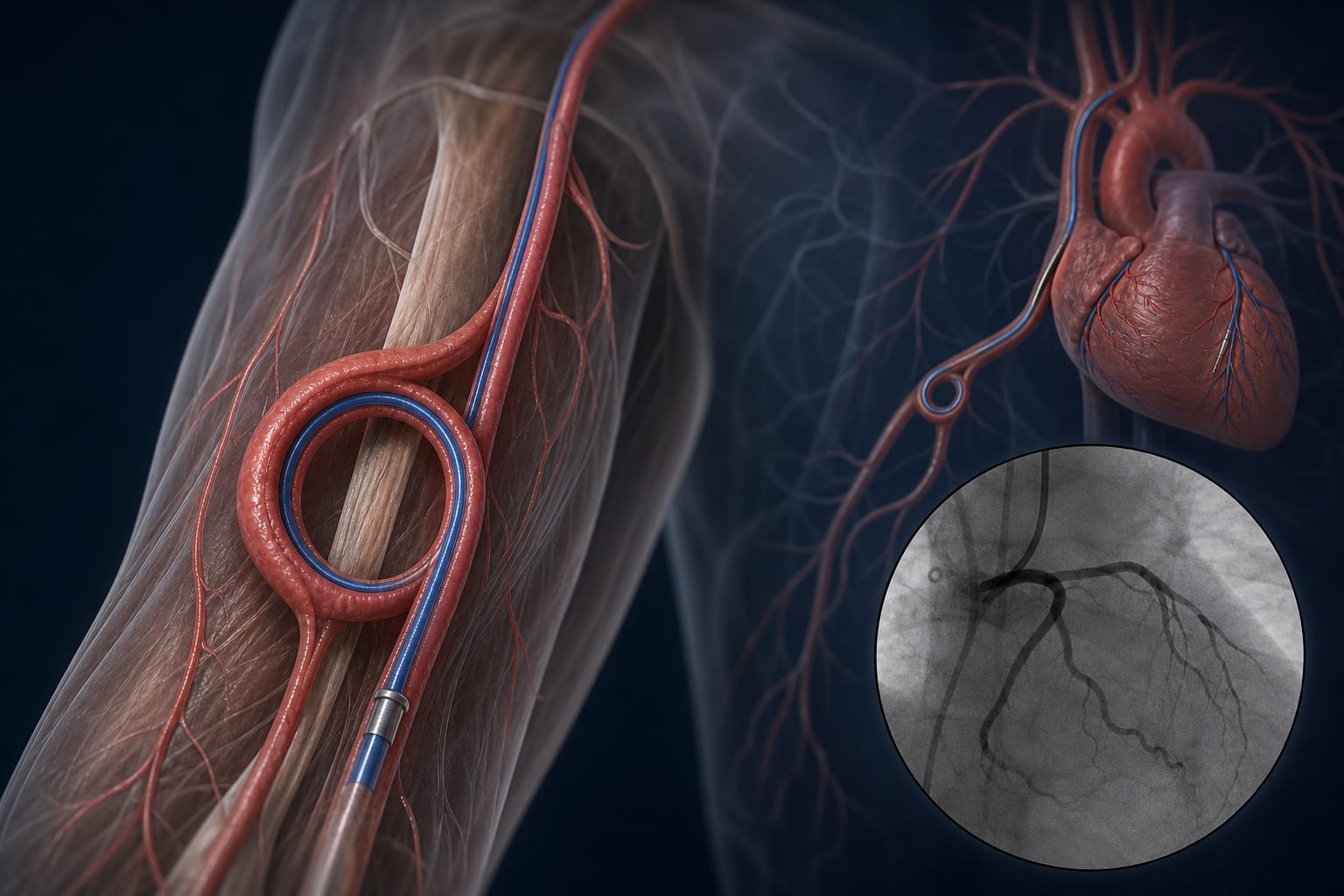
To summarize contemporary evidence on transradial approach (TRA) for coronary angiography and percutaneous coronary intervention (PCI), focusing on technical considerations, adjunctive pharmacology, access-site complications, and future perspectives.
Approach:
Technical Refinements: Discusses variations in puncture technique, use of vasodilator cocktails, and strategies to reduce radial artery occlusion.
Comparative Analysis: Compares TRA with transfemoral access (TFA) in terms of bleeding, vascular complications, and mortality in acute coronary syndromes.
Future Research Directions: Identifies the need for further research on anticoagulation strategies and alternative access methods like distal radial and ulnar approaches.
Key Findings:
TRA reduces bleeding and vascular complications compared to TFA.
TRA is associated with lower mortality in patients with acute coronary syndromes.
Technical refinements and adjunctive pharmacology can enhance procedural success with TRA.
Alternative access strategies like distal radial and ulnar approaches have advantages but are limited by higher crossover rates.
Interpretation:
Limitations:
Optimal anticoagulation strategies in the TRA era remain uncertain.
Higher crossover rates and longer cannulation times for alternative access strategies may limit their use.
by Tanawat Attachaipanich, Muzamil Khawaja, Hafeez Ul Hassan Virk, Dmitriy N. Feldman, Elmir Omerovic, Ian C. Gilchrist, Arnold H. Seto, Chayakrit Krittanawong