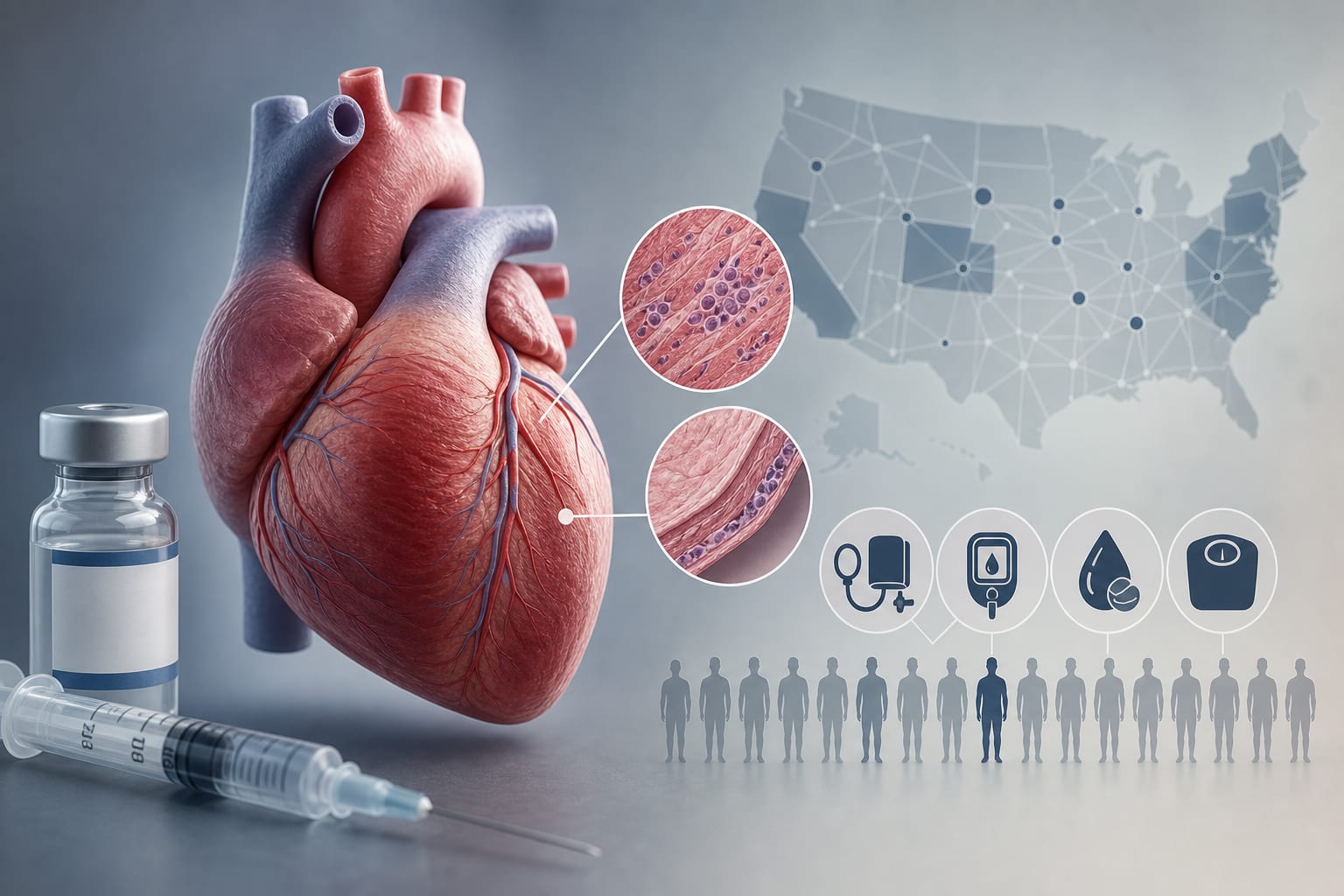
To explore the potential of retinal imaging, specifically OCTA, in assessing cardiovascular risk through the evaluation of microvascular health.
Key Findings:
Retinal microvascular abnormalities may reflect systemic cardiovascular health and correlate with traditional risk factors like hypertension and diabetes.
Retinal ischemic perivascular lesions are associated with myocardial infarction independent of traditional risk factors.
The relationship between functional perfusion deficits and structural remodeling in the retina requires further investigation.
Interpretation:
The findings suggest that retinal imaging could enhance cardiovascular risk assessment, but further studies are needed to clarify the mechanisms and validate its clinical utility.
Limitations:
Variation in retinal perfusion metrics may occur within the 12-month interval between coronary computed tomography and OCTA.
The study did not evaluate the impact of blood pressure control on OCTA-derived metrics in hypertensive individuals.
Conclusion:
Future research should focus on integrating OCTA with structural analyses to develop a clinically actionable strategy for early detection of vascular disease.
Manufacturers would be required to notify the FDA of GRAS determinations under a proposed rule, while HHS and USDA also submitted the first proposed federal definition of ultra-processed foods for final review.
Creatine's ATP-buffering trick isn't just for biceps. In mice, it juices up dendritic cells' energy supply, sharpening T-cell priming and shrinking tumors on daily injections. Human DCs got the memo too, at least in a dish. Early days, but a fun plot twist for gym-bag chemistry.