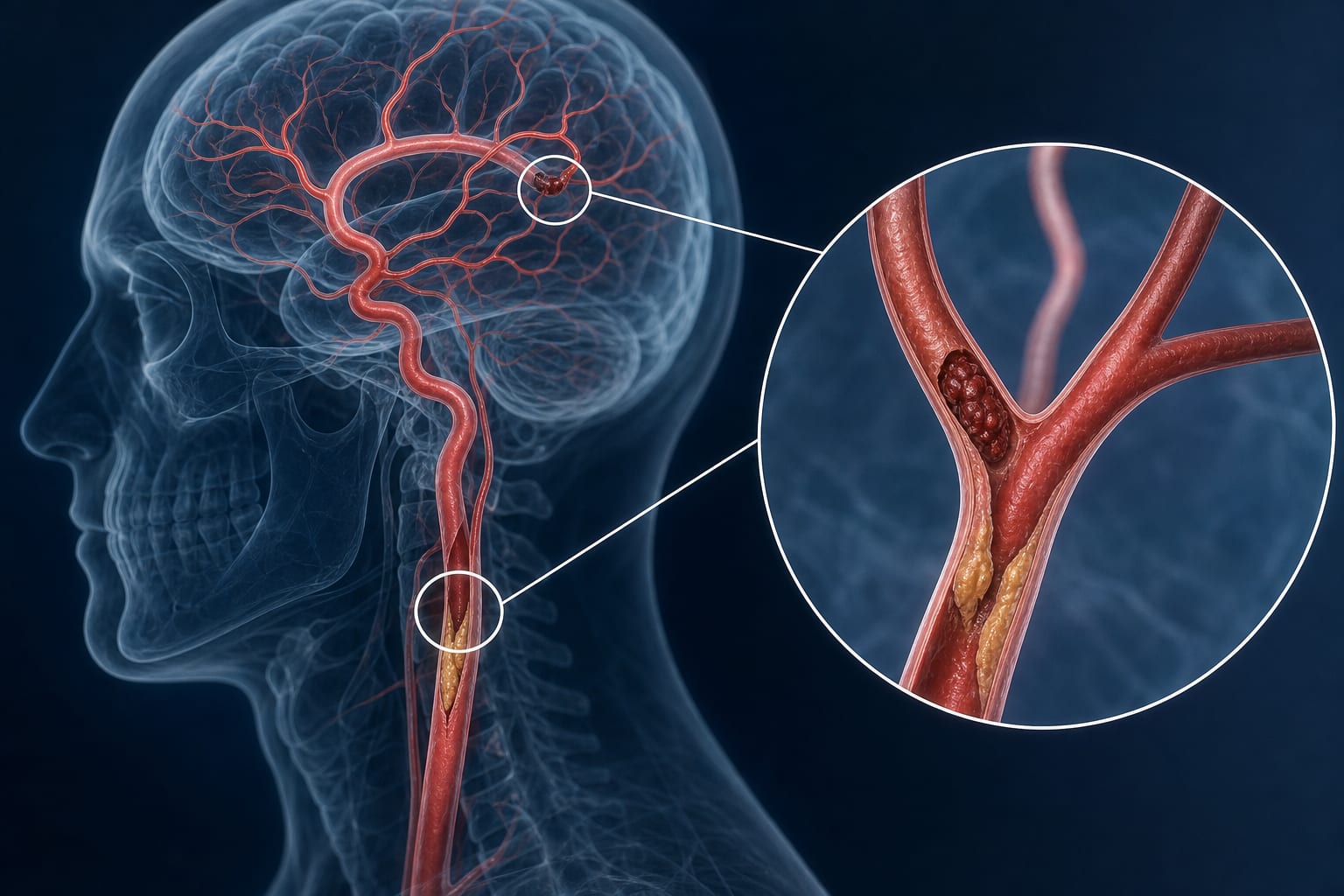
To compare the clinical and angiographic outcomes of antegrade and retrograde strategies in patients with tandem occlusion.
Approach:
Study Design: A retrospective single-center study including 74 patients treated at Bach Mai Hospital, Hanoi, from January 2023 to June 2025.
Patient Grouping: Patients were grouped into antegrade and retrograde treatment strategies.
Outcome Measures: Primary outcome was favorable functional outcome at 90 days (mRS ≤ 2). Secondary outcomes included successful reperfusion, early neurological improvement, symptomatic intracerebral hemorrhage, and mortality.
Key Findings:
Median age was 67 years; 81.1% were male.
Successful reperfusion achieved in 94.6% of antegrade group and 91.9% of retrograde group.
Favorable functional outcome at 90 days: 45.9% antegrade vs 40.5% retrograde (p = 0.639).
sICH occurred in 8.1% of patients (p = 0.999), and mortality was 10.8% (p = 0.999).
Interpretation:
No significant differences were observed between antegrade and retrograde approaches in achieving successful reperfusion and functional outcomes.
Limitations:
Retrospective single-center design.
Limited sample size.
Conclusion:
Both antegrade and retrograde strategies demonstrated comparable outcomes, with procedural selection potentially depending on operator preference and patient-specific factors.