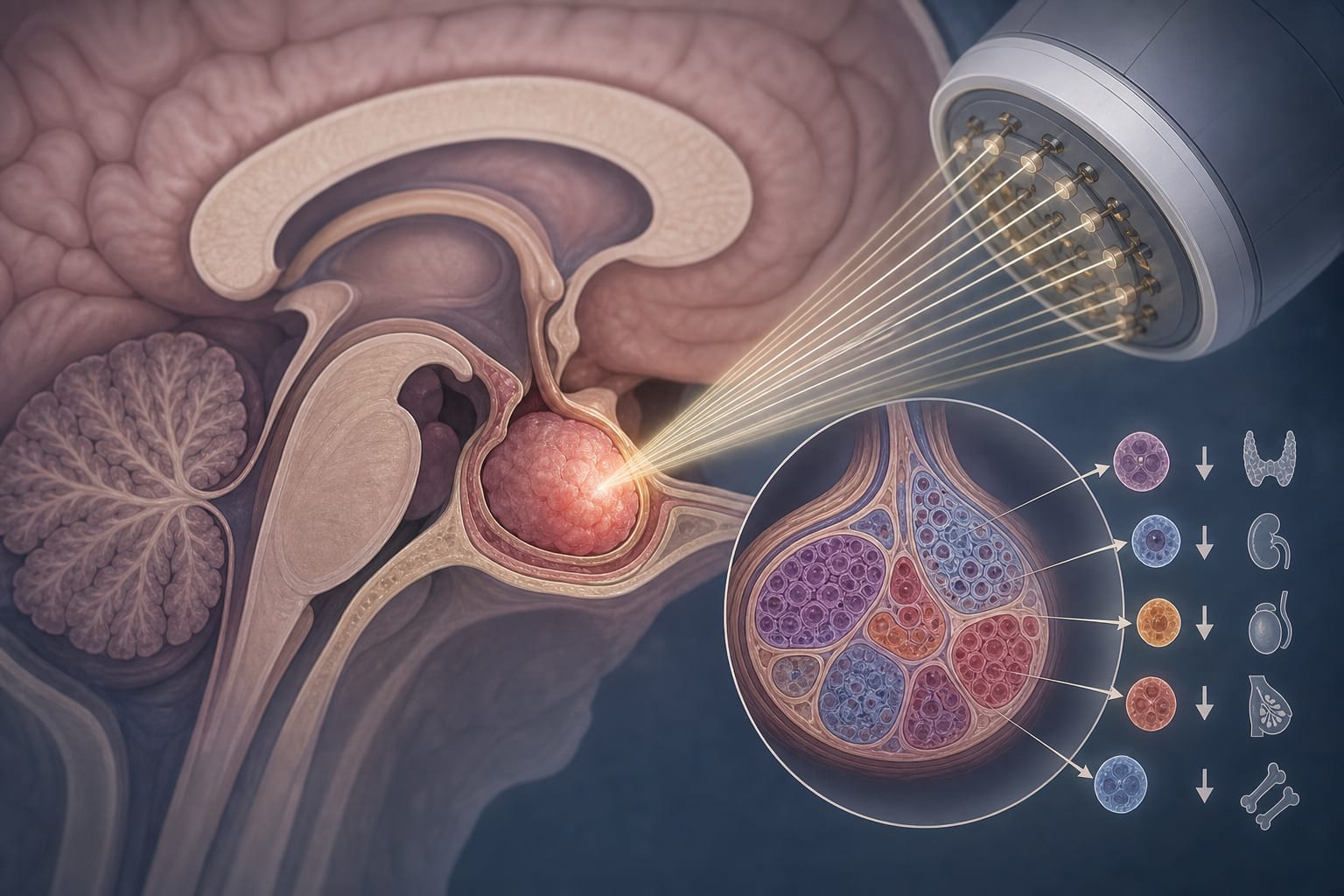
To discuss the role of stereotactic radiosurgery (SRS) in the treatment of pituitary adenomas (PAs), focusing on the incidence, biological mechanisms, predictors, and management strategies for pituitary hormone dysfunction following SRS.
Approach:
Introduction: Overview of pituitary adenomas, treatment options including surgical resection and medical therapies, and the role of SRS in managing recurrent or residual tumors.
Endocrinological outcomes: Analysis of the effectiveness of SRS in controlling tumor growth and achieving endocrine remission in functioning pituitary adenomas (FPAs), noting the variability in remission criteria across studies.
Key Findings:
SRS is more effective in controlling tumor growth than achieving complete endocrine remission in FPAs.
Tumor shrinkage does not necessarily correlate with hormonal remission.
Factors influencing endocrine remission include absence of hormone-suppressive medications and higher maximum radiation doses.
Interpretation:
SRS can lead to hypopituitarism, with incidence rates between 21% and 50%, and is associated with various complications.
Limitations:
Heterogeneity in biochemical remission criteria across studies complicates cross-study comparisons.
Limited data on long-term endocrine outcomes following SRS.
Conclusion:
SRS is a treatment option for PAs, but careful consideration of its effects on hormone function is necessary.
More than 80% of women who were partially up to date reported a wellness visit in the prior year, suggesting missed opportunities for screening engagement in primary care.