Spatial immune archetypes in gastric and colorectal cancer: a proposed conceptual framework for immunotherapy resistance and therapeutic remodeling - Summary - MDSpire
Advertisement
Spatial immune archetypes in gastric and colorectal cancer: a proposed conceptual framework for immunotherapy resistance and therapeutic remodeling
To propose a conceptual framework for understanding immune evasion in gastric and colorectal cancers, focusing on spatial immune archetypes that influence immunotherapy outcomes.
Approach:
Key Findings:
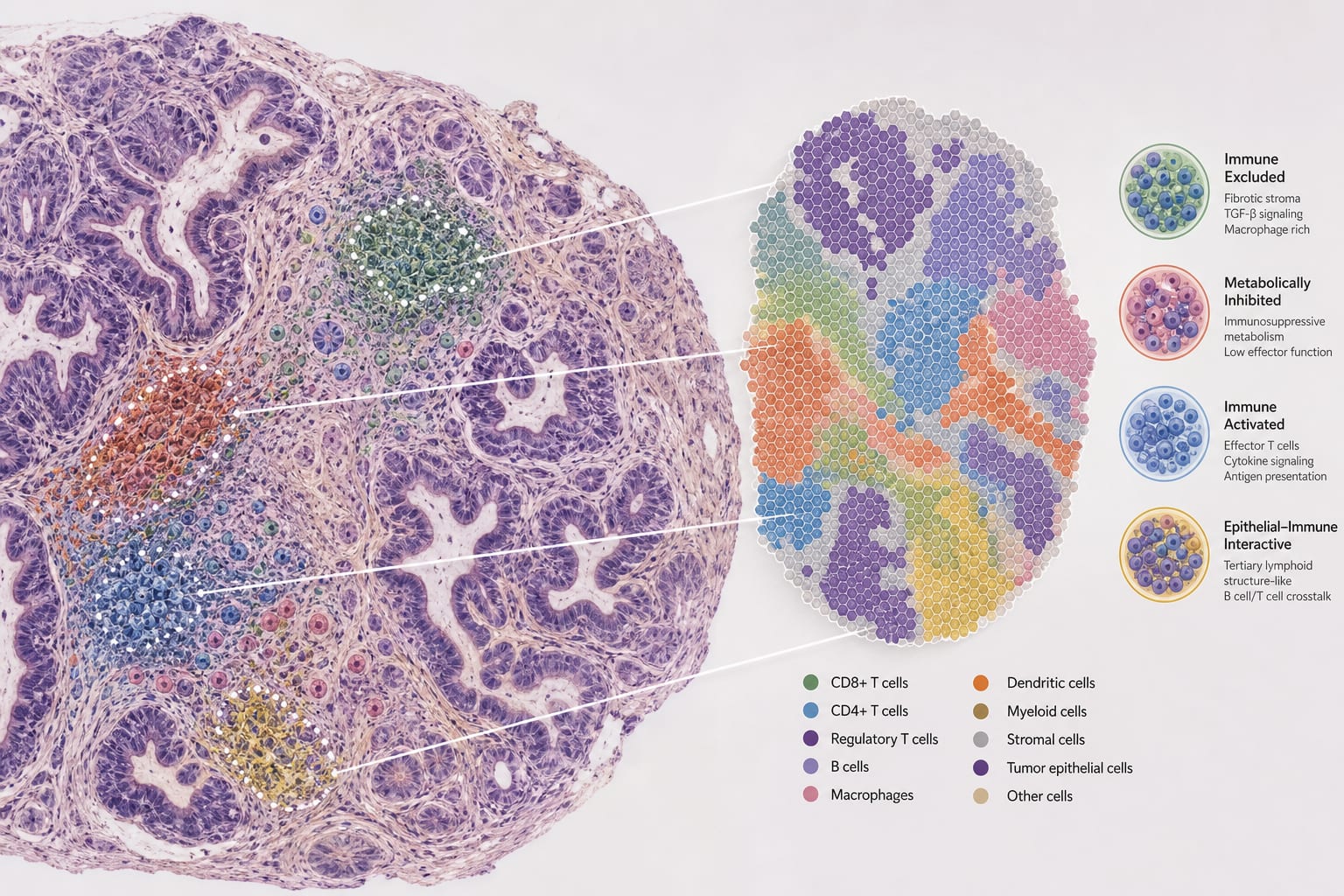
Immunotherapy outcomes are influenced by multicellular architectures rather than lymphocyte abundance alone.
Four spatial immune archetypes were identified: stromal-excluded barrier niche, myeloid-suppressive metabolic niche, inflamed lymphoid-reactive niche, and epithelial-immune interface niche.
Tissue-specific anatomical constraints and distinct microbial ecologies shape the prevalence of these archetypes.
Interpretation:
Limitations:
Current profiling methods fail to capture the complexity of tissue architecture and immune interactions.
Bulk and single-cell profiling techniques may obscure important spatial dynamics and functional outputs.
Conclusion:
Understanding spatial immune archetypes provides a framework for addressing resistance to immunotherapy in gastric and colorectal cancers.