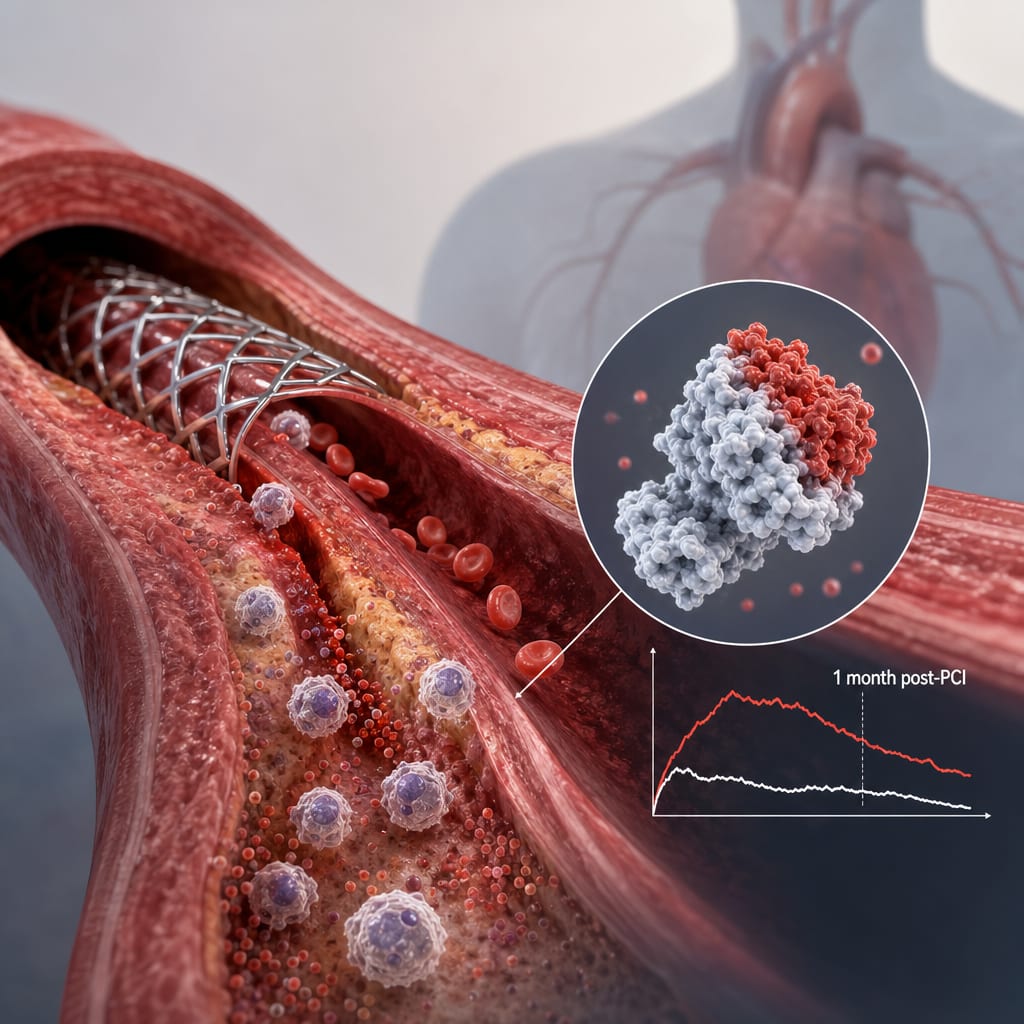
To emphasize the importance of monitoring high-sensitivity C-reactive protein (hsCRP) levels one month post-percutaneous coronary intervention (PCI) to address ongoing residual inflammatory risk (RIR) and enhance secondary prevention strategies through targeted interventions.
Key Findings:
Approximately 43% of patients exhibit sustained elevation of hsCRP at one month post-PCI, with a relative risk (RR) of 1.64 for 12-month major adverse cardiovascular events (MACE) and 3.25 for all-cause mortality.
Persistent hsCRP elevation is an independent predictor of 12-month MACE and all-cause mortality.
Isolated residual inflammatory risk correlates with higher MACE rates compared to isolated residual cholesterol risk.
Interpretation:
The findings suggest that residual inflammatory risk, rather than residual cholesterol risk, is a critical factor influencing recurrent cardiovascular events post-PCI, warranting regular hsCRP monitoring to inform treatment strategies.
Limitations:
Current guidelines do not recommend routine hsCRP reassessment at one month post-PCI, which may hinder optimal patient management.
Further prospective studies are needed to validate the proposed dual-target treatment strategy and its impact on patient outcomes.
Conclusion:
Regular hsCRP monitoring at one month post-PCI could enhance patient stratification and treatment, potentially reducing the risk of recurrent cardiovascular events through targeted interventions.
These 10 states make it more practical for physicians to participate in hospital ownership by aligning statutory structure, corporate practice of medicine rules, and population trends.