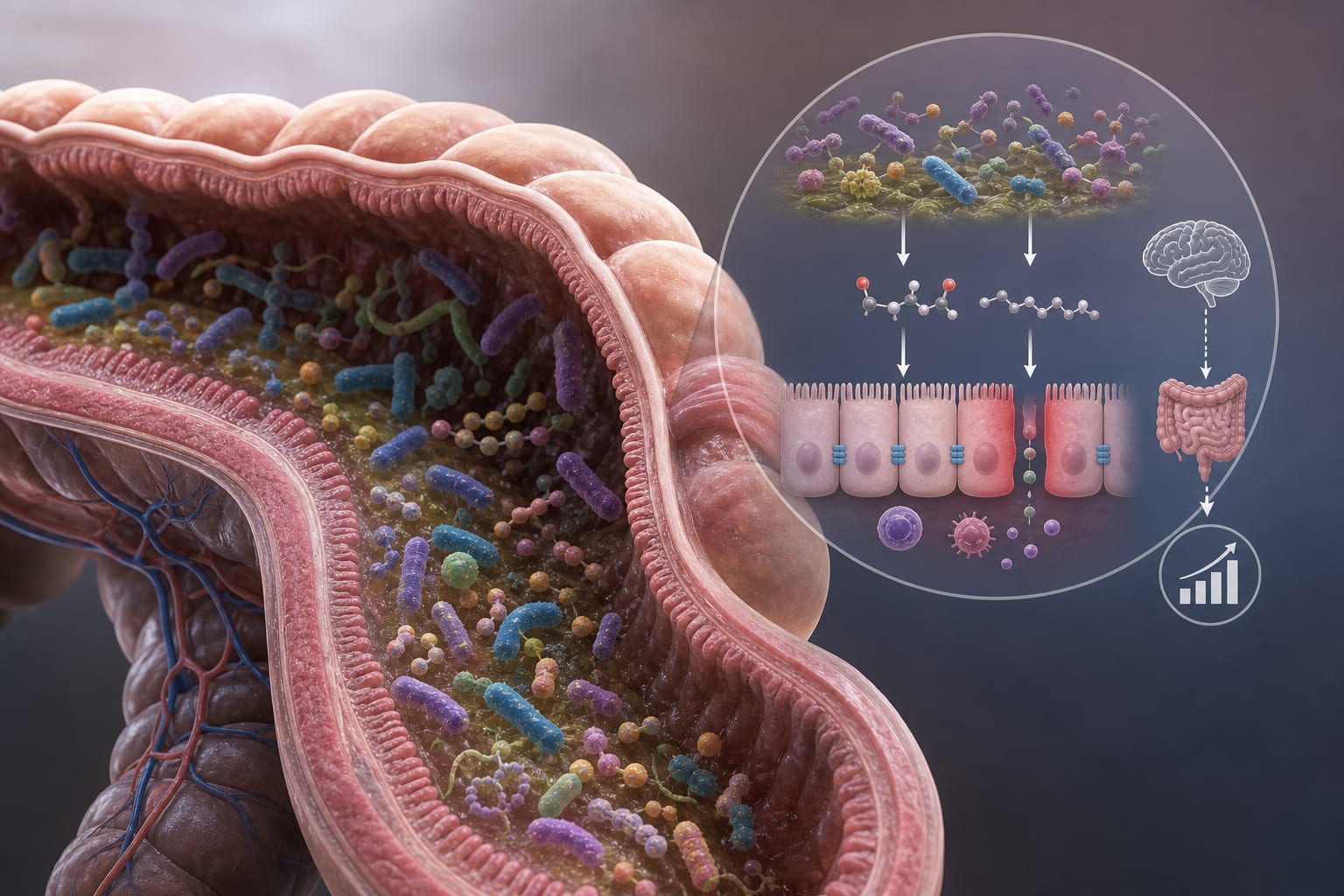
To synthesize current preclinical and human evidence on the bidirectional interactions between GLP-1 receptor agonists (GLP-1 RAs) and the gut microbiota, focusing on microbial composition, metabolite production, and their implications for treatment responses in obesity and type 2 diabetes.
Approach:
Literature Search: A structured literature search was conducted using PubMed and Scopus databases up to January 2026, focusing on keywords related to GLP-1 RAs and gut microbiota.
Key Findings:
GLP-1 RAs can remodel gut microbial communities and influence metabolite profiles.
Human studies show GLP-1 RA therapy is associated with changes in microbial diversity and enrichment of specific taxa.
Baseline microbiota composition may correlate with differential metabolic response, leading to a responder/non-responder framework.
Microbiota changes during GLP-1 RA therapy may be influenced by confounding factors such as weight loss, dietary modifications, and concomitant treatments.
Interpretation:
Current evidence suggests that host-microbiome interactions may contribute to therapeutic heterogeneity in GLP-1 RA responses, but robust longitudinal and interventional studies are needed.
Limitations:
Most available data are observational and associative.
Definitions of response are heterogeneous.
Study populations are limited in size.
Mechanistic causality has not been established.
Functional pathway inferences often rely on 16S rRNA-based predictions rather than direct metabolomic measurements.
Conclusion:
Elucidating interactions between GLP-1 RAs and gut microbiota may refine precision approaches to incretin-based therapy in metabolic disease.