Editorial: Precision oncology: integrating molecular mechanisms, organoid models, and omics technologies for personalized cancer care - Summary - MDSpire
Advertisement
Editorial: Precision oncology: integrating molecular mechanisms, organoid models, and omics technologies for personalized cancer care
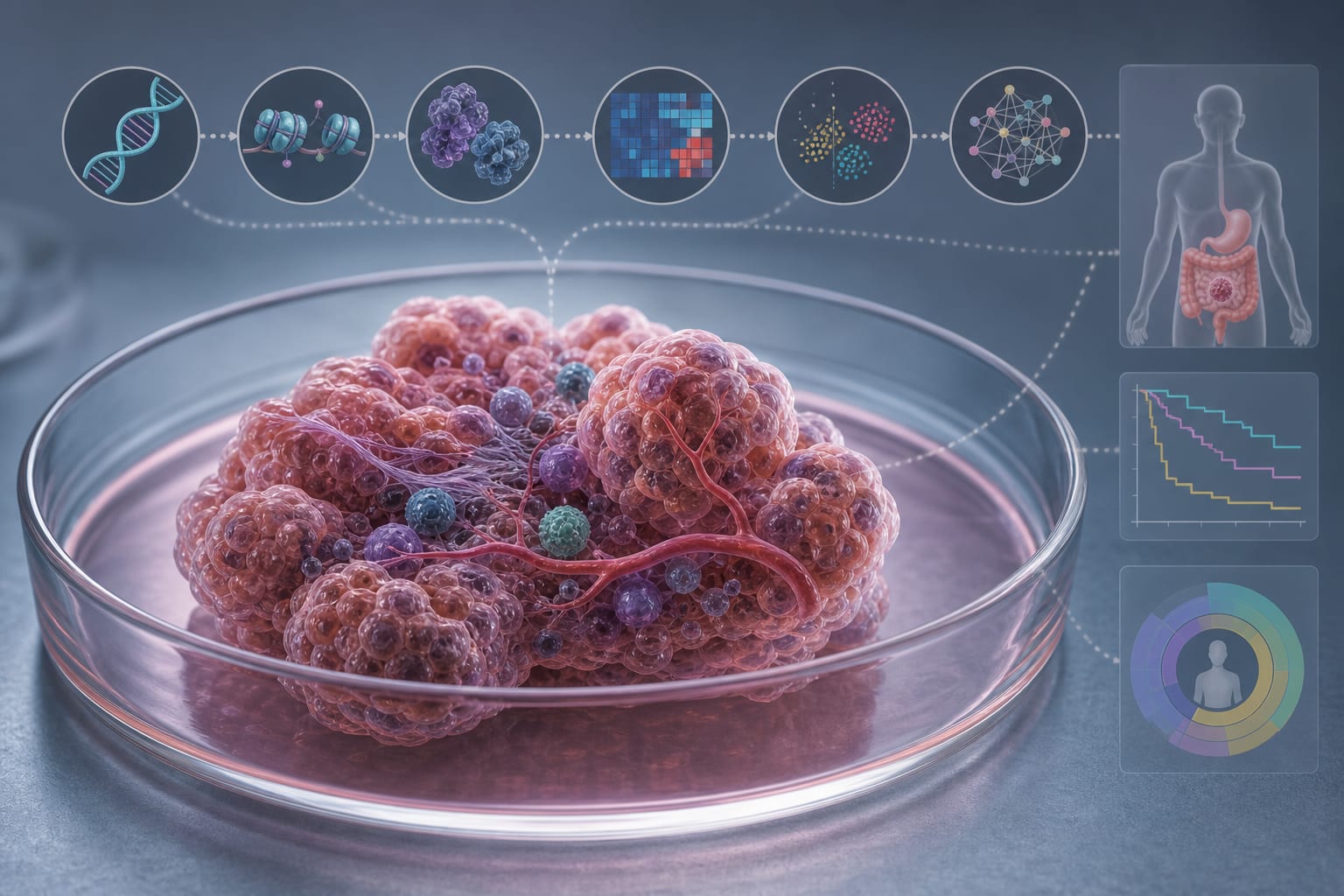
To explore the evolution of precision oncology through the integration of molecular mechanisms, multi-omics technologies, functional disease models, and clinically realistic trial design for personalized cancer care.
Approach:
Key Findings:
Cancer is a dynamic biological system influenced by multiple regulatory layers.
Epigenetic alterations play a significant role in cancer metastasis and therapeutic resistance.
Omics technologies aid in the identification of molecular subgroups and therapeutic vulnerabilities.
Functional modelling using patient-derived organoids shows promise in predicting treatment responses.
Integrated diagnostic approaches can reduce uncertainty in clinical decision-making.
Multiple primary lung cancer is underrepresented in clinical trials, affecting evidence generation.
Interpretation:
The articles collectively advocate for a multidimensional approach to precision oncology, emphasizing the integration of various biological and clinical factors in treatment decisions.
Limitations:
Current biomarkers have limitations and require more refined patient selection.
Multiple primary lung cancer is underrepresented in clinical trials, affecting evidence generation.
Conclusion:
The future of personalized cancer care relies on the integration of diverse methodologies and a comprehensive understanding of cancer biology.